
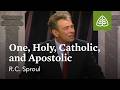
One, Holy, Catholic, and Apostolic: Communion of Saints with R.C. Sproul
Oct 10, 2026
Devotional
Sermon Summary
Bible Study Guide
Sermon Clips
“called Paul. We worship Jesus, but not Paul.” Beloved, you can’t have Jesus without Paul. You don’t know anything about Jesus except what you have learned through the testimony of the apostles. It was Jesus Himself who said that the very foundation of the church is the apostles.” [00:27:15]
“The Father sent me. This is the will of the Father: that you believe the one whom the Father sent,” and so Jesus would not allow the Pharisees to have their cake and eat it too because Jesus was the first apostle. He was the one the Father sent, and the Father sent him saying, “All authority on heaven and earth is given to you.” So what Jesus says, the Father says. And one of the things that Jesus said was, with respect to the apostles after He commissioned them was, “Those who receive you receive me. Those who will not receive you do not receive me.” [00:25:56]
“Do you realize that you’re about to embark on an adventure that every Christian up until this point in history who, you know, for those of us still alive are excluded, but every Christian from the past has already crossed the veil, and every one of them has made that pilgrimage through death’s door before us, and everyone who is in Christ died in faith, and they have joined that whole host of witnesses; and that the fellowship that we enjoy, the mystical communion that we enjoy as members of the body of Christ transcends the local congregation of which we are a part.” [00:08:18]
“church members who are truly Christians are people who are really indwelt by the living presence of the Holy Ghost. In other words, the Holy Spirit descends upon the church, upon the people of God and takes His dwelling place within them; and we know that every Christian is indwelt by the Holy Ghost. That doesn’t mean that the indwelling of the Holy Spirit automatically conveys or confers perfection. We are not glorified; we are not yet perfectly sanctified. But insofar as the Holy Spirit dwells within us, we can said to be the hagioi, or the holy ones. You see that?” [00:14:46]
“the word “apostle,” in its basic meaning in the New Testament, means, simply, “one who is sent.” But in the technical sense, if I send my son to the church – to the store – for a loaf of bread, I have not made him an apostle in the technical sense of biblical apostleship. There’s another dimension to it. To be an apostle in the narrow sense of the New Testament is not only to be sent by somebody but to be authorized for that mission to speak with the authority of the one who sends you.” [00:24:51]
“how this works? That there’s the catholicity, which is the foundational, essential doctrines of the Christian faith, that every Christian has to hold to, and there’s the evangelical, which means you believe in justification by faith alone, and then there’re you’re distinctives that define the various groups. But we don’t throw away our catholicity – that is, the universal truth of Christianity – when we embrace the particular denomination that we do.” [00:22:17]
“we are catholic.” And so the protestants said, “Yes, the faith that we embrace – the one Lord, the one faith, the one baptism – that is catholic. That remains universal, and we still hold to the catholic faith – the universal doctrine of Christ and of the Scriptures – and that catholicity is still a vitally important element of every church.” [00:20:20]
“Because the emphasis in the ministry of the Holy Spirit as the third member of the Trinity is to make the people of God holy. And so the Spirit, as He works in this institution, is working by the means of grace that are concentrated in it to bring you through your sanctification.” [00:16:22]
“the fathers called it holy. The simple reason is because the Word of God calls it holy. Believers in the New Testament are called the hagioi – the saints, which means “the holy ones.” The word “hagios” is the word that is part of the name of the Holy Spirit; that’s the title of the Holy Spirit and yet, we wonder, how can we be called saints when we are so manifestly unholy.” [00:12:45]
“Here is how the authority of the apostles is expressed in the life of the church today: through the sacred Scriptures. And so, we conclude with the Nicene fathers that the church is one, the church is holy, the church is catholic, and the church is apostolic.” [00:28:52]
“if you reject the apostle, then you reject the one who sent the apostle. For, ladies and gentlemen, the word “apostle,” in its basic meaning in the New Testament, means, simply, “one who is sent.”” [00:24:40]
“In the first instance, the unity is still found throughout Christendom, whereby in spite of the points of doctrine with which we disagree and by which our distinctives are determined, there is still a certain core or catholic or universal faith that we all embrace. Virtually every church in the world council of churches, for example, in their – or in each one of its constituent creeds or confessions testify, or at least profess belief in the substance of teaching found in the so-called ecumenical councils, like the council of Nicea, like the council of Chalcedon, and so on, which means simply this, that there is a common core of truth that every church affirms.” [00:03:40]
“the church fathers of the fourth century that the church is numerically one in the visible, unified sense; but there still is a sense in which some unity of the body of Christ has been preserved.” [00:03:19]
“church could say, “Where the bishop is, there is the church.” Now that catholicity in the visible, institutional sense, has been lost, although in the sixteenth century part of the controversy between Rome and the reformers was precisely over this point. I mean, what was Rome to do with the churches that were springing up that had broken away from Roman Catholic communion, with the Lutheran church in Germany, and the reformed church in Switzerland and in Scotland?” [00:18:14]
“adjectives that I want to look at in this session are these: the creed describes the church as one, holy, catholic, and what? Apostolic church. We believe in one, holy, catholic, apostolic church.” [00:01:17]
Ask a question about this sermon
“The Father sent me. This is the will of the Father: that you believe the one whom the Father sent,” and so Jesus would not allow the Pharisees to have their cake and eat it too because Jesus was the first apostle. He was the one the Father sent, and the Father sent him saying, “All authority on heaven and earth is given to you.” So what Jesus says, the Father says. And one of the things that Jesus said was, with respect to the apostles after He commissioned them was, “Those who receive you receive me. Those who will not receive you do not receive me.” [00:25:56]
“Do you realize that you’re about to embark on an adventure that every Christian up until this point in history who, you know, for those of us still alive are excluded, but every Christian from the past has already crossed the veil, and every one of them has made that pilgrimage through death’s door before us, and everyone who is in Christ died in faith, and they have joined that whole host of witnesses; and that the fellowship that we enjoy, the mystical communion that we enjoy as members of the body of Christ transcends the local congregation of which we are a part.” [00:08:18]
“church members who are truly Christians are people who are really indwelt by the living presence of the Holy Ghost. In other words, the Holy Spirit descends upon the church, upon the people of God and takes His dwelling place within them; and we know that every Christian is indwelt by the Holy Ghost. That doesn’t mean that the indwelling of the Holy Spirit automatically conveys or confers perfection. We are not glorified; we are not yet perfectly sanctified. But insofar as the Holy Spirit dwells within us, we can said to be the hagioi, or the holy ones. You see that?” [00:14:46]
“the word “apostle,” in its basic meaning in the New Testament, means, simply, “one who is sent.” But in the technical sense, if I send my son to the church – to the store – for a loaf of bread, I have not made him an apostle in the technical sense of biblical apostleship. There’s another dimension to it. To be an apostle in the narrow sense of the New Testament is not only to be sent by somebody but to be authorized for that mission to speak with the authority of the one who sends you.” [00:24:51]
“how this works? That there’s the catholicity, which is the foundational, essential doctrines of the Christian faith, that every Christian has to hold to, and there’s the evangelical, which means you believe in justification by faith alone, and then there’re you’re distinctives that define the various groups. But we don’t throw away our catholicity – that is, the universal truth of Christianity – when we embrace the particular denomination that we do.” [00:22:17]
“we are catholic.” And so the protestants said, “Yes, the faith that we embrace – the one Lord, the one faith, the one baptism – that is catholic. That remains universal, and we still hold to the catholic faith – the universal doctrine of Christ and of the Scriptures – and that catholicity is still a vitally important element of every church.” [00:20:20]
“Because the emphasis in the ministry of the Holy Spirit as the third member of the Trinity is to make the people of God holy. And so the Spirit, as He works in this institution, is working by the means of grace that are concentrated in it to bring you through your sanctification.” [00:16:22]
“the fathers called it holy. The simple reason is because the Word of God calls it holy. Believers in the New Testament are called the hagioi – the saints, which means “the holy ones.” The word “hagios” is the word that is part of the name of the Holy Spirit; that’s the title of the Holy Spirit and yet, we wonder, how can we be called saints when we are so manifestly unholy.” [00:12:45]
“Here is how the authority of the apostles is expressed in the life of the church today: through the sacred Scriptures. And so, we conclude with the Nicene fathers that the church is one, the church is holy, the church is catholic, and the church is apostolic.” [00:28:52]
“if you reject the apostle, then you reject the one who sent the apostle. For, ladies and gentlemen, the word “apostle,” in its basic meaning in the New Testament, means, simply, “one who is sent.”” [00:24:40]
“In the first instance, the unity is still found throughout Christendom, whereby in spite of the points of doctrine with which we disagree and by which our distinctives are determined, there is still a certain core or catholic or universal faith that we all embrace. Virtually every church in the world council of churches, for example, in their – or in each one of its constituent creeds or confessions testify, or at least profess belief in the substance of teaching found in the so-called ecumenical councils, like the council of Nicea, like the council of Chalcedon, and so on, which means simply this, that there is a common core of truth that every church affirms.” [00:03:40]
“the church fathers of the fourth century that the church is numerically one in the visible, unified sense; but there still is a sense in which some unity of the body of Christ has been preserved.” [00:03:19]
“church could say, “Where the bishop is, there is the church.” Now that catholicity in the visible, institutional sense, has been lost, although in the sixteenth century part of the controversy between Rome and the reformers was precisely over this point. I mean, what was Rome to do with the churches that were springing up that had broken away from Roman Catholic communion, with the Lutheran church in Germany, and the reformed church in Switzerland and in Scotland?” [00:18:14]
“adjectives that I want to look at in this session are these: the creed describes the church as one, holy, catholic, and what? Apostolic church. We believe in one, holy, catholic, apostolic church.” [00:01:17]
Ligonier Ministries
This sermon · AI assistant

-
I'm an AI bot trained specifically on the sermon from Oct 10, 2026. Do you have any questions about it?