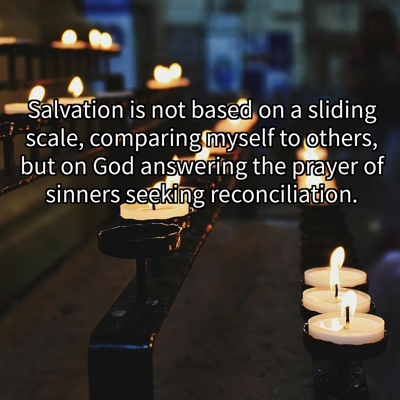
Luke 18:9-14 presents a parable that contrasts a self-righteous Pharisee with a repentant tax collector to draw two central lessons. First, salvation depends on God’s mercy rather than human accomplishment; the Pharisee’s list of good deeds cannot earn justification, while the tax collector’s humble plea—“God, be merciful to me a sinner”—receives God’s acceptance. A brief vignette about a man trying to earn points to enter heaven underscores the absurdity of a righteousness-by-works scheme and points to grace as the only true access to right relationship with God. The sermon affirms that Jesus’ death addresses human sin by providing the price for reconciliation, and that the posture of honest confession invites God’s life-changing mercy now and into eternity.
Second, appearances deceive: outward behavior rarely tells the whole story of a heart. The Pharisee’s pride arose from comparing external actions, while the tax collector’s inward repentance revealed a heart open to God. Practical counsel urges a reorientation in judgment: examine assumptions at the door, look for intentions behind actions, and remember that most people judge themselves by intentions while others judge them by actions. A quotation encouraging people to judge others by intended motives and oneself by actual deeds provides a pastoral pathway toward humility and relational repair. The sermon balances mercy with moral seriousness—recognizing needs and intentions does not excuse wrongdoing but reframes others as needy, not merely culpable.
Concrete practices emerge: confess sin with simple, honest prayer; seek God’s mercy rather than competing for spiritual status; imagine the burdens and histories that shape others; judge one’s own life by observable actions while allowing God to discern and shape motives. The Pharisee’s correct external religiosity but closed heart represents the danger of spiritual self-reliance, while the tax collector models the bridge-building power of contrite confession. The central summons asks for a life renewed by Christ’s mercy and a community reshaped by humility, empathy, and a willingness to let God be the ultimate judge of hearts.
Key Takeaways
- 1. Salvation comes by God’s mercy God’s mercy, not personal merit, secures reconciliation. The tax collector’s brief confession models a posture that invites forgiveness because it acknowledges unworthiness and trusts God’s response. The cross functions as the decisive payment for sin, so human righteousness functions only as fruit, not currency. A life founded on mercy frees spiritual striving from comparative metrics and grounds hope in Christ’s finished work.
- 2. Judge others by their intentions Estimating a person’s motives reframes judgment into mercy without excusing harm. Searching for intentions cultivates empathy, reveals hidden struggles, and opens pathways for restoration rather than condemnation. This stance honors the complexity of human life—history, personality, and pressure—and reduces the temptation to write people off. Compassion founded on inquiry preserves moral clarity while refusing finality in another’s story.
- 3. Measure yourself by your actions Allowing actions, not intentions, to be the standard fosters honest repentance and growth. Evaluating observable behavior resists self-deception and converts good intentions into accountable change. This discipline invites God’s transforming work rather than self-justifying narratives about wanting to be better. It humbles ambition and channels energy toward concrete spiritual fruit.
- 4. Confession opens the bridge to God A simple, contrite prayer creates the relational opening needed for mercy to operate. Confession recognizes dependence and activates grace without bargaining or performance. Such prayer positions the heart to receive transformation rather than merely polishing reputation. Repeated honest confession cultivates ongoing access to God’s restorative presence.