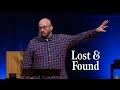
A twin dedication opens the gathering, offering prayers over Marcus and Thomas and inviting the congregation to share in their Christian nurture. The assembly reads Mark 10’s account of Jesus embracing children, then turns to Luke 15 to explore a single parable told in three scenes: the lost sheep, the lost coin, and the lost son. The parables trace a single thread—lostness and recovery—illustrating both the worth of the one who wanders and the fierce, personal joy that accompanies restoration.
Luke 15 reframes common reactions to social fracture and moral failure. The Pharisees’ grumbling about association with tax collectors reveals a posture of exclusion and self-righteousness; the parables counter that posture by depicting a shepherd who leaves ninety-nine to retrieve one, a woman who sweeps every corner to find one coin, and a father who throws a feast when a wayward child returns. The narrative emphasizes that every person bears value, that all have once been lost, and that redemption triggers celebration in heaven and on earth.
Scripture receives repeated citation to anchor the claims: human sinfulness (Romans), God’s patient love (John and First Timothy), and the mission of Christ to seek and save the lost (Luke and Second Peter). The theology centers on active pursuit rather than passive judgment: God’s love initiates rescue, rejoices over repentance, and refuses to reduce people to the worst choices they have made. Practical application follows—people receive a call to move toward the lost with relentless, boundary-crossing love and to move away from grumbling, canceling attitudes that prioritize fairness or purity over restoration.
The closing charge urges adoption of the shepherd’s posture: seek the lost, separate evil from the evildoer so that the person remains redeemable, and resist the ease of categorizing others as enemies. The assembly prays for renewed zeal to join the reconciling work already underway, to throw lost ones on shoulders of welcome, and to celebrate when lives return to life.
Key Takeaways
- 1. All people were once lost Every human story bears a moment or season of separation from God; recognition of that fact destabilizes moral superiority and reorients mercy. Acknowledging shared lostness fosters humility and fuels persistent compassion rather than dismissal. This truth reframes evangelism as restoration, not condemnation. [41:12]
- 2. Christ came to seek and save The mission centers on relentless pursuit rather than passive waiting: God actively seeks stray lives with patient, costly love. That pursuit invites believers to join in seeking, not to deputize judgment. Theology that emphasizes rescue changes both posture and practice. [45:08]
- 3. Heaven rejoices over one repentant Repentance catalyzes cosmic celebration and reorders priorities: recovery matters more than maintaining pristine ranks. Joy over a single return exposes misplaced attachments to fairness and highlights restorative ends over retributive impulses. Worship flows from recovered life, not from preserved status. [52:25]
- 4. Leave grumbling; love the lost Grumbling and exclusion mimic Pharisaic posture; love requires crossing boundaries and engaging discomfort. Moving away from complaint toward active, sacrificial neighborliness sustains redemptive encounter and preserves the image of the redeemable person. Loving the lost practices gospel imagination in daily life. [57:17]
Youtube Chapters