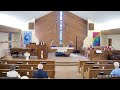
On Resurrection Sunday the congregation celebrates a living, present Christ whose victory over death reshapes how people live. The narrative opens with joy and ordinary details—flowers, community care, and hymns—that ground the holy mystery in domestic life. The gospel reading of Matthew 28:1–10 anchors the day: an emptied tomb, an angel's command, and Jesus' greeting that dispels fear and sends the faithful to bear witness. The resurrection becomes a persistent, practical power rather than only a distant doctrine; it draws people out of despair, turning mourning into movement and fear into mission.
Mary Magdalene’s voice carries the weight of grief and the wonder of encounter. Her witness emphasizes that grief does not cancel the risen presence; instead, the risen Christ meets people in their rawness and transforms their trajectory. The account insists that Jesus meets seekers where they are—whether overwhelmed by sorrow, anger, or doubt—and offers peace that compels a response: go and tell. That summons reframes evangelism as a movement of compassion and connection rather than triumphalism.
The worship life modeled here links proclamation with small acts of kindness. A story about a shared human moment—celebrating a bowler’s perfect game—illustrates how attention and simple affirmation embody the gospel. Communion follows as a tangible expression of welcome: all who have felt lost, fearful, or grieving are invited to the table. The liturgy insists the empty tomb changes communal priorities, calling for hospitality, mercy, and justice that reflect resurrection power in everyday settings.
Finally, the sending crystallizes into practice: speak hope to fear, love to anger, and gentleness to pain. Alleluias follow graves; this pattern encourages persistent hope in a world that often feels like Good Friday. The resurrection’s claim on life requires participation—bearing witness in ordinary interactions, sustaining one another in grief, and living as Easter people whose actions reflect the love that will not be contained.
Key Takeaways
- 1. Death does not have last word The empty tomb insists that endings are not final definitions. Grief and loss remain real, but resurrection reorders identity: people become ones who live toward hope, not under despair. This reality frees courage for honest lament and faithful action in the same breath. [20:54]
- 2. Jesus meets people where they are The risen Christ appears amid fear, fatigue, and confusion, not only to the triumphant. Meeting humans in their exact vulnerabilities reframes spiritual life as accompaniment rather than performance. The call invites approaching others with presence before offering answers. [31:49]
- 3. Jesus accepts every person as they are Acceptance shapes discipleship: belonging precedes behavior. When people receive divine welcome, transformation follows from trust rather than coercion. This theology resists purity tests and centers grace in communal life. [33:52]
- 4. Greet others with good news The imperative “go and tell” translates into daily gestures: greetings, small affirmations, and attention. Evangelism becomes incarnational—sharing what rescues, uplifts, and frees—rather than insisting on correct posture. Such practice cultivates a culture of hope. [39:52]
- 5. The table welcomes those seeking hope Communion functions as embodied promise: no prerequisite purity, only presence. The meal models a community that recognizes hurt and offers restoration through shared bread and cup. It summons people to carry that hospitality into the wider world. [50:24]
Youtube Chapters
- [00:00] - Welcome
- [08:38] - Resurrection Day Greetings
- [16:41] - Good News Proclaimed
- [24:57] - Scripture: Matthew 28:1–10
- [31:49] - Mary Magdalene’s Witness
- [33:52] - Radical Acceptance of All
- [39:52] - Go and Tell: Share Good News
- [40:49] - Everyday Kindness Story
- [43:57] - Prayer of Thanksgiving and Intercession
- [50:24] - Communion: All Are Welcome
- [59:24] - Sending: Peace and Action