Aug 21, 2026
Jesus stood by the Sea of Galilee. A crowd pressed around Him to hear the word of God. Nearby, Simon Peter washed his empty nets after a fruitless night of fishing. Jesus stepped into Simon’s boat. He asked Simon to push out from the shore. That simple, empty boat became a pulpit. Jesus used what was already there.
Jesus did not need a temple or a stage. He used an ordinary tool of a tired man’s trade. He transformed it into a platform for truth. The water carried His voice to the eager crowd. Jesus often begins with what we already possess. He takes our ordinary things and makes them extraordinary for His purpose.
You have something Jesus can use. It might seem as common as a fishing boat. A skill, a voice, a home, or a story. Stop telling God what you do not have. Surrender what you do have to Him. What ordinary thing are you withholding from Jesus today?
And it came to pass, that, as the people pressed upon him to hear the word of God, he stood by the lake of Gennesaret, And saw two ships standing by the lake: but the fishermen were gone out of them, and were washing their nets. And he entered into one of the ships, which was Simon's, and prayed him that he would thrust out a little from the land. And he sat down, and taught the people out of the ship.
(Luke 5:1-3, KJV)
Prayer: Ask Jesus to show you one ordinary part of your life you can surrender to Him today.
Challenge: Identify one specific skill or resource you possess and write it down as an offering to God.
Jesus asked to use Simon’s boat while it was still empty. He did not fill it with fish first. He used it as it was. We often want the opposite. We tell God we will serve after He blesses us. We will give when we have more. We will get involved when life settles down. Jesus says, “Let Me use the boat now.”
Faithfulness does not begin when the boat is full. It begins when we place our empty boat in Jesus’ hands. He uses our limitations and weaknesses. He works with our unfinished stories. Our emptiness becomes the setting for His power.
You may feel you have nothing significant to offer. Your boat may feel scratched and weathered by life. Bring that emptiness to Jesus. Trust Him to use it for His glory before He fills it. Where are you waiting for God to fill you before you will obey Him?
And he entered into one of the ships, which was Simon's, and prayed him that he would thrust out a little from the land. And he sat down, and taught the people out of the ship.
(Luke 5:3, KJV)
Prayer: Confess to God your tendency to wait for fullness before offering Him your emptiness.
Challenge: Set aside ten minutes today to sit in silence and offer God your current situation, however empty it feels.
After teaching, Jesus turned to Simon. He told the tired fisherman to launch into the deep and let down his nets. Simon was the expert. He had fished all night and caught nothing. He explained the reality of his failure to the carpenter from Nazareth. Then he said one word: “Nevertheless.”
Simon acknowledged his empty net and his exhaustion. He did not deny reality. But he chose to obey Jesus’ word over his own experience. His faith was not perfect, but it was real. He acted on the authority of Christ’s command.
You will face moments when God’s direction contradicts your experience. Your own wisdom will say it is pointless. Your fatigue will beg you to quit. Choose to speak that word of faith. What is Jesus asking you to do that your experience says will not work?
And Simon answering said unto him, Master, we have toiled all the night, and have taken nothing: nevertheless at thy word I will let down the net.
(Luke 5:5, KJV)
Prayer: Ask God for the faith to say “nevertheless” when your experience conflicts with His command.
Challenge: Write down the one thing you feel God is asking you to do but you have been resisting. Underline it and write “nevertheless” beside it.
Jesus commanded Simon to let down his nets. Simon replied that he would let down the net. This may seem like a small difference. But it reveals a hesitant, partial obedience. Simon was willing to try, but perhaps not fully commit. He was humoring the preacher. Partial obedience is still disobedience.
Jesus did not reject Simon’s small faith. He honored it and used it to reveal His power. His grace meets us in our hesitation. But His full blessing awaits our full obedience. He wants all our nets in the water, not just one.
We often negotiate with God. We offer a little instead of all. We give most instead of everything. We obey later instead of now. Jesus calls for complete surrender. In what area of your life are you practicing partial obedience instead of full surrender?
Now when he had left speaking, he said unto Simon, Launch out into the deep, and let down your nets for a draught.
(Luke 5:4, KJV)
Prayer: Pray for the courage to stop negotiating with God and to fully obey His clear commands.
Challenge: Today, consciously complete one task you have been doing half-heartedly as an act of full obedience to God.
Simon let down the net. Immediately, fish swarmed into it. The net began to break. The boat began to sink. He signaled his partners for help. They filled both boats with the catch. Human effort had produced nothing. Jesus produced more than they could handle alone.
Jesus displayed His power in the place of Simon’s greatest failure. Your empty net does not intimidate Him. Your weakness does not limit Him. He specializes in turning our shame into a showcase for His grace. His blessing is often too large for us to carry by ourselves.
Your past failure is not the end of your story. Jesus is Lord over that very place. He can fill it beyond your imagination. He will bring others alongside to help you carry the blessing. What empty net are you most ashamed to bring to Jesus?
And when they had this done, they inclosed a great multitude of fishes: and their net brake. And they beckoned unto their partners, which were in the other ship, that they should come and help them. And they came, and filled both the ships, so that they began to sink.
(Luke 5:6-7, KJV)
Prayer: Thank Jesus that He is Lord over your areas of failure and can fill them with His abundance.
Challenge: Reach out to one person today and ask for help or offer help, reflecting the partnership of the body of Christ.
Luke 5:1–7 portrays a scene where crowds press to hear the Word while exhausted fishermen scrub empty nets on the shore. Jesus steps into Simon’s ordinary, weathered boat and transforms it into a platform for teaching, showing that the ordinary surrendered to Christ becomes an instrument of kingdom work. Rather than waiting until the boat or nets were full or impressive, Jesus uses what is present—an empty boat and tired fishermen—before any blessing arrives. When Jesus instructs Simon to let down the nets again, Simon answers honestly about the night’s failure yet yields in a word—“nevertheless at Thy word”—demonstrating faith that acknowledges reality without letting it dictate action. That obedient word, though cautious and perhaps incomplete, places Simon within the sphere of Christ’s authority and power.
The narrative highlights the tension between human expertise and divine direction: Simon knows the lake and his trade, yet Jesus’ command interrupts professional certainty and calls for trust beyond experience. Partial compliance follows; Simon casts one net instead of the commanded nets, revealing how tentative obedience can limit reception. Still, even hesitant obedience becomes the occasion for a dramatic reversal—the empty nets suddenly teem with fish until boats nearly sink. The miracle reframes failure as fertile ground for revelation: the very place of disappointment becomes the clearest display of divine action, removing human credit and magnifying grace. The overflow becomes too large for one man, requiring partners to haul the catch, which points toward the communal nature of mission and the necessity of joined hands to carry abundant blessing. The passage ends with a summons to move from fishing for fish to fishing for people: bring empty nets, bring weakness, get in the boat, and obey the voice that calls—even when understanding lags—so that what begins in small surrender may culminate in extraordinary fruit for the kingdom.
When Jesus steps into your boat, nothing remains ordinary anymore.
An empty net does not mean God is absent from your life.
Faithfulness begins when we place the empty boat in the hands of Jesus.
Jesus used the boat before He filled the boat with fish.
Biblical faith is not denying reality; it acknowledges the empty net and still believes Jesus has the final word.
If Jesus says "nets," we do not get to negotiate it down to "net.
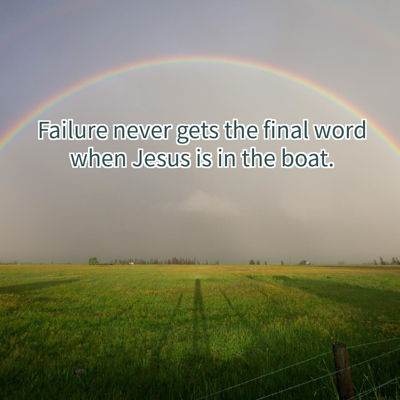
Failure never gets the final word when Jesus is in the boat.
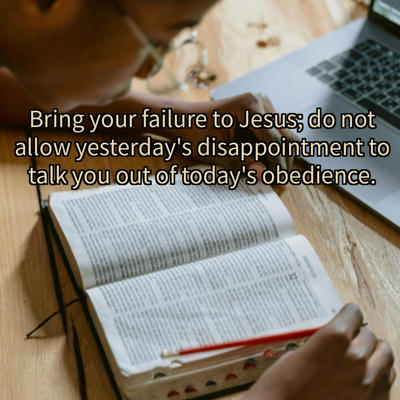
Bring your failure to Jesus; do not allow yesterday's disappointment to talk you out of today's obedience.
Hi, I'm an AI assistant for the pastor that gave this sermon. What would you like to make from it?
Add this chatbot onto your site with the embed code below
<iframe frameborder="0" src="https://pastors.ai/sermonWidget/sermon/luke-indiana-jones-bible17" width="100%" height="100%" style="height:100vh;"></iframe>Copy