Luke lists 77 names in his genealogy. Over half of them are unknown. They never preached a sermon or killed a giant. They left no highlight reel. They were just names on a list. Yet God saw each one. He knew their thoughts and their quiet acts of faithfulness. Their lives mattered to Him because they carried the story forward to Jesus.
God does not measure significance the way we do. The world celebrates visibility, but God rewards faithfulness. He saw every unknown person in that list. He sees you with the same intentional gaze. He says in Isaiah, “I have graven thee upon the palms of my hands.” Your name is permanently and personally written there.
You may feel your life is routine and unnoticed. You serve, you work, you care for your family, and it feels ordinary. But God is using your faithful obedience in ways you cannot yet see. Your ordinary days are part of His extraordinary plan. What quiet act of faithfulness will you offer to God today, trusting that He sees it?
O LORD, thou hast searched me, and known me.
(Psalm 139:1, KJV)
Prayer: Ask God to make you aware of His constant, knowing presence in your most ordinary moment today.
Challenge: Write down one simple, unseen task you will do today as an act of faithfulness to God.
God works through generations. The genealogy shows a chain: Abraham to Isaac, Isaac to Jacob, and on to David. It was a relay race of faith. Someone ran before you ever stepped onto the track. They carried the gospel, held onto truth, and stayed faithful. Then they handed the baton to you.
You are not an isolated believer. You are part of a long line of God’s people. The same faithful God who walked with Abraham and David is walking with you now. Your life is a link in a chain that stretches back through history and forward into eternity.
You have received the baton of faith. The question is what you will do with it. Your season of running matters. Your prayers, your choices, and your influence will affect the next runner in your family or community. How are you intentionally carrying the baton of faith so you can hand it off well?
For the LORD is good; his mercy is everlasting; and his truth endureth to all generations.
(Psalm 100:5, KJV)
Prayer: Thank God for the specific person who first handed you the baton of faith.
Challenge: Call or text one person in your spiritual lineage to thank them for their influence.
God told Noah to build a massive boat. There was no ocean nearby and no rain in sight. For nearly a century, Noah built. He faced critics and worked without applause. He trusted God’s word over his own understanding. Then the rain came, and everything God said happened.
Noah’s long obedience in an unbelieving world mattered. His faithfulness preserved life and carried the promise forward. God sees and uses our faithful obedience even when the purpose is not yet clear. We build because God said to build, not because we see the result.
You may be building something that makes no sense to others. You are praying for a child, serving in a difficult place, or holding onto a promise. You are tired of building with no rain in sight. Will you keep building today, trusting that God’s promise is worth your obedience?
But Noah found grace in the eyes of the LORD.
(Genesis 6:8, KJV)
Prayer: Ask God for the grace to obey Him today in one area that feels confusing or fruitless.
Challenge: Identify one “ark” you are building and do one practical thing to continue the work.
Jacob was a schemer. He lied to his father and deceived his brother. He manipulated his way through life. But one night, he wrestled with God and refused to let go. God changed his name from Jacob to Israel. He was no longer defined by his past but by his new identity in God.
God changed Jacob’s name because He changed his heart. The encounter transformed Jacob from a deceiver into one who clung to God. This is what God does. He meets us in our struggle and rewrites our identity. We are not who we were; we are who He says we are.
You may walk in with labels like failure, addict, or not enough. A real encounter with God changes that. He defines you now. His truth overrides your past and others’ opinions. What old name are you still answering to that God wants to replace with His name for you?
Thy name shall be called no more Jacob, but Israel: for as a prince hast thou power with God and with men, and hast prevailed.
(Genesis 32:28, KJV)
Prayer: Confess one old identity label you believe and ask God to speak His truth over you.
Challenge: Write down the name “Israel” and one truth from Scripture about who God says you are.
The genealogy is full of broken people. Adam broke everything. Noah needed grace after the miracle. Abraham tried to help God and messed up. David committed adultery and murder. God did not wait for a perfect family line. He stepped right into this broken one.
God’s love never quits. His mercy did not run out through every failure in that list. His compassion is new every morning. You are not here today because you got it right. You are here because God did not give up on you. Christ died for you while you were still in your mess.
This love is not based on your performance. It is based on God’s character. He stays when you fail. He pursues when you wander. He lifts when you fall. Where do you need to stop trying to earn His love and simply receive it today?
But God commendeth his love toward us, in that, while we were yet sinners, Christ died for us.
(Romans 5:8, KJV)
Prayer: Thank God that His love for you is based on His character, not your own performance.
Challenge: Set a timer for five minutes and sit in silence, receiving God’s love without working for it.
Luke places a genealogy of seventy-seven names at the center of a vast theological claim: ordinary, obscure, and flawed lives all belong to God’s unfolding plan. The genealogy records many people without biographies or fanfare, yet the list testifies that God knew each person intimately, noticed private faithfulness, and wrote names upon his hands. The narrative contrasts cultural hunger for visibility with biblical assurance that divine significance depends not on applause but on being known by God; Psalm 139 and Isaiah 49 ground that insistence that quiet lives matter. The genealogy also highlights generational continuity: faith passes like a baton, and ancestors who persevered, taught, and handed down truth enabled God’s redemptive purposes to advance across centuries. The relay image frames personal responsibility alongside inherited commitment—every generation receives and transmits what shapes future obedience and hope.
The genealogy becomes a mirror of human brokenness rather than a display of perfection. Adam’s failure introduced sin and hiding; Noah found grace amid pervasive corruption yet later sinned; Abraham struggled with waiting and tried to help God; Jacob schemed until a night encounter rewrote his identity; David fell into adultery and murder before repentance restored him. These portraits establish that divine purposes unfold through sinners who receive mercy, repent, and keep moving. The pattern culminates in a steady refrain: God’s mercy endures, his compassion renews, and Christ came for sinners while still sinners, demonstrating a love that does not wait for moral readiness. The combined lessons insist that faithfulness in small, unseen places matters, that parenthood and ordinary discipline shape eternity, and that identity and calling belong to those whom God reshapes and redeems. Ultimately the genealogy affirms that visibility is unnecessary for significance, generational faithfulness advances God’s plan, broken people become instruments of grace, and relentless divine love keeps working despite failure.
You don’t have to be famous to be faithful. You don’t have to be seen by the world to be known by God.
You don’t have to understand the whole plan to be part of it.
Every unknown name in this genealogy mattered to God. Which means this: You matter to God.
God does not measure significance the way we do; while the world may not have known them, God did.
You are part of a chain; you carry the baton for a season, then you hand it off.
Listen parents: You are not just raising kids; you are shaping eternity.
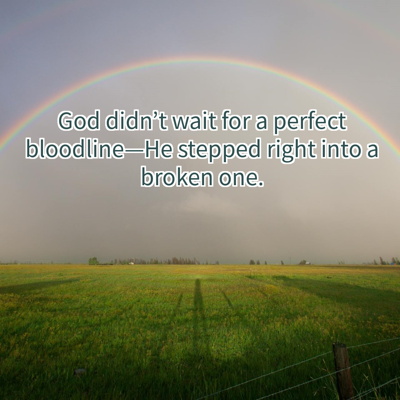
God didn’t wait for a perfect bloodline—He stepped right into a broken one.
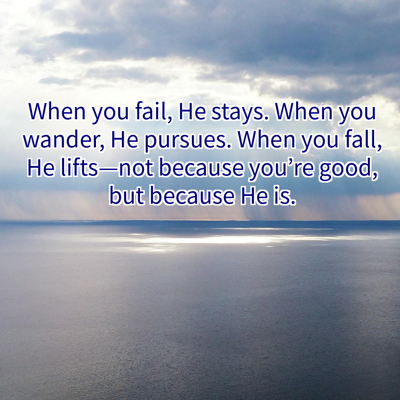
When you fail, He stays. When you wander, He pursues. When you fall, He lifts—not because you’re good, but because He is.
Hi, I'm an AI assistant for the pastor that gave this sermon. What would you like to make from it?
Add this chatbot onto your site with the embed code below
<iframe frameborder="0" src="https://pastors.ai/sermonWidget/sermon/luke-indiana-jones-bible-part-2" width="100%" height="100%" style="height:100vh;"></iframe>Copy