Jesus’ command to love our enemies is perhaps the hardest instruction ever given, challenging our deepest human instincts for self-preservation and retaliation. It goes against our natural impulse to defend ourselves, seek vengeance, or cut off those who have wronged us. This is not a call to tolerate or ignore, but to actively love, even those we’d rather avoid. It is a forceful invitation into a new reality, demanding a courageous and sacrificial response from our hearts. [01:30]
Matthew 5:43-44
You have heard the old saying, ‘Love your neighbor and hate your enemy.’ But I tell you something new: love those who are against you, and pray for those who cause you trouble.
Reflection: Where in your life do you feel the most resistance to Jesus' command to love someone you consider an "enemy" or someone difficult? What specific emotions arise when you consider extending love to them?
Before we can truly extend love to those who have wronged us, we are invited to look within ourselves. The first step in loving our enemies is often self-examination, humbly considering if our own actions or inactions might have contributed to the brokenness in a relationship. This courageous introspection asks us to search our hearts, revealing anything that might hinder healing and prevent love from flowing freely. It’s about acknowledging our own part, however small, in the dynamics of conflict. [08:45]
Matthew 7:3-5
Why do you focus on the tiny speck in your friend’s eye, yet fail to notice the large plank in your own? How can you say to your friend, ‘Let me take the speck out of your eye,’ when you have a plank in your own? You hypocrite! First, remove the plank from your own eye, and then you will see clearly enough to help your friend with their speck.
Reflection: What past action or inaction on your part might have contributed to a strained relationship, and what humility is God inviting you to embrace regarding it?
To love those we’d rather avoid, we must refuse to reduce them to their worst moments or behaviors. Every individual, regardless of their actions, carries the indelible mark of God's image within them. This inherent worth, though it may be marred or obscured, cannot be erased. Remembering this dignity in even our adversaries opens a difficult but essential door to love, preventing us from justifying cruelty and allowing bitterness to take root in our hearts. [12:15]
Genesis 1:27
So God created humanity in his own image, in the very image of God he created them; male and female he created them.
Reflection: When you think of someone who has caused you pain, how might you intentionally shift your perspective to acknowledge the inherent dignity and image of God within them, even if their actions are unacceptable?
The love Jesus commands is not a sentimental feeling, but a profound choice—a conscious decision to seek the ultimate good for another, even when they have not done so in return. This "agape" love is understanding, creative, and redemptive goodwill for all people, seeking nothing in return. It means bending your will to bless rather than curse, to pray instead of seeking revenge, and to resist injustice without becoming cruel yourself. This divine love empowers you to oppose a person’s harmful actions while still embracing their inherent dignity. [16:00]
Matthew 5:45
This way, you will show yourselves to be true children of your Father in heaven. For he makes his sun rise on both the evil and the good, and sends rain on both the righteous and the unrighteous.
Reflection: In what specific relationship are you being called to practice "agape" love, choosing their ultimate good even when it feels undeserved or unreciprocated?
Hate only perpetuates cycles of pain and destruction, multiplying what it touches and ultimately destroying the hater by distorting their perception and consuming their heart. Love, however, possesses a profound redemptive power. It opens doors that force can never open, creating space for repentance, growth, and reconciliation. While it may take time, sacrificial love sets the one who loves free and endures where power rooted in domination eventually collapses. It is the courageous act that breaks the endless cycle of retaliation. [20:30]
Romans 12:21
Do not let evil conquer you, but instead, conquer evil with good.
Reflection: Considering a situation where you've felt caught in a cycle of negativity or retaliation, what small, courageous act of love could you initiate to begin breaking that cycle this week?
This morning I invited us into Matthew 5:43–48 and into the spirit of Dr. Martin Luther King Jr. to face a command that pushes against every instinct: love your enemies and pray for those who persecute you. Jesus’ words are not soft sentiment but a call to costly, active love — a love that chooses the good of another even when that other has wronged us. Loving enemies begins with honest inner work: look first at the plank in your own eye, ask God to reveal the parts of you that provoke harm, and take responsibility where you have caused pain. That self-examination is not a way to avoid justice but a necessary clearing of the heart so love can flow without hypocrisy.
Once inner work has begun, we must refuse to reduce people to their worst actions. Every person, even those who hurt us, bears the image of God; that worth does not erase the harm done, but it prevents us from justifying cruelty. Seeing the image in the other opens the door to a love that is deliberate and sacrificial. I named the Greek word agape as the form of love Jesus calls us to — not erotic attraction, not merely liking or friendship, but a willful, redemptive goodwill that seeks the other’s ultimate good even when reciprocity is absent.
This love does not excuse injustice. It opposes wrongdoing and upholds dignity simultaneously. Hate multiplies; retaliation only extends cycles of violence and hardens the heart of the hater. Love, by contrast, can break cycles. Sacrificial love disarms power rooted in domination and creates space for repentance, transformation, and reconciliation over time. I pointed to Lincoln and Stanton and, most of all, to Jesus on the cross as examples: love that refuses to permit evil to have the final word.
The call is public as well as personal. Loving enemies must shape our streets, schools, workplaces, and policies. It is not easy. It demands courage, forgoing revenge, blessing those who curse, and praying for those who oppose. But when we walk this way, we not only obey Christ — we reveal him to a hurting world and join in the work that transforms enemies into neighbors, wounds into wisdom, and suffering into testimony.
These are hard words from the Lord; they come with force. Yes, Jesus is talking about love, and we often associate love with comfort and beauty, but these words are not meant to comfort us; they are meant to propel us into a new reality forcefully.

The truth is this may be the hardest command ever spoken by Jesus. You see, loving our enemies runs against our nature. It’s anti-culture. It goes against our natural impulse for self-preservation, vengeance, and winning.
So, how do we love our enemies? If we want to know how to love our enemies, we must begin by looking at ourselves, not others. The first step is self-examination.
The second thing we must do is look outward with new eyes. We must look at our enemy and refuse to reduce them to their worst moment, or worst behavior, and instead, see the worth within them.

There is worth mixed with evil in every human heart. Dignity rests within even our worst enemy. If we ignore that worth, we justify cruelty when people become our enemies.
This kind of love requires a conscious decision on your part. You must bend your will to align with it. You must choose the ultimate good for the person, even when they have not done so in return.
Hate can never stop evil; it only prolongs and even encourages it. Hate breeds hate, retaliation invites retaliation, violence provokes violence, and bitterness only reproduces more bitterness.
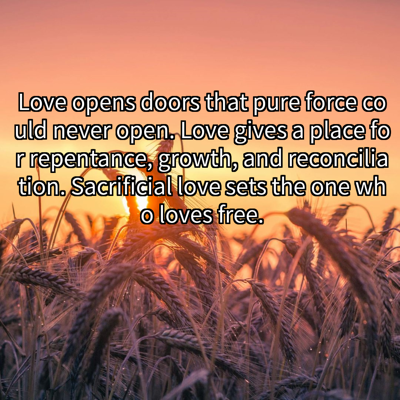
Love opens doors that pure force could never open. Love gives a place for repentance, growth, and reconciliation. Sacrificial love sets the one who loves free.
Add this chatbot onto your site with the embed code below
<iframe frameborder="0" src="https://pastors.ai/sermonWidget/sermon/loving-difficult-people" width="100%" height="100%" style="height:100vh;"></iframe>Copy