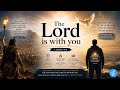
Gideon crouched in a winepress, hiding from enemies while threshing wheat. God’s messenger called him “mighty warrior” long before Gideon believed it. The same God sees past our fearful crouching to the purpose He planted within us. His presence precedes our readiness. Victory begins not with our courage but with His nearness. Where we see weakness, He declares strength. [53:12]
“The angel of the Lord appeared to him and said, ‘The Lord is with you, mighty warrior.’”
(Judges 6:12, NIV)
Reflection: Where do you feel like you’re hiding in fear or shame? How might God’s view of you as “mighty” challenge that story?
A flashlight can’t shine without power. Gideon’s strength came not from grit but God’s Spirit. Philippians 4:13 isn’t about self-reliance—it’s about plugging into Christ’s limitless grace. Like Peter learning to lean on Jesus after failure, our calling depends on His energy, not our effort. [59:48]
“I can do all this through him who gives me strength.”
(Philippians 4:13, NIV)
Reflection: What task or struggle have you been trying to power through alone? How might surrendering to Christ’s strength change your approach?
Hagar named God “El Roi”—the One who sees—in her desert despair. Gideon thought God had abandoned Israel, but the angel tracked him down mid-panic. Whether we’re in winepresses, caves, or fishing boats, God finds us. His presence isn’t deterred by our hiding spots. [01:09:38]
“She gave this name to the Lord who spoke to her: ‘You are the God who sees me,’ for she said, ‘I have now seen the One who sees me.’”
(Genesis 16:13, NIV)
Reflection: Where do you feel invisible or forgotten? How might acknowledging “El Roi” shift your perspective today?
God called Gideon “mighty warrior” while he shook in fear. Abraham became “father of nations” before Isaac’s birth. Our identity isn’t earned through performance but declared by the One writing our story. Like a painter envisioning the final canvas, God names us according to His purpose, not our progress. [57:27]
“As it is written: ‘I have made you a father of many nations.’ He is our father in the sight of God, in whom he believed—the God who gives life to the dead and calls into being things that were not.”
(Romans 4:17, NIV)
Reflection: What false name (failure, inadequate, stuck) have you believed? How does God’s name for you rewrite that narrative?
Abraham trusted God’s promise despite dead wombs and doctor’s reports. Gideon led an army with torches and jars, not swords. Faith isn’t denying reality but anchoring to a greater truth: the One in us outmatches every “impossible.” When evidence falters, His presence remains. [01:14:02]
“Against all hope, Abraham in hope believed… being fully persuaded that God had power to do what he had promised.”
(Romans 4:18,21, NIV)
Reflection: What situation feels hopeless? How can God’s track record of faithfulness steady your heart today?
1 John 4:4 names the ground of courage. “You are from God” and “the one who is in you is greater than the one who is in the world.” Philippians 4:13 then puts steel in the spine. “I have strength to face all conditions by the power that Christ gives.” Judges 6 lets that truth walk into the life of a man hiding in a winepress. The angel of the Lord finds Gideon and says, “The Lord is with you, mighty warrior.” Gideon does not feel mighty. He is scared and frustrated, asking where the wonders went and if the Lord has abandoned them. But God has not. The absence of evidence is not the absence of presence. God names Gideon by destiny, not by his current fear.
God’s pattern is steady. Presence comes before performance. The call starts with “I am with you,” not with a resume. Moses hears it at the bush. Joshua hears it before the walls fall. Jeremiah hears it before his first sentence. Jesus seals it for good, “I am with you always.” A flashlight without batteries cannot do what it was made to do. The Spirit is the power. The church is not asked to muscle through; the church is asked to draw on the grace already provided.
God also knows exactly where people are. Gideon is in a pit. Hagar is in the wilderness and says, “You are the God who sees me.” Elijah hides in a cave, Peter slips back to fishing, the woman drags her shame to a well, Saul breathes threats on a road. God finds them all. And when God finds a person, God renames the future. Abram becomes Abraham, Simon becomes Peter the rock, Saul becomes Paul. Calling rests on divine purpose, not on current chaos. If breath is in the lungs, God is not through.
Romans 4 says God “gives life to the dead and calls into being things that were not.” Abraham believed against hope. That is not name it and claim it. That is God’s creative word and a human being becoming fully persuaded that God can do what he promised. Ephesians 2:10 says the church is created in Christ Jesus for good works prepared in advance. The Author has the script. The Painter sees the landscape before the first stroke. The call is to trust him before the miracle, refuse the Hagar shortcut, and step into the identity he speaks.
So, what they do? What they do? Sarah. Sarah. Devise a plan A. Plan A. Here's Hagar. Hagar. Sleep with her. Have a child with her and we'll build a nation through that. But guess what that ended up doing? Making a mess for everybody. Sometimes, when we try to jump ahead of god and we don't have patience to wait on god, I sure wish god would work on my time frame. But he doesn't. But he doesn't. Why he why doesn't he? Because he wants us to trust him.
[01:00:55]
(34 seconds)
#TrustGodsTiming

we we need to realize our confidence is never in our self but it is in that Jesus is with us, that god is with us and a perfect example of our life is we're we're like a flashlight without batteries. We'll never accomplish what the maker of the flashlight created it to do without battery. And what is the battery? The power. The power. The light. The light. Through his holy spirit is the power in our life. Accomplish what he created us for. We'll never do what he created us for unless his power is working through us.
[01:06:09]
(47 seconds)
#HolySpiritIsPower
Now again. Again. It it the it appears to him the angel of the lord and where is he? Where is he? In a in a wine press. Thresh threshing wheat. Why is he in a wine press? Wine press. Because he's hiding. He's hiding. He's scared. When you would thresh weed, it usually was done at the at a hilltop where it's very visible because when you're threshing the wheat, you want the chaff to fly away. So, you need to be in a breezy area. But yet he's fearful and he's hiding hiding. I like to call it in a pit. In a wine press.
[01:07:22]
(37 seconds)
#HidingInTheWinePress
called them the father of many nations before it came to be. Now, I want you to understand this. This this is not a name and enclaim it thing here. Some people go off it. Who spoke it into existence? God. Not you. Not you. God has creative power. You don't have no creative power. You can't just speak things into existence. We don't have created power. It's god. Notice what it says there. It says, the god who gives life to the dead and the god who calls it into being.
[01:13:21]
(30 seconds)
#GodCallsIntoBeing
Add this chatbot onto your site with the embed code below
<iframe frameborder="0" src="https://pastors.ai/sermonWidget/sermon/lord-with-you" width="100%" height="100%" style="height:100vh;"></iframe>Copy