Bible Reading
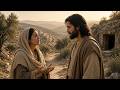
John 11:1-44 “Now a certain man was ill, Lazarus of Bethany, the village of Mary and her sister Martha. It was Mary who anointed the Lord with ointment and wiped his feet with her hair, whose brother Lazarus was ill. So the sisters sent to him, saying, 'Lord, he whom you love is ill.' But when Jesus heard it he said, 'This illness does not lead to death. It is for the glory of God, so that the Son of God may be glorified through it.' Now Jesus loved Martha and her sister and Lazarus. So, when he heard that Lazarus was ill, he stayed two days longer in the place where he was. Then after this he said to the disciples, 'Let us go to Judea again.' The disciples said to him, 'Rabbi, the Jews were just now seeking to stone you, and are you going there again?' Jesus answered, 'Are there not twelve hours in the day? If anyone walks in the day, he does not stumble, because he sees the light of this world. But if anyone walks in the night, he stumbles, because the light is not in him.' After saying these things, he said to them, 'Our friend Lazarus has fallen asleep, but I go to awaken him.' The disciples said to him, 'Lord, if he has fallen asleep, he will recover.' Now Jesus had spoken of his death, but they thought that he meant taking rest in sleep. Then Jesus told them plainly, 'Lazarus has died, and for your sake I am glad that I was not there, so that you may believe. But let us go to him.' So Thomas, called the Twin, said to his fellow disciples, 'Let us also go, that we may die with him.' Now when Jesus came, he found that Lazarus had already been in the tomb four days. Bethany was near Jerusalem, about two miles off, and many of the Jews had come to Martha and Mary to console them concerning their brother. So when Martha heard that Jesus was coming, she went and met him, but Mary remained seated in the house. Martha said to Jesus, 'Lord, if you had been here, my brother would not have died. But even now I know that whatever you ask from God, God will give you.' Jesus said to her, 'Your brother will rise again.' Martha said to him, 'I know that he will rise again in the resurrection on the last day.' Jesus said to her, 'I am the resurrection and the life. Whoever believes in me, though he die, yet shall he live, and everyone who lives and believes in me shall never die. Do you believe this?' She said to him, 'Yes, Lord; I believe that you are the Christ, the Son of God, who is coming into the world.' When she had said this, she went and called her sister Mary, saying in private, 'The Teacher is here and is calling for you.' And when she heard it, she rose quickly and went to him. Now Jesus had not yet come into the village, but was still in the place where Martha had met him. When the Jews who were with her in the house, consoling her, saw Mary rise quickly and go out, they followed her, supposing that she was going to the tomb to weep there. Then when Mary came to where Jesus was and saw him, she fell at his feet, saying to him, 'Lord, if you had been here, my brother would not have died.' When Jesus saw her weeping, and the Jews who had come with her also weeping, he was deeply moved in his spirit and greatly troubled. And he said, 'Where have you laid him?' They said to him, 'Lord, come and see.' Jesus wept. So the Jews said, 'See how he loved him!' But some of them said, 'Could not he who opened the eyes of the blind man also have kept this man from dying?' Then Jesus, deeply moved again, came to the tomb. It was a cave, and a stone lay against it. Jesus said, 'Take away the stone.' Martha, the sister of the dead man, said to him, 'Lord, by this time there will be an odor, for he has been dead four days.' Jesus said to her, 'Did I not tell you that if you believed you would see the glory of God?' So they took away the stone. And Jesus lifted up his eyes and said, 'Father, I thank you that you have heard me. I knew that you always hear me, but I said this on account of the people standing around, that they may believe that you sent me.' When he had said these things, he cried out with a loud voice, 'Lazarus, come out.' The man who had died came out, his hands and feet bound with linen strips, and his face wrapped with a cloth. Jesus said to them, 'Unbind him, and let him go.”
[00:25]Psalm 46:1-10 “God is our refuge and strength, a very present help in trouble. Therefore we will not fear though the earth gives way, though the mountains be moved into the heart of the sea, though its waters roar and foam, though the mountains tremble at its swelling. Selah. There is a river whose streams make glad the city of God, the holy habitation of the Most High. God is in the midst of her; she shall not be moved; God will help her when morning dawns. The nations rage, the kingdoms totter; he utters his voice, the earth melts. The LORD of hosts is with us; the God of Jacob is our fortress. Selah. Come, behold the works of the LORD, how he has brought desolations on the earth. He makes wars cease to the end of the earth; he breaks the bow and shatters the spear; he burns the chariots with fire. 'Be still, and know that I am God. I will be exalted among the nations, I will be exalted in the earth!”
[51:31]Observation questions
- In John 11:1–6, what details establish Jesus’ love for this family, and how does he respond when he hears about Lazarus’ illness? [19:11]
- How do the disciples misunderstand Jesus’ description of Lazarus’ death in John 11:11–15? What purpose does Jesus give for his absence? [20:10]
- In John 11:20–27, what does Martha express both about her disappointment and about her continuing confidence in Jesus? [39:18]
- At the tomb in John 11:38–44, what does Jesus do that only he can do, and what tasks does he give the people standing nearby? [48:34]
Interpretation questions
- Why might Jesus’ delay have seemed to contradict his love and his message about Lazarus’ illness? How does the outcome help explain his promise without making the family’s suffering seem small? [38:27]
- Martha still has questions about Jesus’ absence, yet she confesses confidence in who he is. What does her response reveal about the difference between trusting Jesus and understanding his actions? [27:45]
- Jesus knows he will raise Lazarus, yet he shares the mourners’ sorrow. What does this reveal about his compassion, and how does it challenge the idea that strong faith leaves little room for grief? [44:08]
- Psalm 46:1–10 describes upheaval as well as God’s presence and power. In that setting, how is trusting God different from pretending that nothing is wrong or that no action is needed? [52:04]
Application questions
- If you feel comfortable sharing, when has God’s timing made it difficult for you to believe that he still loves you? What helps you hold on to his love when the reason for waiting remains unclear? [39:03]
- Martha brings her disappointment to Jesus without abandoning her confidence in him. Is there a disappointment you have found difficult to bring honestly to God? What might an honest prayer about it sound like? [28:01]
- When you think about a situation that remains unresolved, what can you still affirm about who Jesus is? How might that confidence shape the way you pray this week without requiring you to predict the outcome? [40:30]
- Jesus’ compassion makes room for tears. When someone you know is grieving, do you tend to listen, offer explanations, or try to make the sadness go away? What is one way you could offer your presence without rushing that person toward feeling better? [44:26]
- Jesus gives ordinary people a part in his work at Lazarus’ tomb. Is there someone facing sorrow or struggling with sin whom you could support in a practical way? What help could you offer while remembering that changing a life belongs to Christ? [48:41]
- What unresolved concern most often fills your thoughts right now? What could making room for stillness before God look like this week—not ignoring the concern, but entrusting it to him? [52:04]