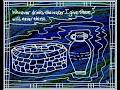
Jesus meets the Samaritan woman not with a theological argument or a correction, but with a simple, vulnerable admission of his own thirst. He starts the conversation from a place of shared human experience, a need that every person understands. This act of vulnerability immediately cuts through the social, religious, and cultural barriers that should have kept them apart. It creates a space where a real conversation can begin, demonstrating that connection often starts not with our strengths, but with our honest needs. [30:30]
Jesus, tired out by his journey, was sitting by the well. It was about noon. A Samaritan woman came to draw water, and Jesus said to her, “Give me a drink.” (John 4:6-7 NRSV)
Reflection: Where in your life are you most aware of the 'dividing lines' that separate people? What is one ordinary, human need or experience you share with someone on the 'other side' of a line, and how might acknowledging that shared humanity change your next interaction with them?
The woman comes to the well at noon, an unusual time that suggests she may have been avoiding the community. She is isolated, perhaps carrying a story that makes her feel like an outsider. Yet, it is precisely in this place of loneliness and in the routine task of drawing water that Jesus chooses to meet her. He does not wait for her to come to a holy place or to get her life in order; he enters into the mundane reality of her day, offering divine connection in the middle of her ordinary life. [35:11]
A Samaritan woman came to draw water. Jesus said to her, “Give me a drink.” (John 4:7 NRSV)
Reflection: Think of a routine or lonely moment in your own life this week. How might God be inviting you to recognize His presence with you in that very ordinary place, rather than waiting for a more spiritually 'ideal' time or setting?
By asking the woman for a drink, Jesus entrusts her with his need. This act of vulnerability reverses the expected power dynamic and allows her to engage with him from a position of being able to give, rather than only to receive. This foundational trust makes it possible for her to later hear the truth about her life and the offer of living water. Her transformation is so profound that she leaves her water jar—the very reason she came—to go and tell others. [35:41]
The woman said to him, “Sir, give me this water, so that I may never be thirsty or have to keep coming here to draw water.” (John 4:15 NRSV)
Reflection: When has someone's vulnerability with you created a sense of trust and safety? Is there an area in your own life where God is inviting you to practice holy vulnerability, trusting that your honest need might be the very thing that opens a door for grace?
The woman’s witness to her town is powerful in its simplicity. She does not have a complex theological treatise or all the answers. Instead, she shares her personal encounter: “He told me everything I have ever done.” Her testimony is an invitation for others to come and see for themselves. It is an authentic sharing of her story that points directly to Christ, making room for others to have their own experience and come to their own belief. [36:10]
The woman left her water jar and went back to the city. She said to the people, “Come and see a man who told me everything I have ever done! He cannot be the Messiah, can he?” (John 4:28-29 NRSV)
Reflection: What is one way you could gently and authentically share your own story of encountering God's grace, without feeling the pressure to have all the answers or to convince anyone else?
The story that begins with two isolated figures at a well ends with an entire community coming to faith. The woman’s testimony leads the people out to Jesus, and after spending time with him, they declare, “We know that this is truly the Savior of the world.” The encounter that broke social barriers did not just transform one life; it became the catalyst for building a new community founded on a shared experience of Christ’s word and presence. [40:03]
They said to the woman, “It is no longer because of what you said that we believe, for we have heard for ourselves, and we know that this is truly the Savior of the world.” (John 4:42 NRSV)
Reflection: Where do you see isolation or division in your community? How might you, by God's grace, participate in building bridges that help others move from being strangers to a community that knows the Savior together?
Saint Martin Lutheran Church moves through the Lenten season with careful attention to worship, community, and the ancient story of Christ’s encounter at Jacob’s well. Announcements orient congregants toward midweek services, communal meals, outreach to the Lighthouse shelter, a vision and listening session for future planning, and the central rhythms of Holy Week. The service flows into confession and forgiveness, then the reading of John 4, which centers on an exchange between Jesus and a Samaritan woman at noon—a meeting that breaks social taboos and opens a theological doorway.
The narrative emphasizes ordinary human need: a tired traveler admits thirst, and that admission becomes the hinge for conversation. From that shared vulnerability, the dialogue moves to living water, worship in spirit and truth, and the woman’s complex personal history. The woman, who came to the well alone, becomes an evangelist; her simple invitation—“come and see”—draws many from her city to encounter the one who knew her life. The text highlights how honesty about need and received grace disarms cultural divides and reconfigures community.
Reflection draws attention to practical application during Lent: begin with shared human experience rather than arguments; notice the places where longings and failures reveal spiritual hunger; and allow hospitality to emerge from vulnerability. The account affirms that worship must root itself in spirit and truth rather than location or ritual alone, and that transformative witness often begins with small acts of trust. Communion instructions reiterate an open table ethic—welcome without exception—and the service closes with benediction, leaving worshippers called to both honest self-awareness and evangelistic tenderness as the season moves toward Holy Week.
He is tired from the journey. The text tells us that he has been walking with the disciples. It is noon, the hottest part of the day, and the first thing he does is admit an ordinary human need. I'm thirsty. In a world full of social barriers, Jesus starts somewhere deeper than all of them, Shared human experience. Thirst. And suddenly, the conversation can begin.
[00:31:02]
(35 seconds)
#StartWithThirst

Not having all the answers, not explaining everything, but simply saying to someone else, come and see. Come and see the one who meets us in our thirst. Come and see the one who refuses to let our stories end in isolation. Come and see the one who turns strangers at a well into a community gathered around living water. Come and see. May it be so. Amen.
[00:40:14]
(36 seconds)
#ComeAndSee
I'm an AI bot trained specifically on the sermon from Mar 09, 2026. Do you have any questions about it?
Add this chatbot onto your site with the embed code below
<iframe frameborder="0" src="https://pastors.ai/sermonWidget/sermon/living-water-well1" width="100%" height="100%" style="height:100vh;"></iframe>Copy