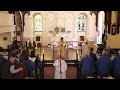
John the apostle gives Saint John’s Church more than a name. The stained glass points toward the beloved disciple, the one who leaned on Jesus at the Last Supper and stood near the cross. His life was marked by closeness to Jesus and by witnessing what Jesus did. His place among the saints rests in the church’s ancient tradition, not in a list of impressive miracles he performed.
All Saints Day honors those recognized as saints with a capital S, but saintly living is not reserved for a few extraordinary people. Believers do not have to perform some massive miracle that violates the laws of nature. Jesus gives concrete ways to live according to God’s will: meekness, hunger and thirst for righteousness, mercy, purity of heart, and peacemaking. These are ways of living closer to God, available in the ordinary actions of a human life.
Love holds these actions together. Throughout scripture, love is not just a feeling. It is a choice and an action, something done. God’s love is known through what God does, through the great love the Father has “lavished” on those called God’s children.
That identity comes before any achievement. God’s children do not earn their place through miracles, saintly conduct, or anything for which they can take credit. God has chosen to love them, and they are God’s children now. The call to live saintly lives is therefore a response to love, not a condition for receiving it. Mercy, righteousness, and peacemaking honor a label already given. Through those actions, believers live out love toward God, toward their neighbors, and toward themselves.
Key Takeaways
- 1. Saintly Living Requires No Spectacular Miracle. Recognition as a saint with a capital S is not the measure of a faithful life. Believers can be inspired by the saints without needing to repeat their extraordinary stories or perform acts that violate the laws of nature. A saintly life remains possible through the concrete ways Jesus gives for living according to God’s will. [29:12]
- 2. The Beatitudes Give Love Concrete Shape. Meekness, mercy, purity of heart, and peacemaking turn saintly living into something more specific than a good intention. Hunger and thirst for righteousness give that life a direction, a desire for what accords with God’s will. These qualities make ordinary conduct a place where love becomes something done. [30:06]
- 3. God’s Love Is More Than Feeling. God does not merely feel favorably toward those called God’s children. God acts toward them in love, giving rather than simply liking. The word “lavished” captures that generosity and gives believers a pattern for love expressed through actions rather than affection alone. [30:40]
- 4. God’s Children Already Bear Their Name. Belonging to God does not wait for a miracle, an accomplishment, or a sufficiently saintly life. God’s choice to love comes first, and the identity of God’s children belongs to the present. Faithful action responds to that love and honors an identity already given rather than trying to earn it. [31:38]
Youtube Chapters