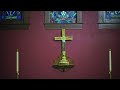
The transfiguration was not an escape from the world's suffering but a preparation for it. In that moment of dazzling light, the disciples were given a glimpse of Christ's true divinity. This vision was a gift, meant to be carried with them into the coming darkness. They would need to remember this light when faced with the horror of the cross. God reveals glory not to remove us from difficulty, but to equip us for faithful endurance. [11:42]
And after six days Jesus took with him Peter and James, and John his brother, and led them up a high mountain by themselves. And he was transfigured before them, and his face shone like the sun, and his clothes became white as light. (Matthew 17:1-2 ESV)
Reflection: As you consider the challenges or sorrows you currently face, what specific memory of God's light or presence can you hold onto to strengthen you for the journey ahead?
The desire to build booths and remain on the mountain is a natural response to profound spiritual experience. Yet, the call of faith is always to descend. The glory of God is never given for our private enjoyment alone; it is meant to fuel our service in the world. True revelation always leads to a calling. We are touched by Christ and sent back into the valleys of everyday life to love and serve. [20:17]
And when the voice had spoken, Jesus was found alone. And they kept silent and told no one in those days anything of what they had seen. (Luke 9:36 ESV)
Reflection: Where in your daily routine might God be inviting you to translate a moment of spiritual insight or comfort into a practical act of compassion for someone else?
We may not see Christ's face shine on a mountain, but we are invited to behold him by faith. This faithful attention is the means of our transformation. As we fix our eyes on him, we are gradually strengthened to carry our own crosses. The purpose of this spiritual sight is not merely admiration, but a deep, formative change into the character of Christ, from one degree of glory to another. [15:21]
And we all, with unveiled face, beholding the glory of the Lord, are being transformed into the same image from one degree of glory to another. For this comes from the Lord who is the Spirit. (2 Corinthians 3:18 ESV)
Reflection: What is one habit or practice you could adopt during Lent to help you "behold the glory of the Lord" more intentionally each day?
The voice from the cloud declaring Jesus as the beloved Son echoes at our own baptism. In those waters, we too are named as God's beloved children and marked as Christ's own forever. This identity is both a comfort and a commission. Being claimed as God's own is inseparable from being sent into the world to live out the promises of our baptismal covenant in faithful obedience. [19:02]
And when Jesus was baptized, with whom I am well pleased.” (Matthew 3:16-17 ESV)
Reflection: How does remembering your identity as God's "beloved" change the way you approach a particular responsibility or relationship this week?
The truth of the transfiguration is a memory to be carried, a light for the path when all other lights seem to go out. It is the church's proof that the crucified one is also the Lord of light. This assurance allows us to walk through seasons of shadow, fasting, and sorrow not as those without hope, but as those who have seen the end of the story. We journey from glory, through the cross, to glory. [23:19]
For we did not follow cleverly devised myths when we made known to you the power and coming of our Lord Jesus Christ, but we were eyewitnesses of his majesty. (2 Peter 1:16 ESV)
Reflection: What is one way you can actively "remember" God's past faithfulness to you as you prepare to enter the reflective season of Lent?
On the last Sunday of Epiphany, the transfiguration stands as a blazing hinge between revelation and the road into Lent. The account on the holy mountain makes plain that glory does not remove suffering but equips for faithfulness: Moses enters the cloud on Sinai, receives the law, and descends to live out obedience; Jesus’ face shines like the sun before the passion so disciples will carry that light into darkness. The transfiguration unveils identity rather than effecting a new nature—God from God, light from light—so that what the world will witness on the cross is also the lord of light. This revelation arrives deliberately before suffering so memory of that light will hold when sight fails.
Glory becomes command: the voice declares the beloved Son and bids listening. The creeds capture this mystery as creedly naming, not abstract theology—light from light, true God from true God—linking vision to vocation. Baptism echoes the mountain’s declaration, marking the baptized as beloved and sent, and ties the mountaintop to daily commitments to justice, fellowship, and service. The temptation to freeze the moment — to build booths and stay on the mountain — receives a stern rebuke: the cloud lifts, touch restores, and the faithful must descend to compassion and work in the world. Glory that does not translate into love becomes mere spectacle; revelation that does not become vocation becomes illusion.
As Lent approaches, the collect and readings offer courage more than certainty, allegiance more than answers. Ashes will testify to dust and mortality, but the remembered light promises destiny for glory. The mountain and the tomb belong to the same Lord; divinity and death remain inseparable in the economy of salvation. The faithful are summoned not to admire the transfiguration as a private wonder but to inhabit it, letting what was seen shape how suffering is borne and how life is lived. The closing rites move from remembrance to sending: the Eucharist, baptismal promises, and benediction bind revelation to mission, sending the assembled into a Lenten journey strengthened to bear the cross and be changed into Christ’s likeness from glory to glory.
What is the transfiguration? The transfiguration is not a custom change. It is the unveiling of what has always been true. Jesus does not become something new. He reveals who he is. God from God, light from light, true God from true God. The veil is pulled back on the incarnation. The carpenter from Nazareth is disclosed as the eternal sun. Humanity is flooded with divinity.
[00:13:45]
(36 seconds)
#UnveilingDivinity

But the cloud lifts, Jesus touches them, and they must go down the mountain to do the work that they have been commissioned to do. Why? Because glory that does not become compassion becomes illusion. Because light that does not lead to love becomes spectacle.
[00:20:17]
(27 seconds)
#GloryIntoCompassion
I'm an AI bot trained specifically on the sermon from Feb 16, 2026. Do you have any questions about it?
Add this chatbot onto your site with the embed code below
<iframe frameborder="0" src="https://pastors.ai/sermonWidget/sermon/lent-cross-light" width="100%" height="100%" style="height:100vh;"></iframe>Copy