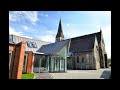
A local church plant on Barking Riverside shifted from a traditional gathered church into a community-centred movement called Solomon’s House, combining a community development charity with a network of local congregations and partners. Plans to build a single-faith building gave way to creative mission: leaders raised local volunteers, ran family and youth gatherings in unconventional spaces, and learned to follow changing doors that God closed and opened. The priority remained clear: Jesus at the heart of community flourishing, not institutional footprint.
Kingdom salvation appears as full surrender to the king rather than a checklist of spiritual experiences. Salvation means letting Jesus do everything he wants in a life—spiritual renewal, physical healing, moral transformation, and commissioning for mission. Luke’s orderly Gospel frames that salvation in three movements: revelation of who Jesus is, increasing demonstration of his kingdom power, and the journey toward Jerusalem that exposes the cost of following him. Parables and encounters along the road show that God’s kingdom reverses expectations: the lowly become receptive and the high-handed can repent.
Two roadside encounters crystallize this upside-down rule of grace. Blind Bartimaeus, a nameless beggar, shouts for mercy and models the single qualification for kingdom entrance: raw desire to be saved. His cry receives immediate response, and Jesus declares that his faith has saved him—sozo that heals body, soul, and status. Zacchaeus, the wealthy chief tax collector, stumbles on Jesus out of curiosity but meets a savior who seeks him out, invites himself in, and provokes public repentance. Wealth yields a radical reordering of life when grace breaks a heart, prompting restitution and generosity.
Salvation always sends. Being saved implies being sent into mission with the king: denying self, taking up a cross, and allowing God to shape ordinary relationships into gospel opportunities. Persistent prayer, an expanding willingness to change, and attention to the people and places where life actually happens become the practical marks of a saved people. The closing invitation calls for renewed openness at communion—whether for the first time or again—asking Jesus to send and to work through imperfect, willing lives.
Key Takeaways
- 1. Salvation is kingly surrender Salvation centers on allowing the king full reign over life. True salvation goes beyond forgiveness or a list of changes; it means opening entire identity, plans, and possessions to the rule of Christ. This surrender reframes comfort, ambition, and security under kingdom purposes and invites continual reshaping. [06:19]
- 2. Faith that refuses to be silenced Persistent, humble crying out exemplifies the faith that meets Jesus. Bartimaeus shows that vocal, stubborn dependence—when all else is lost—draws the savior’s attention and produces holistic healing. Faith’s strength lies not in status but in urgency and trust. [14:27]
- 3. Radical repentance reshapes life Encounters with grace can overturn economic and moral worlds overnight. Zacchaeus demonstrates that true conversion issues in tangible restitution and redirected wealth, not mere private piety. Repentance realigns relationships, restores justice, and testifies to a kingdom reordering. [16:50]
- 4. Saved people are sent Salvation includes commissioning to mission—denying self, taking up a cross, and engaging ordinary spaces with gospel love. Being rescued from sin becomes being released into service; the church’s role stretches into neighborhoods, workplaces, and everyday friendships. Willingness to be sent signals authentic transformation. [18:49]
Youtube Chapters