The resurrection of Jesus is not merely a historical event to be remembered; it is the very power that makes the Christian life possible. Without the risen Christ living in us, the teachings of Jesus would be nothing more than an impossible ideal. His victory over death is the foundation upon which we build our lives, empowering us to live in a way that reflects his kingdom. This reality transforms our daily struggles and infuses our ordinary moments with extraordinary hope. The same power that rolled the stone away is available to us today.
“I have been crucified with Christ. It is no longer I who live, but Christ who lives in me. And the life I now live in the flesh I live by faith in the Son of God, who loved me and gave himself for me.” (Galatians 2:20, ESV)
Reflection: In what area of your life do you most need to rely on the resurrection power of Christ living in you, rather than your own strength?
A vibrant spiritual life is often compared to a fire that must be tended. It begins with intentional moments of prayer and Scripture reading, but it must also be stoked throughout the day with brief pauses for reflection and awareness of God's presence. These practices are not about earning favor or performing for others; they are the necessary means of nurturing a living relationship with Jesus. We engage in them because we are spiritually weak and need constant connection to the source of our strength.
“I have set the LORD always before me; because he is at my right hand, I shall not be shaken.” (Psalm 16:8, ESV)
Reflection: What is one simple way you could “stoke the fire” of your relationship with God during the ordinary moments of your day?
The secret to a fruitful and joyful life is to abide in Jesus, just as a branch abides in the vine. This means resting in our identity in Christ and relying on his presence and power within us. It is an ongoing, intimate relationship of dependence, not a one-time transaction or a list of rules to keep. From this place of abiding, the fruit of the Spirit—love, joy, peace, and more—naturally grows. Apart from this connection, we can do nothing of eternal value.
“I am the vine; you are the branches. Whoever abides in me and I in him, he it is that bears much fruit, for apart from me you can do nothing.” (John 15:5, ESV)
Reflection: Where have you been striving to produce good fruit in your own strength, rather than resting in your connection to Christ?
Jesus concludes his teaching with a clear illustration: a life built on his words is like a house built on a solid rock foundation. This foundation is not our own effort, but Christ himself. The storms of life—trials, temptations, and hardships—will inevitably come for everyone. The question is not if they will come, but whether what we have built will withstand them. A life arranged around Jesus and his teaching is the only way to experience the unshakable security of his kingdom.
“Everyone then who hears these words of mine and does them will be like a wise man who built his house on the rock.” (Matthew 7:24, ESV)
Reflection: When you consider the various “storms” you are facing or may face, what part of your foundation feels most in need of being secured to Christ?
The Christian life is not about achieving perfection but about daily relationship. The empty tomb is a permanent symbol of hope and a new beginning, reminding us that no one is past redemption. Every day is an opportunity to start fresh, to turn our hearts back to God, and to tend the fire of our relationship with him. We are free from condemnation and invited to live a good and beautiful life, not by our own strength, but by the power of the risen Christ who dwells in us.
“There is therefore now no condemnation for those who are in Christ Jesus.” (Romans 8:1, ESV)
Reflection: What would it look like for you to embrace the grace to “begin again” today, releasing any self-condemnation from yesterday?
The image of building and tending a fire anchors an extended reflection on daily discipleship: morning prayer starts the flame; brief prayers, Scripture, and small acts of devotion stoke it through the day. The resurrection provides the decisive ground for that life—without the empty tomb, moral commands collapse into unreachable ideals; with it, the risen Christ dwells within and empowers real transformation. Two false narratives receive careful critique: one that reduces Christianity to a one-time intellectual assent, and another that reduces it to mere rule-keeping. Both miss the central reality that relationship with Jesus—the apprenticeship of abiding—is primary, and practices serve that relationship rather than substitute for it.
The vine-and-branches image from John 15 becomes the practical center: abiding in Christ produces the fruit of the Spirit; apart from him, effort proves fruitless. The Sermon on the Mount functions as a blueprint for arranging life around Jesus, and four paired illustrations underscore the choice between a foundation of rock or sand—entering the narrow way, judging by inward fruits, true kinship marked by doing the Father’s will, and the house built on rock that withstands storms. The emphasis falls repeatedly on interior transformation rather than external conformity; true discipleship reshapes desires, speech, responses to enemies, and the hunger for approval.
The inevitability of trials frames the practical urgency: storms will come, and only a foundation rooted in the risen Christ holds. The resurrection is presented not merely as past vindication but as present power that inhabits fragile human existence—“treasure in clay jars”—enabling endurance, clarity, and hope amid suffering. Practical next steps receive clear application: begin each day by turning the heart to God, stoke the fire through brief habits, and fall asleep counting blessings rather than worries. Communion serves as the ritual center for practicing abiding—simple bread and cup as a private, intimate reminder that the risen life dwells within and renews.
Daily faith gets reframed as an ongoing apprenticeship rather than performance: relationship, disciplined attention to Christ’s presence, and reliance on resurrection power together form the only lasting foundation for a good and beautiful life. Each ordinary day becomes an opportunity to begin again, tend the flame, and live the kingdom now.
The good and beautiful life is not a destination we arrive at. It is a fire we tend, day by day, in the company of the risen Christ.
Will you stoke the fire throughout the day with prayer, Scripture, and awareness of his presence?
The resurrection is not just a historical event to be remembered once a year. It is the foundation on which everything else is built.
The risen Christ lives in us, empowering us to become the people he described in his Sermon.
What truly matters is a relationship with Jesus—being his apprentice. This naturally involves engaging in practices that nurture the relationship.
The tomb is empty. Christ is risen. The fire is lit.
The question is not whether the storm will come. The question is whether your foundation will hold.
No one is past redemption. Every day we begin again.
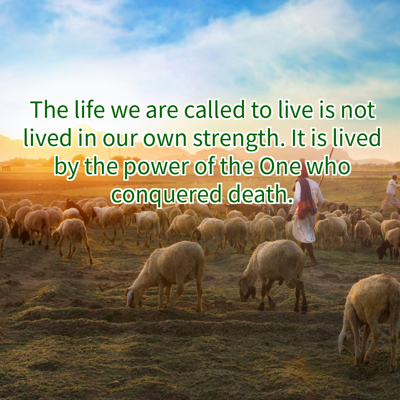
The life we are called to live is not lived in our own strength. It is lived by the power of the One who conquered death.
Will you start each morning turning your heart to God and tend the fire of your soul throughout the ordinary days ahead?
Add this chatbot onto your site with the embed code below
<iframe frameborder="0" src="https://pastors.ai/sermonWidget/sermon/kingdom-daily-life" width="100%" height="100%" style="height:100vh;"></iframe>Copy