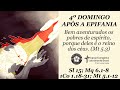
The Beatitudes begin with a profound declaration: "Blessed are the poor in spirit, for theirs is the kingdom of heaven." This statement invites us to consider our own spiritual state, not with shame, but with honesty. It calls us to acknowledge that we come before God with nothing to offer but our need. In this posture of humility, we open ourselves to receive the immeasurable grace, mercy, and comforting word that God freely gives. This is the foundation upon which true spiritual life is built. [32:42]
Matthew 5:3
"Blessed are the poor in spirit, for theirs is the kingdom of heaven." (ESV)
Reflection: In what specific area of your life do you feel a sense of spiritual poverty, and how might acknowledging this need be the first step toward experiencing God's kingdom?
The psalmist poses a question about who is worthy to dwell in God's presence. The answer is clear: those who live a righteous life, speak truth, and act with integrity. This involves refraining from slander, avoiding harm to friends, and treating those who fear the Lord with respect. It also means keeping promises, even when it's difficult, and acting with honesty in all dealings. This standard calls us to examine our actions and words, seeking to align them with God's perfect will. [12:37]
Psalm 15:1-5
"O Lord, who shall abide in your tent? Who shall dwell on your holy hill? He who walks blamelessly and does what is right, and speaks truth in his heart; who does not slander with his tongue and does no evil to his neighbor, nor takes up a reproach against his neighbor; who holds the scoffers inempty, but honors those who fear the Lord; who swears to his own hurt and does not change; who does not put out his money at interest and does not take a bribe against the innocent. He who does these things shall never be moved." (ESV)
Reflection: Consider a recent interaction where you had the opportunity to speak truth or act with integrity. How did you respond, and what might a more intentional approach look like in similar situations?
The prophet Micah reveals God's clear expectation for His people: to do what is right, to love mercy, and to walk humbly with Him. This is not about outward religious performance, but about the inner disposition of our hearts and the outward expression of our faith. It calls us to actively pursue justice, show compassion, and live with a humble awareness of our dependence on God. This is the essence of what it means to truly follow Him. [44:43]
Micah 6:8
"He has shown you, O man, what is good; and what does the Lord require of you but to do justice, and to love kindness, and to walk humbly with your God?" (ESV)
Reflection: Where in your daily life can you actively practice loving mercy and walking humbly with God, even in small, consistent ways?
The Apostle Paul speaks of the "foolishness of the cross" as the power of God for salvation. This message, which seems absurd to the world, is the very core of our faith. It is through the sacrificial death of Christ that we receive forgiveness, redemption, and sanctification. Our hope is not in worldly wisdom or human achievement, but in the finished work of Christ, who became our righteousness. [23:50]
1 Corinthians 1:18
"For the word of the cross is folly to those who are perishing, but to us who are being saved it is the power of God." (ESV)
Reflection: How does the "foolishness of the cross" challenge your own understanding of power and success in the world, and how can you embrace it more fully in your life?
Jesus' teachings in the Sermon on the Mount, particularly the Beatitudes, reveal a path of blessedness that contrasts sharply with the world's values. We are called to recognize our spiritual poverty, to be merciful, and to be peacemakers. This is not about earning our way into God's favor, but about receiving His grace through Christ, who bore our condemnation. This grace empowers us to live lives of genuine obedience, reflecting God's love and justice to a world in need. [59:17]
Matthew 5:9
"Blessed are the peacemakers, for they shall be called sons of God." (ESV)
Reflection: In what specific relationships or situations can you actively be a peacemaker, reflecting the love and reconciliation that Christ offers?
A congregação é chamada a uma fé que começa na pobreza espiritual e se manifesta em ação concreta: reconhecer a própria necessidade diante de Deus, receber a graça que justifica e traduzir essa graça em justiça, misericórdia e humildade. As leituras — do salmo 15, do profeta Miquéias, das cartas de Paulo e das bem-aventuranças de Mateus — são alinhadas para mostrar que a verdadeira piedade não é moralismo externo, mas vida transformada pela cruz. A narrativa teológica destaca que a justiça não é algo conquistado por mérito humano, mas recebida em Cristo, cujo sofrer e morte substituem o julgamento que caberia aos pecadores, tornando possível a habitação no reino dos céus.
Ao mesmo tempo, há um chamamento ético: a fé justificadora liberta para uma obediência prática que exige fazer o que é direito, defender os vulneráveis e tratar o próximo com dignidade. Miquéias 6:8 é apresentado não como um lema abstrato, mas como pauta para o dia a dia — na família, no trabalho, nas redes sociais e nas estruturas sociais. A alternância entre confissão, absolvição, leitura e aplicação evidencia a dinâmica litúrgica de reconhecer fraqueza, receber perdão e ser enviado com uma vocação pública.
As bem-aventuranças colocam essa vocação em perspectiva escatológica: sofrer no presente por fidelidade ao Reino não é derrota final, mas prenúncio de recompensa e consolo divinos. A cruz é chamada de "loucura" para o mundo, mas sabedoria e poder para os que creem, pois nela se cumpre a justiça de Deus e se funda a esperança cristã. A comunhão e a bênção final reiteram que a comunidade participa dessa história de redenção, recebendo tanto o perdão quanto o impulso missionário.
Por fim, a convocação é prática e comunitária: ser luz num mundo injusto implica atitudes concretas — promover justiça, mostrar misericórdia e cultivar humildade — como testemunho que aponta não para a própria retidão, mas para Aquele que justificou e santifica.
``Nós sentamos no banco dos réus de Deus e ele nos absolve dos nossos pecados e nos dá de presente o reino dos céus. Nós não vamos pra cadeira elétrica e nem pra cruz, mas Jesus vai, em nosso lugar, pra que a gente entre no reino dos céus. Jesus, ele amou o mundo todo, com dedicação. Deus amou o mundo de tal maneira, que entregou o seu filho pra que todo aquele que nele crê não pereça mas tenha vida eterna.
[00:54:09]
(35 seconds)
#SalvosPelaGraca

Meus amados, que no dia de hoje, vocês tenham essa certeza, e quando nós colocamos outras pessoas no banco dos réus, esse lugar também é pra nós. E que a gente possa agir com humildade, que a gente possa agir com misericórdia, que a gente aponte pra Cristo, porque essa mensagem nós já ouvimos quando sentamos ali naquele banco. Você está salvo, os teus pecados estão perdoados. Que nós, e essa felicidade, ela será desfrutada plenamente nos céus. Enquanto isso, felizes as pessoas que sabem que são espiritualmente pobres, pois o reino do céu é delas, é de vocês.
[01:00:11]
(47 seconds)
#PratiqueHumildade
I'm an AI bot trained specifically on the sermon from Feb 02, 2026. Do you have any questions about it?
Add this chatbot onto your site with the embed code below
<iframe frameborder="0" src="https://pastors.ai/sermonWidget/sermon/justice-mercy-humility" width="100%" height="100%" style="height:100vh;"></iframe>Copy