God’s pursuit of us is not dependent on our faithfulness, but on His own relentless love. Jonah’s story reminds us that even when we turn away, God does not abandon us. Instead, He moves toward us—sometimes through unexpected means like storms or unlikely people—not to punish, but to draw us back to Himself. His pursuit is an act of grace, not condemnation.
When we feel far from God, it is often because we are running, not because He has left us. God’s commitment to us is unwavering, even when our commitment to Him falters. He is more interested in restoring us than in discarding us, and He will go to great lengths to bring us back into relationship with Him.
“And the Lord hurled a great wind upon the sea, and there was a mighty tempest on the sea, so that the ship threatened to break up. Then the mariners were afraid, and each cried out to his god. And they hurled the cargo that was in the ship into the sea to lighten it for them. But Jonah had gone down into the inner part of the ship and had lain down and was fast asleep.” (Jonah 1:4-5, ESV)
Reflection: Where in your life do you sense God pursuing you, even as you try to avoid Him? What would it look like to stop running and let Him catch up to you today?
When God calls us to something, it is rarely just about the task at hand. Jonah was sent to Nineveh, not only for the sake of the Ninevites, but also for the sake of his own heart. God’s invitations often reveal places in us that need healing, growth, or surrender.
Obedience is not just about accomplishing God’s work in the world; it is about allowing God to do His work in us. When we resist God’s call, we may be resisting the very transformation we most need. But when we say yes, we open ourselves to being changed in ways we never expected, discovering new depths of grace and freedom.
“And the word of the Lord came to Jonah the son of Amittai, saying, ‘Arise, go to Nineveh, that great city, and call out against it, for their evil has come up before me.’ But Jonah rose to flee to Tarshish from the presence of the Lord.” (Jonah 1:1-3a, ESV)
Reflection: Is there something God is asking of you right now that feels difficult or uncomfortable? How might saying yes to Him open you up to transformation in your own heart?
Jonah’s reluctance to go to Nineveh was rooted in his unwillingness to see his enemies receive mercy. God’s grace, however, is not limited by our preferences or prejudices. He extends compassion to those we find hardest to forgive, challenging us to expand our understanding of His love.
This can be uncomfortable, as it exposes our own need for grace and our tendency to withhold it from others. God’s mercy is wide enough to include even those we would rather exclude. As we wrestle with this, we are invited to examine our hearts and ask God to help us love as He loves.
“And should not I pity Nineveh, that great city, in which there are more than 120,000 persons who do not know their right hand from their left, and also much cattle?” (Jonah 4:11, ESV)
Reflection: Who is someone you find difficult to love or forgive? What would it look like to pray for God’s mercy to reach them—and to soften your own heart toward them?
Jonah was far from a model prophet—he was angry, stubborn, and unwilling to repent. Yet God still used him to reveal Himself to the pagan sailors, who ended up worshiping the Lord. Our flaws and failures do not disqualify us from being part of God’s story.
God often works through our weaknesses, not in spite of them. He can use even our reluctant obedience, our doubts, and our mistakes to accomplish His purposes. Rather than waiting until we have it all together, God invites us to step forward as we are, trusting that He can use us in ways we cannot imagine.
“Then the men feared the Lord exceedingly, and they offered a sacrifice to the Lord and made vows. And the Lord appointed a great fish to swallow up Jonah. And Jonah was in the belly of the fish three days and three nights.” (Jonah 1:16-17, ESV)
Reflection: In what area of your life do you feel too flawed or inadequate to be used by God? How might God want to work through your imperfections today?
Jonah’s flight from God was not just about disobedience; it was about avoiding the deeper work God wanted to do in his heart. God’s pursuit was an invitation to healing, freedom, and forgiveness. When we run from God, we are often running from the very transformation we most need.
God does not force us into compliance, but He persistently invites us into a fuller, freer life. His persistence is not about control, but about love. When we stop running and allow God to do His work in us, we discover the healing and wholeness we have been longing for all along.
“Those who pay regard to vain idols forsake their hope of steadfast love. But I with the voice of thanksgiving will sacrifice to you; what I have vowed I will pay. Salvation belongs to the Lord!” (Jonah 2:8-9, ESV)
Reflection: Is there a place in your life where you are avoiding God’s invitation to healing? What is one step you can take today to let Him in and begin the process of transformation?
of the Sermon**
This morning, we began a new sermon series on the book of Jonah, a story many of us know from childhood but often misunderstand. The sermon challenged us to set aside the simplified, “Veggie Tales” version of Jonah and instead read the text with fresh, adult eyes. We explored how Jonah is not just a story about a prophet running from God, but about a God who relentlessly pursues even those who run from Him. The first chapter of Jonah reveals a prophet who refuses God’s call, not out of fear for his safety, but out of a refusal to see his enemies receive mercy. Despite Jonah’s resistance, God continues to pursue him, using storms, sailors, and even a great fish—not just to accomplish His mission, but to transform Jonah’s heart. The sermon closed by inviting us to reflect on our own tendencies to run from God, and to remember that God never gives up on us, no matter how far we go.
**K
The story of Jonah isn’t really about a prophet who runs away from God. It’s about a God who doesn’t run away from people like Jonah—or from anyone, even people like you and me.

When we revisit Jonah’s story with adult eyes, we find it’s not just a children’s tale about a whale, but a challenging story that asks us to examine our own hearts and the unexpected ways God works in us and through us.

Jonah ran away from Nineveh not because he was afraid for his life, but because he was afraid God might forgive his enemies. He didn’t want to imagine a world where even the cruelest people could be shown mercy.

God doesn’t run away from runaways. No matter how far Jonah tried to go, God kept pursuing him, reaching out, and refusing to give up—even when Jonah would rather die than obey.

Sometimes, the people we least expect—like the pagan sailors in Jonah’s story—are more open to God’s work than those who claim to know Him best.

God’s relentless pursuit of Jonah wasn’t because He needed Jonah to accomplish His plans, but because He wanted to heal Jonah’s brokenness and help him live a full, free, and forgiven life.
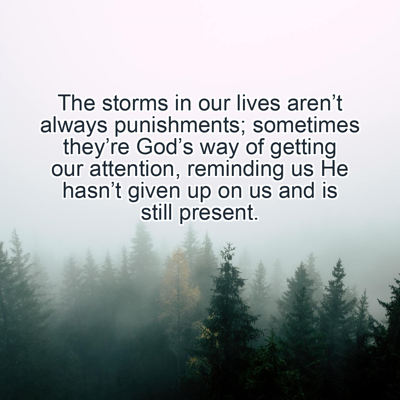
The storms in our lives aren’t always punishments; sometimes they’re God’s way of getting our attention, reminding us He hasn’t given up on us and is still present.

Jonah’s story reminds us that all of us, at times, run from God—whether out of fear, anger, or exhaustion. Yet God’s offer of mercy and grace is always available if we stop and ask for it.

If God didn’t run away from Jonah, He will never run away from me, or from you, or from any of us. God loves us and will never stop pursuing us with His grace.

Even when we’re running in the opposite direction, God can use our journey to reach others, just as He used Jonah’s flight to bring the sailors closer to Him.
Add this chatbot onto your site with the embed code below
<iframe frameborder="0" src="https://pastors.ai/sermonWidget/sermon/jonah-11-2-2025" width="100%" height="100%" style="height:100vh;"></iframe>Copy