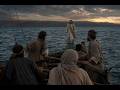
Psalm 105 opens with King David’s clear instruction: give God thanks, sing to him, give glory to his name, seek the Lord and his strength, and remember his wonderful works. The psalm remembers the exodus, and the exodus says again that God is good always and always God is good. Matthew 14 carries that same truth into the Sea of Galilee, where Jesus comes to his frightened disciples in the middle of storming water.
Jesus has just shown compassion to the five thousand plus women and children, healing and feeding them with the help of the disciples. Jesus now shows that same compassion again by walking toward the boat when the waves are battering it and the wind is against it. The disciples see him on the lake and think he is a ghost, but Jesus speaks right away: “Take heart. It is I. Do not be afraid.” Peter asks for a command, Jesus says, “Come,” and Peter really does step out onto the water toward him.
The wind becomes the turning point for Peter. Peter notices the strong wind, becomes frightened, and begins to sink. Yet Peter’s little faith still knows where to cry: “Lord, save me.” Jesus immediately reaches out his hand and catches him. Jesus does not wait until Peter has perfect faith. Jesus saves the one who is sinking, then asks, “You of little faith, why did you doubt?”
Jesus getting into the boat shows who he is. The wind ceases, and those in the boat worship him, saying, “Truly, you are the Son of God.” Jesus is the Lord of creation who entered creation in order to set things right. His power over creation was cloaked in weakness, and through the cross and resurrection he became Lord over death and everything that would destroy his people.
The story of the pontoon boat gives that truth flesh and blood. A father reaches down over the railing, grabs the boy who missed the boat, and pulls him up out of dangerous water. Jesus does that in a greater way. When sin, anxiety, or life in general weighs a person down, the Lord still answers through Scripture, prayer, worship, and the church community. Even little faith can cry, “Lord, save me,” and Jesus will pull the sinking one into his loving arms.
##
Key Takeaways
- 1. God is good in storms Psalm 105 remembers the exodus so the heart will not forget what God has already done. Matthew 14 shows the same God still acting when the boat is far from land and the wind is against it. God’s goodness is not proved by calm water only, but by his presence and power in the storm itself. [29:51]
- 2. Jesus comes toward frightened disciples Jesus does not leave his disciples alone when the waves are battering the boat. His word comes into their fear before their courage returns: “Take heart. It is I. Do not be afraid.” Fear may misread Christ as a ghost, but Christ still names himself clearly to the frightened. [31:22]
- 3. Little faith can still cry Peter’s faith is not fake, but it is fragile. The wind exposes how quickly courage can turn into panic, yet Peter’s cry, “Lord, save me,” still reaches the right Savior. Jesus catches sinking faith before he corrects doubting faith. [32:14]
- 4. Jesus gets into the lifeboat Jesus does more than rescue Peter for a moment. Jesus gets into the boat, and the wind ceases. The Son of God does not save from far away, but enters the place of danger and brings peace with him. [34:32]
- 5. Scripture and prayer steady sinking souls Sin, anxiety, and life in general can feel like going under the water. The Lord still pulls people up through his Word, through prayer, and through life with the church community. Even quiet help from Christ is real help, and even a small cry for mercy is heard.
## [38:31]
Youtube Chapters