Aug 31, 2026
Luke sat down to write. He had a purpose. Many others had compiled accounts about the events surrounding Jesus. But Luke himself had carefully investigated everything from the beginning. He spoke with eyewitnesses. He verified the stories. He then decided to write an orderly account for Theophilus. He wrote so that Theophilus could know the certainty of the things he had been taught.
Luke presents Christianity as a faith grounded in historical fact. He did not write a book of myths or wishful thinking. He wrote a reliable history based on evidence and testimony. Jesus is a real person who entered history. God’s power broke into our world in a concrete way. Luke invites his readers to examine the evidence for themselves.
You live in a world that values evidence and intellectual honesty. You may have questions. Luke does not tell you to leave your questions at the door. He invites you to come and see for yourself. He is convinced that a sincere investigation of Jesus will lead to conviction. What is one honest question you have about Jesus that you could bring to your reading this year?
Many have undertaken to draw up an account of the things that have been fulfilled among us, just as they were handed down to us by those who from the first were eyewitnesses and servants of the word. With this in mind, since I myself have carefully investigated everything from the beginning, I too decided to write an orderly account for you, most excellent Theophilus, so that you may know the certainty of the things you have been taught.
(Luke 1:1–4, NIV)
Prayer: Ask God to give you the curiosity of an investigator as you begin to read the Gospel of Luke.
Challenge: Find a Bible translation you can understand, either a physical copy or an app like YouVersion, and locate the Gospel of Luke.
Jesus entered a town called Nain. His disciples and a large crowd followed him. As he approached the town gate, a dead person was being carried out. He was the only son of his mother, and she was a widow. A large crowd from the town was with her. When the Lord saw her, his heart went out to her. He said, “Don’t cry.” Then he went up and touched the bier they were carrying him on. The bearers stood still. He said, “Young man, I say to you, get up!” The dead man sat up and began to talk. Jesus gave him back to his mother.
This story shows a key truth Luke emphasizes. In Jesus, God does not stay at a distance. God takes the initiative. He pursues people and draws near to them in the midst of their ordinary lives and deepest sorrows. The people recognized this, saying, “God has come to help his people.” Jesus is God coming near to offer help and salvation.
Many of us feel God is far away, especially in our pain. We try to find our way to him. Luke shows us a God who finds his way to us. He sees your grief and his heart goes out to you. He comes near to help. In what area of your life do you most need to experience God drawing near to help you?
Soon afterward, Jesus went to a town called Nain, and his disciples and a large crowd went along with him. As he approached the town gate, a dead person was being carried out—the only son of his mother, and she was a widow. And a large crowd from the town was with her. When the Lord saw her, his heart went out to her and he said, “Don’t cry.” Then he went up and touched the bier they were carrying him on, and the bearers stood still. He said, “Young man, I say to you, get up!” The dead man sat up and began to talk, and Jesus gave him back to his mother. They were all filled with awe and praised God. “A great prophet has appeared among us,” they said. “God has come to help his people.”
(Luke 7:11–16, NIV)
Prayer: Thank Jesus that he sees you and his heart goes out to you in your need.
Challenge: Identify one practical need in your community and ask God how you can be his hands and feet to help meet it.
Jesus saw a tax collector named Levi sitting at his tax booth. “Follow me,” Jesus said to him. Levi got up, left everything and followed him. Then Levi held a great banquet for Jesus at his house. A large crowd of tax collectors and others were eating with them. But the Pharisees and the teachers of the law complained to his disciples. They asked, “Why do you eat and drink with tax collectors and sinners?”
Jesus answered them. He said, “It is not the healthy who need a doctor, but the sick. I have not come to call the righteous, but sinners to repentance.” Jesus consistently surprised people by who he welcomed. He reached out to the despised and the outsider. He invited them to be part of his new community. His mission was clear: to seek and to save the lost.
Jesus still welcomes the outsider. He draws near to those who know they are lost. He is not scandalized by your past or your reputation. He invites you in. His table is open to all who recognize their need for him. Who is one person in your life you have considered beyond the reach of God’s welcome?
After this, Jesus went out and saw a tax collector by the name of Levi sitting at his tax booth. “Follow me,” Jesus said to him, and Levi got up, left everything and followed him. Then Levi held a great banquet for Jesus at his house, and a large crowd of tax collectors and others were eating with them. But the Pharisees and the teachers of the law who belonged to their sect complained to his disciples. “Why do you eat and drink with tax collectors and sinners?” Jesus answered them, “It is not the healthy who need a doctor, but the sick. I have not come to call the righteous, but sinners to repentance.”
(Luke 5:27–32, NIV)
Prayer: Confess to Jesus any tendency to judge who is worthy of his welcome, and ask for his heart for the lost.
Challenge: Initiate a conversation with someone you might normally overlook and offer them a simple gesture of kindness.
Jesus spoke to all who would listen. He said, “Whoever wants to be my disciple must deny themselves and take up their cross daily and follow me.” This was a shocking command. To take up a cross meant to embrace the path of sacrifice and death. Jesus made it clear that following him was not a casual decision. It required a daily surrender of one’s own life and agenda.
Jesus welcomes everyone as they are, but he loves them too much to let them stay that way. Following Jesus means being transformed. It translates into daily life. It means loving neighbors, caring for the poor, forgiving others, and using money differently. It means following Jesus even when it is costly. Trusting him rearranges your entire life.
You cannot investigate Jesus and remain neutral. Luke does not just ask what you think about Jesus. He asks what you will do with him. Following him will change you. It is a daily decision to die to your own way and live for his. What is one area of your life where Jesus is asking you to take up your cross and follow him today?
Then he said to them all: “Whoever wants to be my disciple must deny themselves and take up their cross daily and follow me. For whoever wants to save their life will lose it, but whoever loses their life for me will save it. What good is it for someone to gain the whole world, and yet lose or forfeit their very self?”
(Luke 9:23–25, NIV)
Prayer: Ask Jesus for the strength to deny yourself and follow him wholeheartedly in one difficult area today.
Challenge: Write down one personal preference or comfort you will consciously set aside today to serve someone else.
Luke completed his work. He wrote his gospel so that Theophilus could know the certainty of the things he had been taught. Luke’s careful investigation provided a firm foundation for faith. He was convinced the historical evidence pointed to one conclusion. Jesus is the Savior. The message about him is good news for everyone. This certainty was meant to lead to trust and a decision to follow.
This story does not end with the book of Luke. Jesus died for sinners and was raised from the dead. The resurrection means Jesus is still alive today. It is because he lives that you can have a relationship with God. It is because he conquered death that you have access to the Holy Spirit’s power to live a new life. This is the certainty Luke offers.
Where are you today with Jesus? Are you confident, skeptical, curious, or unsure? Knowing your starting point helps you know what to look for. Luke invites you on a journey to investigate Jesus for yourself. He is convinced you will come away changed. What is the next step you need to take to investigate who Jesus is?
He said to them, “This is what I told you while I was still with you: Everything must be fulfilled that is written about me in the Law of Moses, the Prophets and the Psalms.” Then he opened their minds so they could understand the Scriptures. He told them, “This is what is written: The Messiah will suffer and rise from the dead on the third day, and repentance for the forgiveness of sins will be preached in his name to all nations, beginning at Jerusalem. You are witnesses of these things.”
(Luke 24:44–48, NIV)
Prayer: Pray for the courage to take your next step, whether it is asking a question, reading a chapter, or choosing to follow.
Challenge: Set aside 30 minutes this week to read the first two chapters of Luke, noting one thing that surprises you about Jesus.
The opening lines of Luke’s Gospel serve as a declaration of intent: a carefully investigated, orderly account written to establish the certainty of what Theophilus—and by extension all readers—had been taught about Jesus. Luke presents himself as a historian who consulted eyewitnesses and custodians of tradition, gathering material that often appears nowhere else in the other biographies. That research yields unique scenes: detailed birth narratives, intimate glimpses into Mary’s experience, and many episodes that underscore Luke’s central claims about who Jesus is and why his life matters.
Luke frames Jesus as the Savior who actively draws near to ordinary and overlooked people rather than remaining distant. Repeated scenes show compassion for widows, welcome for tax collectors and sinners, and challenge for those secure in religious privilege. Jesus’ ministry both includes and upends social boundaries: outsiders find place and dignity, and the comfortable face calls to costly conversion. Luke emphasizes that proximity to Jesus carries an ethical demand—discipleship reshapes daily practice: prayer, generosity, forgiveness, and sacrificial commitment.
Luke describes his account as “orderly,” recognizing both historical fidelity and theological purpose. The narrative arranges events to highlight salvation’s themes: God’s initiative, the reversal of social expectations, and the necessity of transformation. The cross and resurrection anchor that story; Luke insists that Jesus’ death and rising are not merely exemplary but decisive—grounding forgiveness, restoring relationship with God, and enabling the Spirit’s power for life now. The Gospel culminates in a movement that does not stop at Jesus’ resurrection: Luke continues the narrative into Acts, portraying the early community empowered by the Spirit to embody and extend the same Jesus-shaped life.
Luke issues an invitation rather than a command to abandon questions: intelligent inquiry and honest doubt find a place in this account because certainty, Luke argues, rests on historical witness and the observable change in lives. Readers receive a twofold challenge—first to examine the evidence Luke offers, and then to respond concretely when conviction comes. Practical next steps appear plainly: read the Gospel, pay attention to the portrait of Jesus who comes near, and allow the life, death, and resurrection of Jesus to steer personal and communal practice.
Luke is inviting us to come and examine Jesus for ourselves, convinced that in doing so we will come away changed.
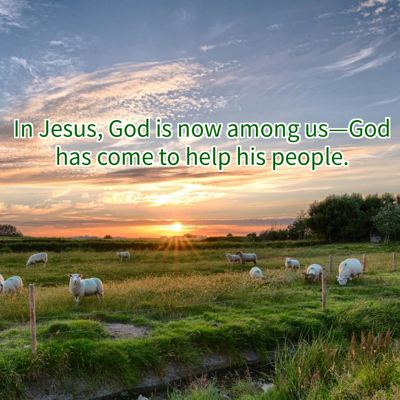
In Jesus, God is now among us—God has come to help his people.
Jesus didn't just come to make good people a little bit better; he came to seek and to save the lost.
He loves us as we are, but he loves us too much to let us stay that way.
Following Jesus means loving our neighbors, caring about the poor, forgiving others, praying honestly and regularly, using our money very differently than the world does, and following Jesus even when it costs us.
Luke tells the story of a Savior who comes into the lives of ordinary people.
He wants us to use our brains, but he won't let us leave it at the head level.
The resurrection means that Jesus is still alive today, and it is because he lives that we are able to come back into a right relationship with God.
Luke wants his readers to move and grow in their relationship with Jesus.
Hi, I'm an AI assistant for the pastor that gave this sermon. What would you like to make from it?
Add this chatbot onto your site with the embed code below
<iframe frameborder="0" src="https://pastors.ai/sermonWidget/sermon/jesus-luke-come-see" width="100%" height="100%" style="height:100vh;"></iframe>Copy