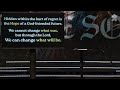
Human regret enters through those “if only” places where the past keeps forcing its way into the present. Time travel is not just a movie idea, because every human being goes back to what was, sometimes with joy and sometimes with pain, and then tries to peek into the future through worry. Regret sits in those two hard categories, the things left undone and the things done that never should have been done.
Psalm 81 gives the Lord’s own “if only.” Asaph lets God review Israel’s history, not as a harsh ruler trying to flex power, but as a Father who knows where the dead end street leads. God brought Israel out of Egypt, gave his word, offered protection and prosperity, but Israel did not obey. God gave them over to their stubborn desires, and they did what seemed right to them. That line names the place where so many regrets are born.
The pain of regret can become one of the best experiences in life when it becomes authentic transformational repentance. Ezra’s shame, Proverbs’ groan at the end of life, and Paul’s words about godly sorrow all show that pain is not always the enemy. God sometimes uses sorrow as spiritual energy. Consequential repentance only wants the discomfort to stop, like a thief sorry because he got caught. Transformational repentance lets the Lord search the deed, the motive, and the damage.
First John gives the only safe place for that surgery. God is faithful and just to forgive, but he also purifies from all unrighteousness. Confession is not blame shifting, minimizing, or saying, “I had a reason.” Confession says, “This is what happened, this is why it happened, and this is the damage it caused.” That kind of honesty hurts, but the pain cleans the infection instead of just numbing the wound.
Hebrews brings the comfort that makes such honesty bearable. God forgives wickedness and remembers sin no more, not because God loses information, but because God refuses to treat his child as though the sin is still pending. Human “memory experts” may keep branding the past, but God’s voice must become louder than theirs.
Isaiah, Paul, Moses, and Jesus all turn regret toward a future. God says not to keep brooding over things gone by, because he is making roads in the desert and rivers in the wasteland. Paul forgets what lies behind without losing the lesson, and presses toward Christlike perfection. Jesus says obedience keeps the soul in his love so that his joy may be complete. The past cannot be changed, but through the Lord, what will be can change.
Key Takeaways
- 1. Regret can become spiritual surgery Regret is not automatically holy, and pain by itself does not heal anybody. Regret becomes mercy when it drives the soul past quick fixes and into the deeper work only the Lord Jesus Christ can do. A painkiller may quiet the ache, but spiritual surgery cleans what is infected and restores what has been damaged. [42:37]
- 2. God’s commands are not arbitrary God does not throw out rules just to see who will jump when he says jump. His commands reveal the way he himself lives, and that is the only kind of life that can last forever in love, harmony, and joy. Disobedience feels like freedom for a little while, but it always teaches the same hard lesson: life only works God’s way. [60:49]
- 3. Godly sorrow carries holy energy The sorrow God uses is not the same as panic over consequences or shame that wants to escape discomfort. Godly sorrow opens the heart to turn away from sin and seek the life of God in the soul. The memory that hurts can become a catalyst, not a prison, when it leads to real transformation instead of shallow confession. [66:19]
- 4. Confession must tell the whole truth Confession does not stop with naming the act, because the Lord also wants to put light on the motive and the damage. A soul may say what happened, why it happened, and whom it harmed without excuse, blame shifting, or minimizing. That honesty is painful, but purification comes when the infection is brought into the presence of God’s love. [70:35]
- 5. The future is not locked shut Fatalistic thoughts like “my life is ruined” only become powerful when the soul keeps listening to them. God can make roads in deserts and rivers in wastelands, and past failure does not get the final word over a God intended future. The past cannot be rewritten, but obedience today can change what will be. [76:44]
Youtube Chapters
- [00:00] - Welcome
- [39:24] - Human Beings as Time Travelers
- [40:31] - The Four Kinds of Regret
- [42:37] - Painkillers or Spiritual Surgery
- [44:33] - Processing the Most Traumatic If Onlys
- [48:57] - Psalm 81 and Israel’s History
- [51:34] - God’s If Only Over His People
- [57:34] - The Pain From the Past
- [63:34] - Transformational Repentance Versus Consequences
- [67:34] - Regret That Keeps People Stuck
- [69:24] - Confession, Forgiveness, and Purifying
- [75:47] - God Makes Roads in the Desert
- [78:31] - Pressing Toward Christlike Perfection
- [81:28] - Peace Like a River
- [83:52] - Changing What Will Be