Before knowing Christ, humanity was in a state of profound spiritual separation, living without hope and without God in the world. We were like outsiders, excluded from God's promises and covenants, unable to bridge the vast distance between ourselves and our Creator. Yet, in His boundless love, God intervened through Jesus. Through the sacrifice of His blood, those who were once far away have been miraculously brought near, reconciled to Him and given new life. This transformation is not by our effort, but by His incredible grace. [02:50]
Ephesians 2:11-13
Remember that you, who were not Jewish by birth, were once considered outsiders by those who were. At that time, you lived without Christ, cut off from the community of Israel, and strangers to the promises God made. You had no hope and no knowledge of God in the world. But now, because of Christ Jesus, you who were once distant have been brought close through His sacrificial death.
Reflection: How does remembering your past spiritual state deepen your appreciation for Christ's work in bringing you near to God?
Jesus Himself is our peace, actively working to unite those who were once divided. He took two distinct groups—Jew and Gentile—and made them one, dismantling the very wall of hostility that separated them. Through His body, He rendered the Law's regulations ineffective as a means of division, creating a single new humanity. His ultimate purpose was to reconcile both groups to God in one body through the cross, putting an end to all animosity. [03:50]
Ephesians 2:14-16
For Jesus Himself is our peace, who made both groups into one and tore down the dividing wall of hostility between them. In His own body, He set aside the Law with its commands and rules, so that from the two, He might create one new person in Himself, establishing peace. His goal was to reconcile both groups to God in one body through the cross, thereby putting the hostility to death.
Reflection: Where in your life or relationships do you sense God inviting you to participate in tearing down "dividing walls" through the peace of Christ?
Through Christ, a completely new humanity has been forged. We are no longer defined by our former distinctions, whether they be ethnic, cultural, social, or personal preferences. Jesus didn't simply blend old identities; He created something entirely new, a "new race" of people whose primary identity is found solely in Him. This new identity transcends all earthly categories, offering a profound answer to the brokenness and divisions of our world. [04:15]
Ephesians 2:15; Galatians 4:4-7
He made the Law ineffective so that He might create in Himself one new person from the two, bringing about peace. When the right time came, God sent His Son, born of a woman and born under the Law, to free those under the Law, so that we might receive adoption as His children. Because you are His children, God sent the Spirit of His Son into our hearts, crying out, "Abba, Father!" So you are no longer a slave but a child, and if a child, then God has made you an heir.
Reflection: What cultural or personal identity markers do you sometimes prioritize over your primary identity as a new creation in Christ, and how might you re-center your focus this week?
Because of Christ's work, believers are no longer considered outsiders or temporary residents in God's kingdom. Instead, we are welcomed as fellow citizens with all of God's holy people and cherished members of His own household. This means we are reconciled vertically to God as our Father and horizontally to one another as family. We are invited into a deep, authentic community where masks can be dropped, and genuine connection can flourish. [05:50]
Ephesians 2:19
Therefore, you are no longer foreigners and strangers, but you are fellow citizens with God’s holy people and members of God’s own family.
Reflection: How does understanding yourself as a "supernaturalized citizen" and adopted child of God change how you view your place in the world and in the church?
The church is not merely a collection of individuals, but a living structure, continuously being built together into a holy temple for the Lord. This spiritual edifice rests on the foundation of the apostles and prophets, with Christ Jesus Himself as the indispensable cornerstone. We are designed to be interconnected, each a vital stone, growing together for God's dwelling place by His Spirit. This communal reality calls us to mutual encouragement, support, and love. [06:30]
Ephesians 2:20-22
You are built upon the foundation laid by the apostles and prophets, with Christ Jesus Himself as the most important cornerstone. In Him, the entire structure, being joined together, grows into a sacred temple in the Lord. In Him, you also are being built together with others to become a place where God lives by His Spirit.
Reflection: In what specific ways can you actively participate in building up the church community this week, recognizing that we are all stones in God's living temple?
We read Ephesians 2:11–22 and traced how God redefines who we are. Once outsiders, without access to covenant promises and separated by human walls, we have been brought near by the blood of Christ. Jesus is described not only as bringer of peace but as the peace itself—he has torn down the dividing wall of hostility and, by his flesh, nullified the separating effects of the law so that Jew and Gentile are made one. This is not a blending that preserves old categories; it is the creation of a new people, a new humanity “in Christ.”
That newness produces two linked realities: vertical reconciliation to the Father and horizontal reconciliation to one another. Being “brought near” means we now have access to God through the same Spirit; being citizens and household members means we belong to one another. Paul’s picture of the church as a building with Christ as the cornerstone reminds us that spiritual life is communal—each stone matters, and the structure only becomes a temple as we are built together. The gathered community is not optional; it is essential to identity and formation.
There’s a moral and practical edge to this truth. If our primary identity is anything other than Christ—race, politics, gender, status, or tastes—we replicate the very idolatry Paul critiques. The reconciling work of Christ exposes cultural blinders and calls for personal repentance where bias persists. True peace requires active reconciliation: humility to confess, courage to forgive, and the discipline to put unity above personal preferences. In worship and in daily life we are to practice the kind of radical belonging the cross creates: accountability, mutual care, shared mission, and prayerful honesty.
As we respond, the text demands obedience: if the Spirit prods toward reconciliation or public commitment, move. The inward reality of being adopted into God’s family must overflow into concrete acts of love and unity so that the world sees a distinct people—one new humanity—whose identity is in Christ alone.
If you are a believer, bought by the blood of Jesus, your identity is IN HIM as a part of his body, not in anything else.
We were far from God, but now in Christ Jesus we have been brought near by the blood of the Lamb.
We are a new race—no longer defined by what we were before, but now defined by being in Christ, transformed and united beyond former ethnic or cultural divisions.
Our identity in Christ as this new race of people is the answer to so much of what is broken about our culture.
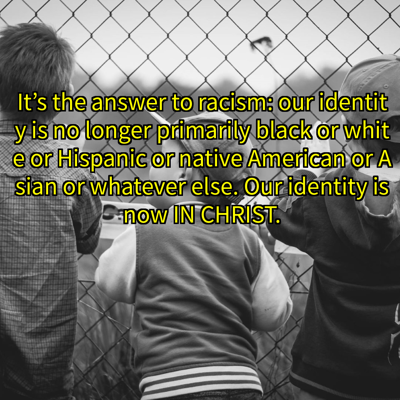
It’s the answer to racism: our identity is no longer primarily black or white or Hispanic or native American or Asian or whatever else. Our identity is now IN CHRIST.
Jesus is not only the author of our peace; he is our peace, the one who tore down the dividing wall of hostility between people.
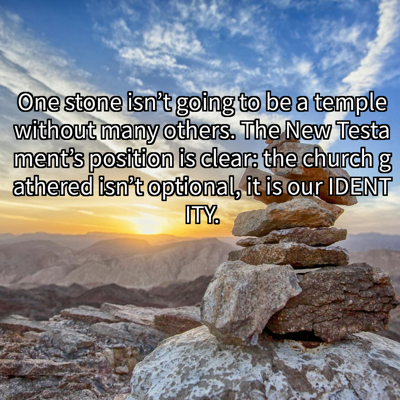
One stone isn’t going to be a temple without many others. The New Testament’s position is clear: the church gathered isn’t optional, it is our IDENTITY.
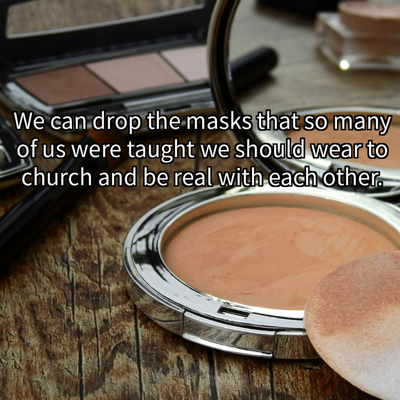
We can drop the masks that so many of us were taught we should wear to church and be real with each other.
This is the reality of the Church—we are adopted sons and daughters of the King, all members of the same family, defined by relationship rather than status.
ALL who are saved are saved by GRACE alone; ALL started off dead in our sins, and none of us have room to boast.
Hi, I'm an AI assistant for the pastor that gave this sermon. What would you like to make from it?
Add this chatbot onto your site with the embed code below
<iframe frameborder="0" src="https://pastors.ai/sermonWidget/sermon/identity-in-christ3" width="100%" height="100%" style="height:100vh;"></iframe>Copy