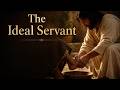
Jesus wrapped a towel around His waist and knelt before twelve men with dirty feet. Peter protested as the Creator washed creation’s grime. Judas’ betrayer toes received the same care as John’s faithful ones. This wasn’t theater – it was love’s blueprint. [09:26]
The King’s coronation robe was a servant’s cloth. Foot-washing required no special skill, just willingness to stoop. Jesus redefined greatness as downward mobility, exchanging crowns for towels in His kingdom economy.
Your hands grip phones more than washbasins. What mundane act could become holy when done with a servant’s heart? Identify one daily chore you’ll reframe as worship this week. When did you last serve someone who couldn’t repay you?
“If I then, your Lord and Teacher, have washed your feet, you also ought to wash one another’s feet. For I have given you an example, that you should do as I have done to you.”
(John 13:14-15, ESV)
Prayer: Ask Jesus to reveal prideful resistance to lowly service.
Challenge: Wash dishes/laundry for your household today with silent prayer for each family member.
Roman believers faced a choice: blend into Caesar’s empire or burn bright for Christ. Paul urged them to offer their bodies as living torches – walking sacrifices that illuminated God’s will. Conformity extinguishes; transformation ignites. [02:15]
The world molds minds like potters shape clay. God’s renewal works like a refiner’s fire, burning away selfish agendas until we reflect Christ’s servant heart. Peter’s temper became boldness; Thomas’ doubt became devotion.
You check social media more than Scripture. What worldly mold have you passively accepted? Replace 15 minutes of screen time today with Romans 12:1-2 meditation. Where does your thinking most need Christ’s renewing fire?
“Do not be conformed to this world, but be transformed by the renewal of your mind, that by testing you may discern what is the will of God, what is good and acceptable and perfect.”
(Romans 12:2, ESV)
Prayer: Confess one area where you’ve prioritized cultural approval over Christ’s commands.
Challenge: Write down a worldly mindset you’re rejecting, then burn/shred the paper as an act of surrender.
Isaiah’s Servant-Messiah leaned wholly on His Father. The One who spoke galaxies into being chose dependency – praying before preaching, retreating before miracles. His power flowed through the posture of trust, not self-sufficient striving. [15:38]
Modern culture worships independence; Christ exemplified God-dependence. Paul discovered this when his “thorn” became a leaning post – weakness the very channel for divine strength. Servants thrive when they stop pretending they’re saviors.
You juggle responsibilities like a circus act. What burden have you failed to transfer to Christ? Place one hand palm-up today while praying “I release ________ to You.” What ‘weakness’ do you need to stop hiding from God?
“Behold my servant, whom I uphold, my chosen, in whom my soul delights; I have put my Spirit upon him; he will bring forth justice to the nations.”
(Isaiah 42:1, ESV)
Prayer: Thank God for three limitations that keep you dependent on Him.
Challenge: List three areas of self-reliance. Cross out each while praying Psalm 28:7 aloud.
The Messiah’s touch gentled broken lives. Peter’s post-betrayal shame met breakfast by Galilee. The bleeding woman’s desperation stopped the Savior. Isaiah’s prophecy lived – Christ mended fractures without breaking the already-cracked. [31:16]
Servants see people as God does – not projects but precious. The disciples wanted to send crowds away; Jesus said “feed them.” Our “inconvenient” interruptions are divine appointments in disguise.
You pass more hurting souls than you realize. Who’s the “difficult” person you’ve avoided? Text/Call them today with Christ’s compassion. Whose pain have you walked past to protect your comfort?
“A bruised reed he will not break, and a smoldering wick he will not snuff out. In faithfulness he will bring forth justice.”
(Isaiah 42:3, NIV)
Prayer: Ask God to break your heart for one specific struggling person.
Challenge: Write an encouraging note to someone facing failure – mail/deliver it today.
The Servant-Messiah faced betrayal, torture, and abandonment yet never quit. His fuel? Isaiah’s prophecy – “He will not grow faint or be discouraged.” The cross’ horror couldn’t extinguish His joy in obeying the Father. [36:43]
Servant-hearts outlast storms because their hope’s anchored beyond circumstances. Peter’s post-Pentecost prison prayers shook foundations; Paul’s chains advanced the gospel. What looks like defeat becomes victory through resurrection eyes.
You’re facing a draining situation. What eternal perspective can you reclaim? Memorize Isaiah 42:4 as your anti-discouragement mantra today. What challenge seems impossible until you see it through Christ’s finished work?
“He will not grow faint or be discouraged till he has established justice in the earth; and the coastlands wait for his law.”
(Isaiah 42:4, ESV)
Prayer: Worship Jesus for one victory His resurrection guarantees over your current struggle.
Challenge: Light a candle while praying for perseverance in your hardest responsibility.
The call to servanthood insists that greatness in Christ’s kingdom runs the opposite direction of flesh and culture. Romans 12 demands a renewed mind that refuses to conform to self-pleasing reflexes and instead proves God’s good, acceptable, perfect will by offering the body as a living sacrifice. Romans 15 then turns the screws: life is not to “please” self but to please God by serving his creation for their good and edification, just as Christ did not please himself but bore the reproach of others. The kingdom looks like a “fellowship of mutual servanthood,” not a platform to be served.
Christ himself sets the pattern. Philippians 2 shows him “emptying” himself, taking the form of a servant, obedient to death. John 13 marks the single moment he called his action an “example” when he wrapped a towel and washed feet, even Judas’s. Mark’s “first shall be slave of all” lands with force in a world where to be great is to be served. The difference Christ aims at is not a handful of dutiful acts with mixed motives, but a “spirit of servanthood,” a settled posture that can be present even when hands are momentarily still.
Isaiah 42 paints the Servant’s inner life as the believer’s pattern. Dependence comes first: “my servant, whom I uphold.” The ideal servant rejects the idol of independence and receives weakness as leverage for grace, echoing the word to Paul, “my strength is made perfect in weakness.” Approval follows: the Father delights in the Son, and the Son delights to do the Father’s will. Playing for the applause of One liberates a disciple from the tyranny of pleasing everyone, even self.
Modesty marks the Servant. “He will not cry out,” refusing the lure of spectacle on the temple’s pinnacle. Hidden work suits him, content that the Father sees. Empathy colors his touch: “a bruised reed he will not break,” “a smoking flax he will not quench.” He specializes in mending and rekindling, not avoiding the broken or finishing them off. Optimism steadies his steps: “he will not fail nor be discouraged” because the Father’s will cannot finally be thwarted; even the cross is endured “for the joy set before him.”
All of this requires anointing. “I have put my Spirit upon him.” The same Spirit who rested on Jesus at the Jordan empowers ordinary saints to live an extraordinary servanthood, giving hope where there is little and fire where the embers barely glow.
But the problem is is when you read the word of God, our savior came as a servant. He told his disciples, I'm leaving you an example to be a servant. He told us the only way you're gonna be great in the kingdom that he's establishing is to be a servant. So I guess that means all of us, whether we wanna accept it readily or not, we are called to servanthood. Alright?
[00:01:21]
(34 seconds)
Today, the world in which we live in, and I think it's worldwide now, alright, is a day of arrogant self advertisement. You're gonna do everything by the how you dress, how you act, what you say you believe in, to attract what? Attention. Here I am. I am important. I am somebody. Validate me. Alright? We want that focus on ourselves. Alright? You do what you can to put yourself at the center, but God's servant is modest, that self effacing.
[00:27:11]
(37 seconds)
Is he gonna bring weakness in your life or strength in your life? What's gonna make you dependent? Weakness. I'm not a I'm not a fan of weakness. Alright? I'm not a fan on having other people have to help me or serve me. I'm gonna be able to blaze my own trail. Right? I I don't wanna say I need you, and I need you to do this for me, to admit that there's we need to admit weakness. But if dependence is God's goal, then weakness is an advantage.
[00:18:46]
(38 seconds)
When we empty ourselves, accepting our weakness, trusting in God completely, committing ourself to his will, we have his approval. Whose approval do you want in your life? We we by the way, we all seek approval. Right? I mean, whether it's at workplace, whether it's a coach here in sports, whether it's a parent. But as a believer, the chief one that we should be endeavoring to have approval from is our creator.
[00:23:39]
(36 seconds)
I'm an AI bot trained specifically on the sermon from May 19, 2026. Do you have any questions about it?
Add this chatbot onto your site with the embed code below
<iframe frameborder="0" src="https://pastors.ai/sermonWidget/sermon/ideal-servant-sermon-hegedus" width="100%" height="100%" style="height:100vh;"></iframe>Copy