
Humility: The Key to Understanding Scripture's True Meaning
Devotional
Sermon Summary
Bible Study Guide
Sermon Clips
"Reading a text in order to discover the author's intention is the humble path to greater knowledge and true wisdom or to put it upside down or negatively it is arrogant to ignore or discount the author's intention assuming you have nothing to learn from others so we don't want to be arrogant we want to be humble." [00:01:57]
"Psalm 25:9 he leads the humble in what is right and teaches the humble his way and we know that God often usually communicates what is right and communicates his way through his word his written word and therefore this implies that he leads humble people into a good insight into what the authors of the word are saying." [00:02:29]
"The proud come and they read the word assuming parity know what it means they already know what they think they don't need to humble themselves underneath something outside themselves and enlarge their own understanding they just bring what they already have and try to have it confirmed so that their ego can be built up that's not what the humble do with the Word of God." [00:03:22]
"Proverbs 11:2 when pride comes then comes disgrace but with the humble is wisdom because the humble are learning the humble are being taught being led they are lowering themselves humbling themselves under the word and saying to the word you have intentions you inspired authors behind this word you have intentions that I need to know which I don't presently know." [00:03:53]
"Proverbs 1:5 let these Wise Ones these humble ones these learning being taught being led open eager childlike ready to grow ready to increase in knowledge ones let the wise here and increase in learning let the one who understands obtain guidance so it's it's the humble wives who increase in learning because the author the inspired author is treated as somebody who has something to teach us." [00:04:36]
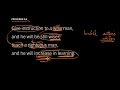
"Proverbs 9 9 give instruction to a wise man and he'll be still wiser teach so give instruction and teach a righteous man he will increase in learning so how are we going to become wiser and wiser how we're going to increase in the knowledge of reality and the knowledge of God the answer is we're gonna be wise and humble." [00:05:50]
"Proverbs two three and five describe what this looks like in the heart of the humble wise reader if you call out for insight if you raise your voice for understanding if you seek it like silver if you search for it all that if if if you call out raise your voice seek its search for then then you will understand the fear of the Lord and find the knowledge of God." [00:06:52]
"The arrogant they don't come to a text calling out for insight raising their voice for understanding seeking it like silver searching for it as for hidden treasure they're already quite content with their own insight and their own understanding and the silver that they want and the hidden treasures they want is the ego satisfaction of having their own ideas confirmed rather than humbling themselves like a child." [00:07:26]
"Grow grow I'm 71 years old this is a passion I want so much to grow yes above all in grace but as a means to growing in grace knowledge of the Lord I want to grow in the knowledge of the Lord and Savior Jesus Christ to him be glory both now and to the day eternity there are riches of glory there are unsearchable rich of wisdom to be had in Christ and in his word." [00:08:13]
"Let's never never become so arrogant so proud so self-satisfied that we can't humbly grow in the knowledge of the Lord and that means we have to come to the word and the author's author's intention and do the necessary work to go underneath it and try to crawl up into it crying out to God for these glorious discoveries of what they have in their minds that aren't yet in our minds." [00:08:56]
"The meaning of a text we're arguing is what the author intended to communicate by his words because the Bible assumes it because this is the way we want to be read when we write something where we're trying to communicate something important and because reading a text in order to discover the author's intention is the humble path to greater knowledge and true wisdom." [00:09:28]
"If we make this a lifelong passion a whole a whole world opens to us that is not already in our mind and what a glorious way to live day by day having a whole world open to you wider and wider as it will talk about next time." [00:10:01]
Ask a question about this sermon
"Psalm 25:9 he leads the humble in what is right and teaches the humble his way and we know that God often usually communicates what is right and communicates his way through his word his written word and therefore this implies that he leads humble people into a good insight into what the authors of the word are saying." [00:02:29]
"The proud come and they read the word assuming parity know what it means they already know what they think they don't need to humble themselves underneath something outside themselves and enlarge their own understanding they just bring what they already have and try to have it confirmed so that their ego can be built up that's not what the humble do with the Word of God." [00:03:22]
"Proverbs 11:2 when pride comes then comes disgrace but with the humble is wisdom because the humble are learning the humble are being taught being led they are lowering themselves humbling themselves under the word and saying to the word you have intentions you inspired authors behind this word you have intentions that I need to know which I don't presently know." [00:03:53]
"Proverbs 1:5 let these Wise Ones these humble ones these learning being taught being led open eager childlike ready to grow ready to increase in knowledge ones let the wise here and increase in learning let the one who understands obtain guidance so it's it's the humble wives who increase in learning because the author the inspired author is treated as somebody who has something to teach us." [00:04:36]
"Proverbs 9 9 give instruction to a wise man and he'll be still wiser teach so give instruction and teach a righteous man he will increase in learning so how are we going to become wiser and wiser how we're going to increase in the knowledge of reality and the knowledge of God the answer is we're gonna be wise and humble." [00:05:50]
"Proverbs two three and five describe what this looks like in the heart of the humble wise reader if you call out for insight if you raise your voice for understanding if you seek it like silver if you search for it all that if if if you call out raise your voice seek its search for then then you will understand the fear of the Lord and find the knowledge of God." [00:06:52]
"The arrogant they don't come to a text calling out for insight raising their voice for understanding seeking it like silver searching for it as for hidden treasure they're already quite content with their own insight and their own understanding and the silver that they want and the hidden treasures they want is the ego satisfaction of having their own ideas confirmed rather than humbling themselves like a child." [00:07:26]
"Grow grow I'm 71 years old this is a passion I want so much to grow yes above all in grace but as a means to growing in grace knowledge of the Lord I want to grow in the knowledge of the Lord and Savior Jesus Christ to him be glory both now and to the day eternity there are riches of glory there are unsearchable rich of wisdom to be had in Christ and in his word." [00:08:13]
"Let's never never become so arrogant so proud so self-satisfied that we can't humbly grow in the knowledge of the Lord and that means we have to come to the word and the author's author's intention and do the necessary work to go underneath it and try to crawl up into it crying out to God for these glorious discoveries of what they have in their minds that aren't yet in our minds." [00:08:56]
"The meaning of a text we're arguing is what the author intended to communicate by his words because the Bible assumes it because this is the way we want to be read when we write something where we're trying to communicate something important and because reading a text in order to discover the author's intention is the humble path to greater knowledge and true wisdom." [00:09:28]
"If we make this a lifelong passion a whole a whole world opens to us that is not already in our mind and what a glorious way to live day by day having a whole world open to you wider and wider as it will talk about next time." [00:10:01]
Chatbot

-
I'm an AI bot trained specifically on the sermon from Jul 07, 2018. Do you have any questions about it?