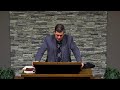
The disciples huddled in a locked room, fear clinging like storm clouds. Jesus appeared—not as a ghost, but flesh and bone. He showed His scars, ate broiled fish. Their doubt melted like morning fog. Just as sunlight breaks through clouds, Christ’s resurrection body proved God’s presence outlasts every darkness. [10:28]
God’s faithfulness isn’t a feeling—it’s fact. Like the sun, He remains constant even when sorrows hide Him. Jesus didn’t abandon the disciples after the cross; He came closer. His scars became proof of love that storms can’t extinguish.
When clouds of anxiety or grief block your view of God, remember: He’s already broken through death itself. What storm in your life needs this reminder of His nearness?
“It is of the Lord’s mercies that we are not consumed, because his compassions fail not. They are new every morning: great is thy faithfulness.”
(Lamentations 3:22-23, KJV)
Prayer: Thank God for one specific way He’s been faithful this week, even if you couldn’t see it clearly then.
Challenge: Write “GREAT IS THY FAITHFULNESS” on a sticky note. Place it where you’ll see it during today’s storms.
Roman soldiers swung hammers while Christ hung naked. No one chanted “worthy”—they cast lots for His clothes. Yet Paul later wrote God proved His love “while we were yet sinners.” Jesus died for rebels, not saints. Mercy came before repentance. [16:43]
God’s love isn’t reactionary. He didn’t wait for us to clean up. Like a father sprinting toward his prodigal son, Christ’s sacrifice started in the manger, not the resurrection. The cross was love’s preemptive strike against our sin.
We often try to earn grace through good behavior or guilt. Where are you still acting like God’s love depends on your performance?
“But God commendeth his love toward us, in that, while we were yet sinners, Christ died for us.”
(Romans 5:8, KJV)
Prayer: Confess one area where you’ve tried to earn God’s love. Ask Him to help you receive it as a gift.
Challenge: Text Romans 5:8 to someone who needs to hear they’re loved before they “fix” their life.
Peter described a heavenly inheritance—incorruptible, undefiled, unfading. Not gold or land, but Christ Himself. Roman wills required seals to prevent tampering. Our inheritance is guarded by God’s power, not our merit. No thief can steal it; no decay can tarnish it. [26:47]
Earthly treasures rust. Careers end. Relationships fracture. But what Christ secures lasts. His resurrection guarantees our future. Trials don’t diminish this inheritance—they make it shine brighter against life’s grit.
What temporary thing have you been clutching like it’s eternal? How would living for your sealed inheritance change today’s choices?
“Blessed be the God and Father of our Lord Jesus Christ, which according to his abundant mercy hath begotten us again unto a lively hope by the resurrection of Jesus Christ from the dead, to an inheritance incorruptible, and undefiled, and that fadeth not away…”
(1 Peter 1:3-4, KJV)
Prayer: Ask God to shift your focus from today’s losses to eternity’s gains.
Challenge: List three “incorruptible” things you can invest in today (e.g., prayer, Scripture, encouraging others).
A refiner heats gold until impurities rise. He skims the dross, repeating until his face reflects clearly. Peter says faith tested by fire becomes purer than gold. Every trial is a furnace where Christ removes what hinders His image in us. [28:07]
God doesn’t waste pain. Like a surgeon cutting to heal, He uses hardships to excise pride, fear, and self-reliance. The disciples’ locked-room fear became boldness when tested by persecution.
What current fire might God be using to reflect more of Jesus in you? Where do you need to trust the Refiner’s hands?
“That the trial of your faith, being much more precious than of gold that perisheth, though it be tried with fire, might be found unto praise and honour and glory at the appearing of Jesus Christ.”
(1 Peter 1:7, KJV)
Prayer: Name one trial you’re facing. Ask God to show you what He’s refining through it.
Challenge: Write the word “PURE” on your palm. Let it remind you to surrender dross when hardships heat up.
Roman soldiers girded tunics before battle—pulling fabric tight to avoid tripping. Peter says “gird up the loins of your mind.” Tangling thoughts—anxiety, bitterness, distraction—must be cinched by truth. A prepared mind sees life’s chaos as a call to depend on Christ. [32:20]
Holiness starts in the mind. Just as Peter walked on water when focused on Jesus but sank when fearing waves, we stumble when our thoughts drift from God’s promises. Victory begins with mental discipline.
What loose thought trips you most often? How can you actively “gird” your mind against it today?
“Wherefore gird up the loins of your mind, be sober, and hope to the end for the grace that is to be brought unto you at the revelation of Jesus Christ.”
(1 Peter 1:13, KJV)
Prayer: Ask God to highlight one thought pattern (worry, anger, etc.) needing His truth as a belt.
Challenge: Replace one negative thought today by quoting 1 Peter 1:13 aloud.
First Peter chapter one unfolds a clear, hope-filled theology grounded in God’s mercy and Christ’s resurrection. The text presents election as God’s foreknowledge that leads to calling, sanctification, and obedience—not as a cold decree but as a positive assurance that births a living hope. That living hope rests on the resurrection of Jesus and on mercy, not on human merit, so believers receive an incorruptible, undefiled inheritance kept safely in heaven by God’s preserving power. Trials enter this picture as a refining process: suffering tests faith and proves it far more precious than perishable gold, shaping character and producing praise and glory at Christ’s appearing.
Old Testament prophets longed to understand these redemptive realities, and even the angels marveled; the gospel’s details went beyond their comprehension yet pointed forward to Christ’s sufferings and triumph. The practical call in this passage commands mental preparation—“gird up the loins of the mind”—which means to discipline thought, cast down imaginations that oppose God’s knowledge, and bring every thought into obedience to Christ. That preparation requires sober-mindedness: a reverent, clear-eyed posture that sees salvation as gift rather than achievement and that avoids religious performance.
Holiness, in this framework, flows from yielded dependence rather than self-effort. God’s holiness becomes the standard into which lives are set apart by submission, not by works-based striving. The rightful fear to carry through the sojourning life is a reverential awe of the Father who judges impartially and who redeemed with the precious blood of Christ. The mark of genuine transformation appears in renewed relationships: purified souls obey truth by the Spirit and love the brethren with sincere, fervent affection. Service that honors God springs from this surrendered heart—grace-produced, humble, and aimed at others’ restoration rather than self-exaltation. The passage closes by urging a life oriented toward Christ’s revelation, anchored in hope, disciplined in thought, sanctified in conduct, and expressed in sacrificial love.
And he's already predetermined that. Is that the god that we serve? No. God is not willing that any should perish, but that all should come to repentance, and he gives us that choice. Now according to his foreknowledge, he knows the choice that people will make. But he's not, nope. I created you to burn in hell. Is that how is that the god that we serve? Is that the god that we follow? And the answer is no. No.
[00:23:33]
(27 seconds)
#GodChoosesRepentance

You know, the idea of passing your time here in fear, it can be taken one of two ways. And, as I think of this, you you could take it in the sense of if we were to stand before god based on our righteousness, there'd be a lot of fear because it would never make it. But we know that we're not redeemed with corruptible things. It's not our works. It's a it's not how much money we earn or how much we can do for the church.
[00:45:44]
(26 seconds)
#NotSavedByWorks
I'm an AI bot trained specifically on the sermon from Apr 20, 2026. Do you have any questions about it?
Add this chatbot onto your site with the embed code below
<iframe frameborder="0" src="https://pastors.ai/sermonWidget/sermon/hope-holiness-service" width="100%" height="100%" style="height:100vh;"></iframe>Copy