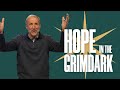
I opened with the surprising rise of “grimdark,” “hopepunk,” and “hopecore,” and why those genres tell us something about the world’s hunger for hope. In a time of wars, cultural turbulence, and personal weariness, hope can feel endangered—yet Advent is precisely the season that trains our eyes to expect good. We stepped into Luke 1 and walked with Zechariah and Elizabeth—ordinary, faithful people carrying unfulfilled longings: for a child, for their nation’s renewal, for God to remember them. Into that ache, Scripture shows us what hope is and why it matters.
Biblical hope isn’t vague optimism; it’s the expectation that God will do something good. That good may not arrive on our timetable or in the form we had in mind, but God is at work—personally and globally—bringing about redemption. Zechariah keeps praying beyond the point of probability, and an angel announces two answers at once: a son for an elderly couple and a forerunner for a long-promised Messiah. Their hopes are fulfilled—but not as expected. Instead of Zechariah Jr., they receive John the Baptizer; instead of political deliverance, God brings salvation in Jesus.
We named three reasons hope is crucial. First, hope sustains us when it’s feeble. Even a thin strand of expectation keeps us praying, showing up, and resisting bitterness. Second, hope rewards us—even when it’s not what we expected. God’s good often surprises us, meeting our deepest need rather than our nearest want. Third, hope inspires us—even when it’s distant. Like waiting for a sunrise, we rise with confidence because we know it will come; we act now because the future is secured in Christ.
I shared how this looks for us as a church in a challenging transition year. We wanted a seamless path; instead, God is forming us—uniting staff and elders, preparing a new pastor, and shaping a resilient congregation. Our ultimate hope is not in what, when, or how, but in who. Hope is a person—Jesus—who has come, is present, and will come again to guide our feet into the path of peace. So we bring our specific longings to him—personal and global—and ask him to do something good, even if it’s unexpected, even if it’s far off.
Key Takeaways
- 1. Biblical hope expects God’s goodness Biblical hope is not optimism or denial; it is a settled expectation that God will act for good, even when details remain unclear. That kind of hope is rooted in God’s character and promises, not in our probabilities. It allows us to wait without cynicism and plan without control. Advent trains our hearts to live by that expectation. [11:54]
- 2. Feeble hope sustains faithful perseverance Zechariah kept praying past the point of practicality, and that thin thread kept him engaged with God and his calling. Even when our faith is wobbly, hope gives us oxygen to keep showing up. It resists the corrosion of bitterness and the inertia of despair. God often meets us precisely where we keep returning in hope. [19:05]
- 3. Hope rewards us, not as expected God gave Zechariah and Elizabeth a son—and gave the world a prophet—yet not on the timeline or terms they imagined. Hope teaches us to receive God’s good even when it diverges from our script. The surprise is not a failure of love but often its deeper wisdom, addressing what we most need rather than what we most want. [24:19]
- 4. Distant hope inspires present courage The sunrise metaphor matters: we act now because we are certain morning is coming. When we know Christ will set all things right, we can risk love, endure hardship, and refuse fear. This kind of hope does not numb us to pain; it energizes faithful action in the middle of it. [30:04]
- 5. Hope is a Who: Jesus Without a person, hope is wishful thinking. In Jesus, hope takes flesh—bearing our darkness, rising in victory, and promising to come again. We entrust our personal and global longings to him, confident that his presence is the difference between anxiety and expectancy. [36:45]
Youtube Chapters
- [00:00] - Welcome
- [00:35] - Advent joy and personal updates
- [02:15] - Trying AI to explore hope
- [03:19] - Grimdark, Hopepunk, and Hopecore explained
- [06:32] - Meet Zechariah and Elizabeth
- [09:58] - What are you hoping for?
- [11:54] - Defining biblical hope
- [14:26] - Angelic promise and two prayers
- [19:05] - COVID memories and perseverance
- [24:19] - When hope is answered differently
- [27:02] - Our church’s hopeful transition
- [30:04] - Sunrise metaphor: hope inspires
- [33:23] - Christ, past and future hope
- [36:45] - Hope is a Who: Jesus
- [39:31] - Prayer of expectancy