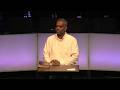
Jesus Christ took a man born and brought up in a Hindu family, trained from childhood to do temple priest work, and showed him that “this new God” was not like the gods he had known. India’s many temples, coconuts, bananas, flowers, astrology, and pujas formed his whole world, but the New Testament showed Jesus commanding waves, raising the dead, touching lepers, and walking on the sea. The name of Jesus first met rejection in his heart, so much rejection that the Bible became something he wanted to burn.
A carpenter’s witness became the moment when resistance broke open into sickness, fear, and helplessness. The hospital bed became the place where all the gods he had served stayed silent. The fear of death asked the question that temple work could not answer: which god is going to welcome him after death? The one God he had rejected was the only one left to call upon.
That small prayer was simple: “Jesus, if you are a true God, reveal me your truth.” Christ answered not first with argument, but with peace, sleep, healing, and a presence in the heart that could not be removed. The trees seemed to speak “Jesus, Jesus, Jesus,” because the living Christ had entered where idols had failed.
Psalm 1 began to teach him the way of righteousness, and Psalm 115 exposed the idols with eyes that cannot see, mouths that cannot speak, noses that cannot smell, and feet that cannot walk. Romans 6 called him out of the old life into baptism, where old things pass away and new things come. The Spirit of God gave wisdom, languages, preaching, and boldness far beyond what human training could explain.
The gospel then carried him into villages, Bible schools, church planting, and persecution. Bamboo sticks, broken bodies, ropes, gasoline, a river, and a jungle became the place where fear left and faith spoke. The blood of Christians, he said, would not silence the gospel, but would raise up thousands more to preach Jesus Christ. God honored that faith with an unexpected letter from America, provision for study, and a wider call to evangelize Asia for Christ.
Revelation 7 places that whole story before the throne, where every nation, tribe, people, and language will cry, “Salvation belongs to our God.” The call is not guilt, but boldness. Jesus is the only hero of the story, and true life is found only in him.
##
Key Takeaways
- 1. Jesus answers the rejected prayer A heart can reject the name of Jesus for years and still be reached by mercy in one honest sentence. The prayer in the hospital was not polished, but it was surrendered: “reveal me your truth.” Christ met that cry with peace before the mind had all the answers. [53:41]
- 2. Idols cannot carry the dying The gods that receive devotion in strength may become silent in weakness. Psalm 115 presses the issue with plain force: eyes that cannot see and mouths that cannot speak cannot welcome a soul beyond death. The living God is known not by decoration, but by power to answer, save, and give life. [56:07]
- 3. Baptism means old things pass Romans 6 did not offer a small religious addition to temple priest work. Baptism meant burial with Christ, a clean break from the old identity, and a new life under another Lord. Grace did not decorate the old life, it ended it and raised something new. [57:45]
- 4. Persecution reveals Jesus as worth it The jungle did not create faith, but it revealed what faith had come to believe. When death seemed near, fear left because Jesus was no longer an idea, but the one who welcomes his martyrs. The threat of bamboo sticks and a river could not make Christ less worthy. [66:26]
- 5. The nations belong before the Lamb Revelation 7 shows where every faithful witness is headed: every tribe, language, people, and nation before the throne. Mission is not a human project trying to make history meaningful. Mission is the road toward the worship that heaven has already promised.
## [77:04]
Youtube Chapters