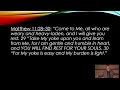
A firsthand account of physical suffering becomes a vivid sermon on spiritual rest. A broken arm and weeks of sleep deprivation illustrate how intense longing for bodily rest mirrors a deeper need for soul rest. Jesus’ invitation—“Come to me all who are weary”—stands as the only lasting remedy for guilt, striving, and the futile labor of self-justification. The writer of Hebrews frames that invitation within a stern warning drawn from Psalm 95 and Israel’s wilderness failure: familiarity with God’s works without faith can still leave people outside God’s promised rest.
The text distinguishes between outward participation and inward trust. Many can attend worship, enjoy fellowship, and assent to facts about Jesus yet stop short of faith that changes the heart and produces obedience. The repeated summons “today” presses urgency: the right moment to embrace Christ and cease from self-effort is this present day. Rest in Christ means more than relief from toil; it means cessation from earning salvation, freedom from crippling guilt, inner peace that outlasts life’s hassles, settled security in God’s keeping, and confident perseverance rooted in grace.
Hebrews recasts Sabbath imagery to show that God’s finished work invites people into a permanent Sabbath rest—a salvation that removes the need to labor for acceptance. The warning applies both to unbelievers who have never trusted and to believers who can drift into mere ritual, complaint, or spiritual complacency. Theologized hope follows applied urgency: enter that rest by repentance and faith; make pursuing spiritual rest a top priority. The summons balances compassionate invitation and sober fear—call to trust rather than to greater effort, and call to diligence rather than casual attendance. The passage closes with pastoral prayer: the sinner whose sins feel too great must come, and the believer must join word and life so faith bears lasting fruit.
Key Takeaways
- 1. Rest comes by ceasing works True spiritual rest issues when persons stop attempting to earn God’s favor and accept the finished work that secures forgiveness. Ceasing to labor for righteousness opens the soul to Sabbath peace—no more performance-driven identity, only reliance on Christ’s accomplished atonement and ongoing sufficiency. That rest reorders motives and frees energy for worship, service, and perseverance born of gratitude rather than fear. [27:44]
- 2. Today is the decisive day The repeated “today” in the passage turns theological truth into urgent summons: faith must move from intellectual assent to present trust that shapes life. Procrastination and familiarity with Christian practice harden hearts; the only safe posture is immediate repentance and dependence. This urgency invites sacramental seriousness—take the present hour as the locus of conversion and renewal. [16:22]
- 3. Outward religion often deceives hearts Attendance, ritual, and agreeable theology can mask unbelief when they fail to produce inward repentance and obedience. The wilderness generation illustrates how proximity to God’s means—sacrifice, deliverance, community—does not guarantee union with God unless faith transforms motives and behavior. Examine whether commitments cost something; genuine faith reshapes life, not merely patterns of presence. [25:05]
- 4. Diligence to enter rest The call to “be diligent” reframes rest as intentional pursuit: entering God’s rest requires prioritizing repentance, prayerful attention to Scripture, and perseverance against spiritual drift. This diligence is not merit-making but faithful receptivity—making it one’s chief aim to rely on Christ, to root conviction in daily obedience, and to refuse the complacency that lost generations displayed. Steadfast attention to union with Christ secures lasting peace. [39:52]
Youtube Chapters
- [00:00] - Welcome
- [00:16] - Announcements and transition
- [01:08] - Follow-up to resurrection focus
- [01:30] - Personal accident and recovery
- [03:30] - Lessons from sleep deprivation
- [06:15] - Jesus’ invitation: Matthew 11
- [09:02] - Moving into Hebrews
- [13:47] - Exposition of Psalm 95
- [22:50] - Warning: fear of missing rest
- [27:44] - Defining Sabbath rest in Christ
- [39:52] - Call to diligence and response
- [42:44] - Closing prayer and benediction