Life gets busy, and good things can crowd out the best thing—time set apart for God. Drift rarely begins with defiance; it starts when worship moves from first to “if there’s time.” You’re invited to clear space again so the Lord doesn’t get your leftovers but your first yes. Choose attention over autopilot, presence over distraction, delight over duty. Guard the day and the heart, and watch how your week re-centers around Him. [04:12]
Nehemiah 13:15–16
Nehemiah noticed people pressing grapes, hauling grain, and selling goods on the day set apart for rest, even traders from outside bringing fish and merchandise into Jerusalem. He warned them because ordinary work had replaced holy attention to God.
Reflection: What one concrete change to your weekly schedule would make gathered worship and unrushed rest truly first rather than squeezed in at the edges?
When worship is treated as ordinary long enough, it stops feeling urgent. Nehemiah didn’t just notice the drift; he spoke up, reminding the people where unchecked compromise had led them before. Then he set boundaries—shutting gates, posting guards—so pressure and convenience could no longer set the tone. Love sometimes looks like limits that protect what is holy. Peace isn’t preserved by silence but by faithful, timely courage. [03:37]
Nehemiah 13:17–19
Nehemiah challenged the leaders for treating the Sabbath like any other day, warning them that this path had already harmed their nation. As evening approached, he ordered the city gates closed before the Sabbath and kept them shut until it was over, placing guards so business couldn’t reshape their worship.
Reflection: Where have you stayed quiet while a small compromise has quietly grown, and what gentle, honest step could you take this week to bring it into the light and set a healthy boundary?
The future of faith is formed in everyday places—at tables, in car rides, before bed. Nehemiah grieved that children couldn’t speak the language of worship, signaling a slow disconnect from Scripture and identity. Formation is always happening; if the home doesn’t disciple, something else will. You don’t need perfection—just faithful rhythms that point hearts to Jesus. Start small, stay steady, and let love lead the way. [04:06]
Deuteronomy 6:6–7
Keep God’s words close to your heart, and pass them along with intention—talk about them at home, on the way, when you lie down, and when you rise—so life itself becomes the classroom of faith.
Reflection: What one simple, repeatable practice (like mealtime prayer, a short psalm at bedtime, or a weekly family gratitude round) will you begin this week to help your home speak the language of faith?
Compromise rarely shouts; it whispers and gradually turns the heart. Even Solomon, blessed with wisdom and favor, drifted when he let unguarded influences steer his loves. The question isn’t only, “Is this allowed?” but, “Is this shaping me toward Christ?” Some things feel manageable today yet redirect us tomorrow. Guard the inputs, and you’ll guard the outcome. [03:22]
1 Kings 11:4
As Solomon grew older, the voices he welcomed drew his heart in other directions, and his devotion was no longer fully aligned with the Lord as it had been in his earlier years.
Reflection: What influence—relationship, feed, habit, or voice—feels “fine for now” but is quietly tugging your heart off-center, and what boundary or replacement will you choose this week?
It’s not enough to fix a moment; we must also remove what caused the mess and replace it with better. Nehemiah cleansed what was wrong, restored right order, and set rhythms so faithfulness could last. Jesus warned that an empty, swept house invites a worse return if nothing life-giving fills the space. Obedience is a path, not a moment—guard it with structure, community, and grace. Replace noise with Scripture, panic with prayer, isolation with accountability. [04:31]
Matthew 12:43–45
When a corrupt spirit leaves, it wanders and later returns to find the life tidied but vacant; it comes back with reinforcements, and the final condition becomes worse than before. The warning is clear: clearing out isn’t enough—fill the house with what is truly good.
Reflection: Where has God recently brought a clean start, and what specific structure (a time, a boundary, a person for accountability) will you add this week to protect and strengthen that obedience?
Chaos has a way of returning to what was once clean when no one guards it. I felt that standing in our house just days after Gina worked hard to shine it up—thirty-five minutes later the mess crept back in. That picture set the tone for Nehemiah 13. The wall was up, worship restored, the house cleansed—yet drift slipped in because what God rebuilt wasn’t guarded. So I called us to three simple, costly moves: protect the priority of worship, preserve the purity of the house, and practice the path of obedience.
First, protect the priority of worship (Nehemiah 13:15–22). Israel didn’t reject God; they got busy. The Sabbath turned into just another workday. Drift rarely announces itself; it arrives as good things crowd out the best. Nehemiah confronted leaders, closed the gates, and stationed guards. He changed the environment because intention without boundary won’t hold. What we don’t confront will shape what we become. Leaders don’t manage comfort; they guard what’s holy. I told our church family with love and clarity: that season of letting things slide is over. We’re going to guard the house.
Second, preserve the purity of the house (13:23–27). The crisis showed up in the children—they couldn’t speak the language of Judah, the language of Scripture and worship. The issue wasn’t loud rebellion but quiet formation. Homes are discipleship centers; what we tolerate becomes normal, and what becomes normal becomes culture. Nehemiah reached for Solomon as a warning: compromise doesn’t collapse you all at once; it turns you—slowly—until your loves are realigned. So we asked better questions than “Is this allowed?” We asked, “Is this forming the kind of people God is calling us to be?”
Third, practice the path of obedience (13:28–31). Obedience that isn’t guarded doesn’t last. Nehemiah removed what defiled and reestablished what was right—duties, rhythms, provisions. It isn’t enough to clear a room; you must furnish it with better things or the old returns stronger. My plumbing fiasco preached that to me: I fixed the toilet but left the wipes. We finish clean by locking the gates, building the right habits, and replacing what was removed with prayer, Scripture, accountability, and presence. Nehemiah’s final prayer—“Remember me, O my God, for good”—isn’t pride. It’s a steward’s report: I guarded what You gave me. That’s the call as we enter a new year—close open gates, confront what we hoped would fix itself, refuse to carry compromise forward, and for some, step into new life in Christ today.
The chaos came back because what was cleaned wasn’t guarded; a clean house won’t stay clean unless someone is guarding it.
Most spiritual drift doesn’t start with bad decisions. It starts when good things crowd out the best things—we get busy and never clear space for God to be first.
We don’t wake up one day and decide worship doesn’t matter. We just get busy—busy with work, busy with family, busy with life.
When compromise becomes visible, leadership doesn’t get the option to stay silent; what we don’t confront will eventually shape the worship of the whole house.
What we allow—what we normalize, what we stop paying attention to—eventually begins to shape the whole house, and the next generation inherits that direction.

Compromise always costs more than it promises; it rarely destroys us suddenly but redirects us slowly, turning what feels manageable into the very thing that steals our future.
Obedience that isn’t guarded doesn’t last; clearing something out isn’t enough if you don’t put something better back in its place.
An empty house doesn’t stay clean for long; fixing a problem doesn’t help if you don’t guard it afterward with structure and lasting change.
This altar isn’t just for people who are far from God. It’s for the people of God who want to stay faithful.
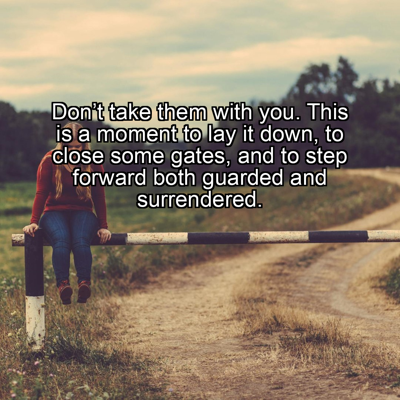
Don’t take them with you. This is a moment to lay it down, to close some gates, and to step forward both guarded and surrendered.
Add this chatbot onto your site with the embed code below
<iframe frameborder="0" src="https://pastors.ai/sermonWidget/sermon/guard-the-house" width="100%" height="100%" style="height:100vh;"></iframe>Copy