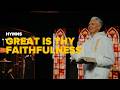
Lamentations 3 takes the church right into the middle of pain, not around it. Jeremiah names the affliction, the wanderings, the wormwood, and the gall. The bitterness is real. The poison feels real. The prophet is not pretending everything is fine, and God is not too fragile to handle an honest heart.
God’s faithfulness does not require perfect circumstances. Jerusalem has fallen, Babylon has taken over, homes are gone, worship is disrupted, and the people of God are scattered. Jeremiah has every earthly reason to say God is absent. Yet the pain proves the world is broken, not that God is unfaithful.
The hymn “Great Is Thy Faithfulness” carries that same witness. Thomas Chisholm’s life was not marked by fame, money, or perfect health. God’s provision came through an ordinary life, day by day, morning by morning. God’s faithfulness is not only found in spectacular deliverance, but in daily provision that keeps showing up when life still feels heavy.
Jeremiah turns on one small word: “but.” His circumstances have not changed, but his mind has shifted. His soul remembered pain, but then his heart called to mind the steadfast love of the Lord. Hope rises when the people of God remember what is true about God before the situation looks any different.
God’s steadfast love never ceases. His mercies never come to an end. Great is his faithfulness, not just good, but great. Even when humanity is faithless, God remains faithful because he cannot deny himself.
The promises of God have to be brought into the middle of pain. Hope is not something a person manufactures by trying harder. Hope comes when the faithful God who is already present gets called back to mind. What occupies the mind will eventually shape hope, so bitterness on repeat leads somewhere dark, but God’s promises on repeat teach the heart to stand.
God is the portion of his people. The Lord is not stingy. He is inheritance, security, satisfaction, and the source of everything truly needed. Jeremiah may have lost what he possessed, but he had not lost the God who possessed him.
God’s greatest faithfulness is seen in Jesus. The deepest need is not always the thing being asked for, but pardon for sin and peace that endures. Christ died while sinners were still sinners, and the free gift of eternal life remains the brightest hope for tomorrow.
##
Key Takeaways
- 1. Pain is not God’s unfaithfulness [14:05] Pain tells the truth that the world is broken, but pain is a terrible interpreter of God’s character. Jeremiah can name the poison and bitterness without letting those things define the Lord. Honest lament becomes dangerous only when it turns into a verdict against God instead of a cry to God. [14:05]
- 2. Hope begins with holy remembering [20:33] Jeremiah’s “but this I call to mind” shows that hope often starts before circumstances change. The soul can remember pain, but faith calls God’s steadfast love and mercy back into view. The mind that rehearses God’s character is not denying suffering, it is refusing to let suffering have the final word. [20:33]
- 3. God’s mercies arrive every morning [23:21] The mercy of God is not a vague feeling from the past, but fresh provision for the day at hand. The need for new mercy every morning exposes human weakness, but it also reveals the constancy of divine compassion. God does not excuse sin or ignore sorrow, but his grace remains sufficient in the middle of both. [23:21]
- 4. God himself is the portion [31:52] The Lord as portion means God is inheritance, security, and satisfaction when everything else can be taken. Jeremiah’s world has collapsed, but the God who possesses his people has not been lost. Faith learns to say that circumstances are not the ultimate portion because God himself is enough. [31:52]
- 5. Jesus is the greatest provision [41:41] God’s faithfulness is not proven mainly by giving every wanted thing, but by giving the one need that stands above all others. Christ died for sinners while they were still sinners, bringing pardon for sin and peace that endures. Eternal life in Jesus is not an add-on blessing, but the deepest mercy of God made visible.
## [41:41]
Youtube Chapters
- [00:00] - Welcome
- [01:21] - Reading Lamentations 3
- [03:08] - Introducing Great Is Thy Faithfulness
- [05:16] - Thomas Chisholm’s Ordinary Life
- [07:39] - Faithfulness In Daily Provision
- [08:44] - Jeremiah In Devastation
- [09:55] - Faithful In The Middle Of Pain
- [14:05] - Pain And A Broken World
- [18:07] - Hope Rises Through Remembering
- [20:15] - The Turning Point: But
- [23:21] - Mercies New Every Morning
- [25:07] - Bringing Promises Into Pain
- [29:04] - The Hymn’s Declaration
- [30:19] - God Is The Portion
- [41:41] - Jesus, The Greatest Evidence Of Faithfulness