Many of us have mistakenly viewed Jesus's Beatitudes as a demanding checklist, a series of virtues we must perfectly embody to earn God's favor. We might feel like we're constantly failing to measure up, assuming God's blessing is reserved for those who are "more spiritual" or "better." But these profound words are not a ladder to climb; they are an open door, a radical announcement of grace. Jesus isn't raising the bar higher; he is throwing the doors of the kingdom open wider, inviting all to enter. [03:55]
Matthew 5:3-10
Jesus said, "How truly blessed are those who recognize their spiritual poverty, for the kingdom of heaven is theirs. How truly blessed are those who grieve, for they will find comfort. How truly blessed are the gentle, for they will inherit the earth. How truly blessed are those who deeply desire what is right, for their hunger will be satisfied. How truly blessed are the compassionate, for they will be shown compassion. How truly blessed are those with pure intentions, for they will see God. How truly blessed are those who work for peace, for they will be called God's children. How truly blessed are those who suffer for doing what is right, for the kingdom of heaven is theirs."
Reflection: In what ways have you previously approached the Beatitudes as a set of requirements rather than an invitation, and what burden might that have placed on your heart?
Imagine a crowd gathered on a hillside, many of whom had been told by the religious system of their day that they were excluded from God's blessing. They were the poor, the sick, the marginalized, the "wrong" gender, class, or moral category. Yet, Jesus looked out at these very people and declared them blessed. He consistently welcomed those the world rejected—lepers, sinners, women, Gentiles—demonstrating that God's heart is for the lost and the overlooked. The kingdom of heaven is not exclusive; it is radically inclusive, welcoming those who have been told they don't belong. [04:50]
Matthew 5:1-2
When Jesus saw the large crowds, he went up a mountain and sat down. His followers came close to him, and he began to teach them.
Reflection: When you consider the people Jesus intentionally welcomed, who in your own community or sphere of influence might feel similarly excluded or overlooked by conventional standards?
It is crucial to understand that Jesus does not declare people blessed because of their difficult conditions. Poverty, grief, or persecution are not virtues in themselves. Rather, these individuals are blessed because Jesus is inviting them into the kingdom, offering hope even in their challenging circumstances. The people Jesus blesses are often those who recognize their inability to "handle it" on their own; they come with empty hands, which are the only kind that can truly receive a gift. This profound truth reminds us that our brokenness, not our self-sufficiency, is the entry point for God's grace. [06:45]
Matthew 5:3
Jesus said, "How truly blessed are those who recognize their spiritual poverty, for the kingdom of heaven is theirs."
Reflection: What area of your life or spiritual journey are you currently trying to "handle" on your own, and what might it look like to approach God with empty hands in that specific situation?
While Jesus extends a grand invitation to the marginalized, he also offers a sobering warning to those who are comfortable and prosperous. It is not that God dislikes the rich or the well-off, but rather that wealth and comfort can dangerously numb us to our profound need for God. When life is going smoothly, we can easily mistake temporary prosperity for the true good life, settling for worldly consolations and inadvertently missing the kingdom of heaven. The comfortable are not excluded, but they face the unique peril of believing they don't need the very grace that is freely offered. [07:30]
Luke 6:24-25
But sorrow awaits you who are rich, for you have already received your comfort. Sorrow awaits you who are full now, for you will experience hunger. Sorrow awaits you who are laughing now, for you will mourn and weep.
Reflection: In what ways might your current comforts or successes be subtly blinding you to a deeper spiritual need or a reliance on God that you might otherwise embrace?
The beauty of understanding the Beatitudes as an invitation is that once we receive this grace, we are transformed into inviters ourselves. Jesus tells his disciples, a diverse group of once-marginalized individuals, "You are the salt of the earth… You are the light of the world." The very people who were once rejected become agents of transformation, extending the same welcome they received to others. This is the natural outflow of grace: we stop hoarding it and begin sharing it, becoming channels of God's love and invitation in a world that desperately needs to know the kingdom is open to all. [09:00]
Matthew 5:13-14
You are like salt for the earth. But if salt loses its flavor, how can it be made salty again? It is no longer good for anything but to be thrown out and trampled underfoot. You are like a light for the world. A city built on a hill cannot be hidden.
Reflection: Considering the grace you have received, what is one concrete way you can extend a genuine invitation or blessing to someone in your life who might feel overlooked or excluded this week?
Last week we began our Lenten walk through the Sermon on the Mount, and today we stood with Jesus on that hillside to hear the Beatitudes. The crowd he addressed were the overlooked: the poor, the sick, the women, the outcasts—people the religious system of the day had disqualified. Jesus did something scandalous: he told them they were blessed. He didn’t add another ladder of virtues to climb; he opened the doors wide and invited those with empty hands to enter the kingdom.
We unpacked the assumptions Jesus overturned: that the kingdom belongs only to the right people—Jewish, male, wealthy, healthy, righteous. Instead, Jesus announced that the kingdom belongs to the poor in spirit, those who mourn, the meek, those who hunger for justice, the merciful, the pure in heart, peacemakers, and the persecuted. These descriptions are not virtues to be manufactured but portraits of people who already know their need and therefore can receive.
This is grace on a mountainside. The blessings are declarations, not demands. Jesus blesses those the world would write off because they are the ones most ready to receive the gift. At the same time there is a warning to the comfortable: wealth and ease can anesthetize our hunger for God. Comfort can be a spiritual danger when it convinces us we don’t need invitation or dependence.
The story of Kevin made this concrete. Kevin had almost nothing by the world’s standards, yet his joy and capacity to bless others were signs of someone who had received the invitation and became an inviter. When the blessed receive, they become salt and light—agents who welcome, mourn with, feed, and reconcile others. The Beatitudes call us to receive first and then to embody that welcome for the world.
The invitation still stands. No list of accomplishments, no degree of moral success, no category the world assigns can bar anyone from this welcome. Whether you feel poor in spirit or strangely comfortable, the question is simple: will you come with empty hands and accept what has already been offered? The kingdom is open; the call is to receive and to pass that reception on to others.
I believe the Beatitudes are not what we've been taught. They are not a spiritual checklist. They are not a ladder we must climb to earn God's blessing.
The Beatitudes are invitations, not prescriptions. Jesus isn't raising the bar higher—he's throwing the doors open wider, announcing to the disqualified that they're welcome and blessed.
He saw the poor, the grieving, the powerless, the hungry, the marginalized—and he announced that the kingdom of heaven belonged to them.

The people Jesus blesses are the ones who know they can't handle it. They're the ones who come with empty hands. And empty hands are the only kind that can receive a gift.

When everything is going well, when our bellies are full and our bank accounts are healthy, we can easily forget that we need God.
The very people the world rejected have become the agents of transformation. The ones who received the invitation are now extending it to others.

By the world's standards, Kevin had nothing going for him. And yet he was one of the most joyful, loving people anyone had ever met, because he knew he was welcomed, esteemed, and valued in God's kingdom.
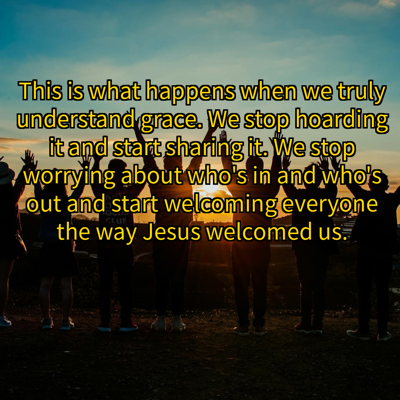
This is what happens when we truly understand grace. We stop hoarding it and start sharing it. We stop worrying about who's in and who's out and start welcoming everyone the way Jesus welcomed us.
Add this chatbot onto your site with the embed code below
<iframe frameborder="0" src="https://pastors.ai/sermonWidget/sermon/grand-invite" width="100%" height="100%" style="height:100vh;"></iframe>Copy