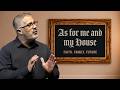
Families thrive when they intentionally mark God’s interventions. Just as Joshua instructed Israel to stack memorial stones after crossing the Jordan, we need tangible reminders of divine faithfulness. These "Ebenezers" become conversation starters for future generations, testifying to God’s provision in seasons of grief, financial strain, or relational healing. Spiritual amnesia creeps in when we neglect storytelling. But rehearsing miracles – big or small – fortifies trust for tomorrow’s challenges. Every answered prayer, protected child, or redirected life is a stone in God’s ongoing narrative. [56:16]
“When your children ask in time to come, ‘What do those stones mean to you?’ then you shall tell them that the waters of the Jordan were cut off before the ark of the covenant of the Lord. These stones shall be to the people of Israel a memorial forever.”
(Joshua 4:6–7, ESV)
Reflection: What “memorial stone” moment from your family’s story have you neglected to share with younger generations? How could naming one specific answered prayer this week strengthen someone’s faith?
Homes centered on grace reject the idol of perfection. Performance-driven families fixate on achievements, appearances, and avoiding failure – a crushing burden. But grace-based families run to Christ in their imperfections. They normalize repentance, like parents apologizing to children, because they know forgiveness fuels growth. This atmosphere mirrors Pentecost: not self-made holiness, but Spirit-empowered transformation. Marriages find peace here. Children learn to thrive, not hide. [57:13]
“For by grace you have been saved through faith. And this is not your own doing; it is the gift of God, not a result of works, so that no one may boast.”
(Ephesians 2:8–9, ESV)
Reflection: Where has a “perform to belong” mentality subtly infected your family interactions? What one phrase could replace pressure with grace in conversations this week?
Spiritual formation often happens in the mundane – like family car rides. These unforced moments become holy ground when we discuss God’s Word, answered prayers, or current struggles. The dashboard’s forward gaze mirrors faith’s posture: looking ahead while remembering the rearview of God’s faithfulness. These talks need no agenda, just availability. Stories shared between soccer practices and grocery runs weave faith into daily fabric. [01:07:09]
“These words that I command you today shall be on your heart. You shall teach them diligently to your children, and shall talk of them when you sit in your house, and when you walk by the way, and when you lie down, and when you rise.”
(Deuteronomy 6:6–7, ESV)
Reflection: What ordinary moment this week could become a “windshield altar”? How might sharing a current prayer request during a commute deepen your family’s spiritual honesty?
Families aren’t DIY projects. Pentecost reminds us that building Christ-centered homes requires the Spirit’s blueprints, not human willpower. The Spirit mentors parents in wisdom, whispers peace during marital tension, and guides teens navigating cultural chaos. Like the disciples waiting in the Upper Room, families thrive when they prioritize the Spirit’s presence over self-reliance. Spiritual power flows when we admit, “We can’t, but He can.” [59:15]
“And Peter said to them, ‘Repent and be baptized every one of you in the name of Jesus Christ for the forgiveness of your sins, and you will receive the gift of the Holy Spirit. For the promise is for you and for your children.’”
(Acts 2:38–39, ESV)
Reflection: Which family challenge feels overwhelming in your own strength? How could inviting the Spirit into that situation shift your approach this week?
Busyness is the modern Amorite, fighting to claim territory in our homes. Joshua’s call to “choose this day” applies to our calendars: every activity declares what we value. Prioritizing God’s presence means scheduling around Him, not squeezing Him into leftovers. Children discern true worship by what consistently gets time – sports, screens, or Scripture. Memorial Day reminds us: what we ritualize, we remember. [01:09:13]
“Unless the Lord builds the house, those who build it labor in vain. Unless the Lord watches over the city, the watchman stays awake in vain.”
(Psalm 127:1, ESV)
Reflection: What recurring event in your family’s schedule unintentionally declares “this matters most”? How could adjusting one time commitment this month center your home more on Christ?
Joshua gathers Israel near the end of his life and stacks up God’s verbs so no one misses the point. The text says again and again, I have given you, I have delivered you, I have sent you, I have brought you out. The crossing, the victories, the land and vines, the houses and groves are all grace. It was not your swords or bows. On the heels of remembered grace the charge lands with weight. Therefore fear the Lord and serve him wholeheartedly. Put away the idols. The declaration as for me and my house, we will serve the Lord grows out of this soil. A home that serves the Lord is a home that remembers the Lord.
The danger named for families today is not loud rebellion but quiet distraction. Schedules thicken, phones hum, pressure mounts, fatigue sets in, and slowly God slides from center to edge. Remembering pushes back. Remembering God’s faithfulness strengthens future faithfulness. Like those twelve memorial stones from the Jordan, stories shape identity. So testimony belongs at the kitchen table and in the passenger seat. Children and grandchildren need to hear the rescues, the provisions, the restorations, the no’s that were mercy, the yes’s that were surprise.
Grace defines the kind of home being built. A grace based family roots identity in what God has done, not in what anyone can perform. Performance says keep up and don’t fail. Grace says loved, dependent, forgiven, and invited to grow. In a grace atmosphere people can repent, apologize, and try again without being discarded. Children raised only under pressure learn to hide. Children raised in truth and grace learn to thrive.
Pentecost locates the power for this work. God did not only give instructions. God gave his presence. The Spirit indwells, convicts, strengthens, and leads. Parents need wisdom, marriages need peace, children need guidance, and families need power that is not in them. A spiritual family looks different not because it is flawless but because God is actively present.
Proverbs 22:6 names responsibility. Spiritual formation is intentional. Culture is already discipling the home through screens, entertainment, politics, and peers, so discipleship will happen one way or another. Practices matter. Talk about God naturally at home, not only at church. Actually pray prayers and open Scripture so there is something real to share. Use ordinary rhythms like car conversations. Pray together. Let children see humility in confession. Prioritize the presence of God consistently. Celebrate and write down the stories. Imperfect families are the audience of this grace, and a faithful God still builds houses that serve him.
Spiritual formation is not something that happens accidentally. It doesn't just happen because we want it to happen. It happens because we put the work in it. And here's something that I don't think I have to say it and yet I think it's something we easily dismiss don't give credit to the influence that it has. And that is that our culture is discipling our families every single day. Screens are discipling our families. Entertainment, social media, politics and peer pressure are discipling our families each and every day.
[01:02:57]
(41 seconds)
#IntentionalSpiritualFormation

While discipline and responsibility matter, performance can never create spiritual health. But grace changes people differently. Grace says we are loved by God. Grace tells us that we are to be dependent on God. Grace reminds us that we are in need of forgiveness, that we need God's mercy, and most importantly, we need Jesus with us every single day. Grace based family is not a perfect family, but it is a family that knows where to run when things are imperfect, and that changes the atmosphere of our homes.
[00:57:52]
(45 seconds)
#GraceNotPerformance
Families need the spirit's power. Because as many of us know already, there are moments in our family's lives when our own strength just isn't enough. That's why Jesus sent the Holy Spirit. Not so that we could merely attend church services, but so that we could experience and live transformed lives. A spiritual family should look different from the world around us, not because it's perfect, but because God is actively present in it. In that family, forgiveness and peace and reconciliation all become possible.
[01:01:06]
(35 seconds)
#SpiritPoweredFamily
Joshua is nearing the end of his life, and he is taking some time here to gather all of the people of Israel together because he wants to kind of just bring some things back into focus for them as he knows his time is coming to an end. He reminds the people of Israel together just how much God has done for them. And then at the end of chapter 24, we get that famous declarative statement that most of us are certainly familiar with where he where he ultimately says as and declares, as for me and my house, we will serve the Lord.
[00:42:24]
(41 seconds)
#AsForMeAndMyHouse
I'm an AI bot trained specifically on the sermon from May 25, 2026. Do you have any questions about it?
Add this chatbot onto your site with the embed code below
<iframe frameborder="0" src="https://pastors.ai/sermonWidget/sermon/grace-families-gods-spirit" width="100%" height="100%" style="height:100vh;"></iframe>Copy