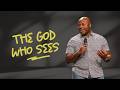
Many of us carry a deep-seated fear that God is watching us, waiting for us to make a mistake so He can punish us. This view paints a picture of a distant and angry deity. Yet, this is a profound misunderstanding of God's true character and posture towards us. His gaze is not one of indictment, but of loving anticipation. He is like the father of the prodigal son, waiting on the porch, hoping for our return. He sees you with a heart full of grace, ready to welcome you home. [32:04]
But the Lord said to Samuel, “Do not consider his appearance or his height, for I have rejected him. The Lord does not look at the things people look at. People look at the outward appearance, but the Lord looks at the heart.” (1 Samuel 16:7 NIV)
Reflection: What is one area of your life where you instinctively feel God’s gaze is one of disapproval rather than invitation? How might accepting His view of you as loved and welcomed change how you approach that area today?
It is a common human experience to feel overlooked, forgotten, or like the last pick. We often base our worth on the invitations we receive or the validation from others. David was left in the fields, seemingly forgotten by his own family while a momentous occasion happened inside. Yet, his absence from the family gathering did not mean an absence from God’s notice. God’s vision penetrates every field and sees every heart that feels invisible. His invitation is not based on human merit or recognition. [38:25]
So he asked Jesse, “Are these all the sons you have?” “There is still the youngest,” Jesse answered. “He is tending the sheep.” Samuel said, “Send for him; we will not sit down until he arrives.” (1 Samuel 16:11 NIV)
Reflection: When have you recently felt overlooked or excluded in a significant situation? How can the truth that God sees and values you in that very moment reshape your perspective and bring you comfort?
We often present God with a list of our shortcomings, believing they are obstacles to His use of us. We see our flaws as reasons for disqualification. God, however, operates on a completely different system. He specializes in using our weaknesses, not in spite of them, but so that His strength and glory can be displayed through them. What we label as an obstacle, God sees as an opportunity to demonstrate His power and faithfulness in a way that points directly to Him. [44:41]
But God chose the foolish things of the world to shame the wise; God chose the weak things of the world to shame the strong. (1 Corinthians 1:27 NIV)
Reflection: What is one perceived weakness or past failure you have been holding onto as a reason God cannot use you? What might it look like to offer that very thing to Him as an opportunity for His glory?
Human systems and prejudices often create barriers, seeking to exclude people based on outward criteria. These man-made walls can feel immovable and deeply painful. Yet, the glorious truth is that no earthly power can ultimately veto a divine invitation. If God has called you and invited you into a purpose or a place, no person or system can ultimately keep you out. His call is the final authority. Our role is not to argue with His invitation but to accept it and walk through the door He holds open. [51:54]
So he sent for him and had him brought in. He was glowing with health and had a fine appearance and handsome features. Then the Lord said, “Rise and anoint him; this is the one.” (1 Samuel 16:12 NIV)
Reflection: Where in your life are you facing a closed door or feeling excluded based on someone else’s judgment? How can you choose to trust God’s inviting voice over the world’s excluding one in this situation?
The most powerful voice of disqualification often comes from within ourselves. We replay our mistakes and insecurities, telling God all the reasons His invitation must be a mistake. We try to speak for God, declaring ourselves unworthy. But God has already spoken the final word on our qualification through the work of Jesus Christ. Our standing before God is not based on our own merit but on the finished work of the cross. We are invited not because we are good, but because He is. [54:30]
Therefore, since we have been justified through faith, we have peace with God through our Lord Jesus Christ, through whom we have gained access by faith into this grace in which we now stand. (Romans 5:1-2a NIV)
Reflection: What is one specific, gracious invitation from God that you have been hesitating to accept because you feel unqualified? What would it look like to stop arguing with Him and simply say "yes" today?
The God who sees reframes common fear about divine scrutiny into an invitation grounded in grace. Rather than watching for mistakes to condemn, God looks with longing and welcomes return, like a father on a porch waiting for a lost child. The David narrative in 1 Samuel 16 becomes the focal example: overlooked by family and by human standards, the youngest shepherd receives God's anointing because God evaluates the heart, not outward appearance. Human systems and cultural measures tend to exclude and disqualify, leaving many convinced they are last-picked or unfit; God’s posture consistently reverses that verdict by calling the overlooked into purpose.
Samuel’s trip to Bethlehem exposes how easily human judgment mistakes appearance for worth, while God scans inward realities. David’s obedience in the field, not ambition for honor, positions him to receive the call—an illustration that faithfulness in small, unseen tasks often precedes visible invitation. The cross and resurrection provide the mechanism for qualification: Jesus opens the gate, making sinners welcome not because of their merit but because of his life, death, and vindication. The cross reveals that God’s approach to sinners is tender and generous, offering pardon and restoration rather than initial condemnation.
Practical application flows from the text: receive the invitation rather than argue over disqualification, recognize that exclusion by others does not negate divine calling, and allow God’s metrics of the heart to reshape identity. The narrative pushes toward a decisive response—accepting the qualification offered by Christ and stepping into the room God has opened. The season before Easter underscores this invitation with urgency: the same God who anointed David now beckons those who feel unseen to come home and live by the full life Jesus promises.
God sees you not to indict you, but to invite you. Let me say it again. God sees you not to indict you, but invite you. See, indict is a legal term, meaning there's a case that has been built against you. And yes, we know we have fallen short. There is a case against us. But God is not looking to you to condemn you, but to invite you to be a part of his family and his story. And here's what's true, everybody. We all have fallen short.
[00:32:17]
(32 seconds)
#InvitedNotIndicted

You're telling God all the reasons why he can't use you, why he shouldn't invite you, why you shouldn't be called. Hear me. He knows, but you know what he does when he uses someone like us? He gets the glory. Because there's no other answer but a what a god, what a god. Only a god like that can do that. He is really good at using what we think disqualifies us. He uses it to reveal himself and get the glory.
[00:44:59]
(32 seconds)
#GodUsesOurFlawsForGlory
God is fully aware of what he is doing, everybody. He's fully aware of what he is getting, and he still invites you anyway. See, I saw my lack of speaking as a speech obstacle, but he saw it as a speech opportunity. Because who gets the glory for it? It's not me, it's him. He did it. And here he is with David, and he's going, I'm calling the one that wasn't invited in. Who gets the glory? God does.
[00:44:30]
(29 seconds)
#GodSeesOpportunity
If you think that God is just for good people who always get it right, those people don't exist. God sees you. He loves you. He is for you, and he is inviting you not to give you condemnation, but to give you invitation. And you might go, but God, if you knew all that I've done, you won't want anything to do with me. Everyone, let me just clear the air. He knows everything you have done, and he still wants you to be a part of his family.
[00:32:49]
(27 seconds)
#LovedDespiteFailure
See, we hear that he's good. We hear that he's kind, but maybe how we have drawn it up is we don't view him that way. We think that he is waiting for us to make a mistake so he can intervene and smite us, send the lightning, fill in the blank. But may I tell you that is not the posture of our God. We just sang about him. That is not what is true about God. God's posture is more like the prodigal son's father who is waiting on his porch to see if his child is coming home.
[00:31:19]
(31 seconds)
#GodWaitsToWelcome
And I wish I could tell you that that was just a story of my childhood. I wish I could tell you that I overcame that out of my adolescence. But if I'm honest with you, I still feel the same way many days. I still feel like I'm not sufficient. I still feel like I should be last picked. I still feel that I'm lacking. I still feel that I'm not good enough. And yet, I know that's not true because of the posture of God. And we're gonna see this more is that although we operate in a world that picks you as last, that's not how God operates.
[00:41:44]
(33 seconds)
#NotLastPickedByGod
A better posture would be, praise God that I got invited in. Can I just give you some free information? We get ourselves in trouble when we start looking at what God is doing in somebody else's life without being thankful for what he's doing in our own. And that's so hard to live out because we miss the blessing. We miss the invitation that he has given us because we go, woah. My invitation is not as good as their invitation. It's not about how you view it. It's the fact that you've been invited.
[00:47:23]
(29 seconds)
#GratefulForMyInvite
Here's what's interesting about this. So often when we look at our heroes of the faith, we go, man, they just had a supernatural faith. They were just willing to do the hard thing. As I survey the Bible and I look at that, they were just caught in the act of obedience, everybody. Samuel sent for David while he was being obedient to the tasks that he had been given. And so often we go, man, if I do this thing, if I do the next best thing, then I'm going to miss out. God sees you and he invites you.
[00:48:00]
(35 seconds)
#ObedienceOpensDoors
I'm an AI bot trained specifically on the sermon from Mar 01, 2026. Do you have any questions about it?
Add this chatbot onto your site with the embed code below
<iframe frameborder="0" src="https://pastors.ai/sermonWidget/sermon/god-who-sees-sermon" width="100%" height="100%" style="height:100vh;"></iframe>Copy