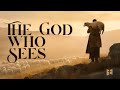
The world often assigns value based on outward appearances, leading us to categorize and judge others. However, heaven's perspective is entirely different. God sees the intrinsic worth within every person, recognizing souls rather than superficial traits. This divine perspective calls us to look beyond the surface and acknowledge the inherent dignity in each individual, regardless of their background or how they present themselves. [09:31]
Luke 19:1-10 (ESV)
Now Jesus entered Jericho and was passing through. And there was a man called by name Zacchaeus. He was a chief tax collector and was rich. And Zacchaeus was trying to see who Jesus was, but on account of the crowd he could not, because he was small in stature. So he ran on ahead and climbed up into a sycamore tree, that he might see him, for he was about to pass that way. And when Jesus came to the place, he looked up and said to him, “Zacchaeus, hurry and come down, for I must stay at your house today.” So he hurried down and received him joyfully. And when they saw it, they all grumbled, “He has gone in to be the guest of a sinner.” And Zacchaeus stood and said to the Lord, “Behold, half of my possessions, Lord, I will give to the poor. And if I have defrauded anyone of anything, I restore it fourfold.” And Jesus said to him, “Today salvation has come to this house, since he also is a son of Abraham. For the Son of Man came to seek and to save the lost.”
Reflection: In what ways do you find yourself assigning value to people based on their outward appearance or social standing, and how might you begin to shift your perspective to see them through a lens of heaven's value?
Before we even turn our hearts toward God, He is already looking at us. This divine gaze is not passive observation but an active, intentional pursuit. He calls us by name, acknowledging our existence and worth long before we acknowledge Him. This truth offers profound comfort, assuring us that we are never lost, forgotten, or abandoned, but are continually seen and sought by the Savior. [18:46]
John 10:3 (ESV)
To this one the gatekeeper opens. The sheep hear his voice, and he calls his own sheep by name and leads them out.
Reflection: Can you recall a time when you felt an undeniable pull or a sense of being seen by God, even before you fully understood or responded to Him?
Jesus' interaction with Zacchaeus reveals a powerful principle: belonging often precedes believing, and grace comes before transformation. Jesus extended an invitation to Zacchaeus' home, not based on his past actions or current status, but out of His own initiative. This act of inclusion and acceptance restored Zacchaeus' dignity, creating a space where genuine change could then unfold. [22:35]
Luke 19:5-7 (ESV)
And when Jesus came to the place, he looked up and said to him, “Zacchaeus, hurry and come down, for I must stay at your house today.” So he hurried down and received him joyfully. And when they saw it, they all grumbled, “He has gone in to be the guest of a sinner.”
Reflection: Think about a relationship where you've felt hesitant to extend grace or belonging. How might Jesus' approach to Zacchaeus inspire you to offer an invitation of inclusion first?
True faith is not passive curiosity but a decisive pursuit. Like Zacchaeus, who climbed a tree despite the crowd and his own limitations, we are called to overcome obstacles that keep us from Jesus. This means not caring how foolish it may look or what others might think, but resolutely pushing past anything that hinders our connection with the One who already sees us. [40:35]
Luke 19:4 (ESV)
So he ran on ahead and climbed up into a sycamore tree, that he might see him, for he was about to pass that way.
Reflection: What "tree" are you currently being invited to climb, or what obstacle are you facing, that is preventing you from drawing closer to Jesus?
Developing a heaven's heart means intentionally seeing people as God sees them—as souls with intrinsic value, not as labels or categories. This requires us to slow down, pay attention, and notice those whom God is already noticing. It's a prayerful endeavor to ask God to help us see the world through His eyes, treating everyone as image-bearers of God, worthy of love and compassion. [36:20]
Luke 19:10 (ESV)
For the Son of Man came to seek and to save the lost.
Reflection: As you go about your week, what is one specific, intentional action you can take to practice seeing someone through God's eyes, moving beyond any preconceived notions or judgments?
A church is being formed around a vision called Heaven’s Heart: developing spiritual disciplines that shape how people live and love the lost. The community began by naming one person to pray for, setting a daily rhythm (the “3:16” alarm) to pray for that one, and using front altars for shared prayer and side altars for private intercession. These practices are not gimmicks but attempts to cultivate attentiveness and persistence in prayer so that evangelistic living becomes natural overflow rather than an awkward program.
The core teaching centers on the God who sees. Using Luke 19 and the story of Zacchaeus, a despised, wealthy chief tax collector, the narrative shows that Jesus sees souls beneath behavior and social labels. Jesus looks up into a tree, calls Zacchaeus by name, and announces, “I must stay at your house.” That singular act restores dignity and reorders identity before any moral reformation occurs. Belonging precedes believing: grace arrives in the household first and invites transformation from the inside out.
Zacchaeus’s response models decisive repentance that issues in practical restitution and generosity—an outward sign of inward reorientation. The gospel’s work is relational and household-centered; a changed man changed his whole house. The speaker presses men especially to embrace this pattern, arguing the cultural moment needs mature, faithful men whose conversions reshape families. Practical application is simple and concrete: pray to see people the way God sees them, notice souls rather than categories, and refuse to let obstacles keep anyone from Jesus—even if it means looking foolish to get closer.
The summons is to attention before action. Spiritual formation begins with noticing: slowing down, remembering names, entering people’s stories, and offering presence that conveys dignity. If the church will cultivate that vision, natural evangelism and household transformation will follow. The final plea is both pastoral and urgent: heaven already looks for people; the church must learn to see with heaven’s eyes and carry that heart into daily life.
``You see, heaven sees souls before heaven saves souls. That's really important that you hear that. Heaven sees souls before heaven saves souls. In other words, Jesus sees us long before he saves us. You're not lost. You're not forgotten. You're not abandoned. Jesus sees you. And if you're here this morning, you're not sure what you believe, well, the beauty of Jesus is that he sees you before you ever see him.
[00:18:45]
(43 seconds)
#SeenBeforeSaved

And so as we continue to work through this passage, what's important that we pick is that Jesus sees beyond our behavior to our identity. He calls Zacchaeus by name. He calls him by name before he repents, before he changes, before he fixes anything. In that moment, when Zacchaeus is up in a tree, he is still a sinner. He has still betrayed his own people. Nothing has happened yet.
[00:19:28]
(35 seconds)
#IdentityBeforeBehavior
When we get to the end of the passage, Jesus says, today, salvation has come to this house. That terminology is so important because Jesus didn't say, Zacchaeus, salvation has come to you. He says, salvation has come to this house, meaning the entire household, the family that is there, friends, whoever is there is saved. You see the salvation in this story isn't just personal, it's relational, it's household. See, the gospel changes the atmosphere of our homes.
[00:30:11]
(45 seconds)
#GospelChangesHomes
And then I love what Jesus does and only the way Jesus could. He invites himself into Zacchaeus' home. He says, Zacchaeus, I must stay in your house. Notice what he says, I must. He doesn't say, could I? I'd sure like to. No. By the way, I'm showing up at your place. And he does it in such authority and power. He doesn't ask for permission. You wanna know why? Because the privilege belongs to Zacchaeus, not Jesus. Jesus isn't blessed to be in Zacchaeus' house. Zacchaeus is. The savior of the world is coming over for lunch. Zacchaeus is the one that's privileged. He's the one that's blessed.
[00:20:56]
(52 seconds)
#SaviorAtYourTable
You see, being evangelistic is seeing the soul beneath the behavior. Well, when Zacchaeus is seen by Jesus, it changes everything. Zacchaeus stands and he declares publicly that he's gonna give half to the poor and four times as much restitution to anyone that he has defrauded in this process. And so he's doing a lot of different things. I won't go into the deep theological reasons behind that, but I will say this, that it has both Jewish and Roman impact behind it when he says that he's gonna give money back.
[00:26:21]
(55 seconds)
#RepentanceInAction
And especially right now, as crazy as this country is, the world wants to divide us, wants to separate us, put us into categories, and wants to pit us against one another rather than recognizing we are God's creation. We are created in his image. And so we need to see the intrinsic value that is inside each and every one of us. That is so important that we recognize that.
[00:09:37]
(30 seconds)
#MadeInGodsImage
I wonder if we develop that attitude, how it would change, how we talk to people, how we would walk out into the world when you recognize that I have something that's blessing everyone I talk to. I don't need permission. I'm blessing you in my gospel conversations. I'm not ramming it down your throat. I'm not shoving anything there. I'm not being awkward. I'm not being cruel. But I have the gift of life that I carry with me, and I'm gonna share that. I don't need permission. It's a privilege to carry this message.
[00:21:47]
(43 seconds)
#ShareLifeBoldly
Now for those of you who understand Old Testament, you're gonna say, oh, see, there's there's a bloodline. Jesus is pointing it out. He's he's the son of Abraham. It's not what he means. He means that because of the covenant promise that god, the father, made with Abraham, now now Zacchaeus is part of that family. He's part of that covenant promise. You realize that you gain a title like that too when you're saved? You now belong to the family of Abraham. See, scripture is rich when we understand it. It's not about a bloodline. It's about a faith line.
[00:31:03]
(53 seconds)
#FaithLineNotBloodline
Add this chatbot onto your site with the embed code below
<iframe frameborder="0" src="https://pastors.ai/sermonWidget/sermon/god-who-sees" width="100%" height="100%" style="height:100vh;"></iframe>Copy