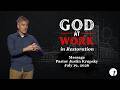
John the Baptist and Jesus begin with the word, “Repent,” and repentance means “change the way you think.” The kingdom of heaven is at hand, which means God is working, even when eyes do not see it and hearts refuse to notice it. Chronicles comes to God’s children after exile, after displacement, after identity got blurry, and it speaks into that question, “Who are these people now?”
The genealogy at the beginning of First Chronicles matters because it tells returned exiles that they are connected all the way back to creation. God’s people are not random, forgotten, or done. God has a plan, a purpose, and a mission for them. David’s story in Chronicles shines with hope, not because David never sinned, but because Chronicles wants returned exiles to see encouragement, worship restored, the ark brought back, and the covenant promise that the Christ would come.
David’s psalm in First Chronicles 16 gives the shape of that calling. David says, “Give thanks to the Lord. Call upon his name. Make known his deeds among the peoples.” God’s people are called to proclaim his goodness. Worship in the sacred assembly becomes the foundation for life outside the assembly. Faith is meant to go public, not just in good works, but also with words. Romans 10 presses the same truth, because people cannot call on Christ if they have never heard, and they cannot hear unless someone speaks.
The Apostles’ Creed becomes a simple tool for that public faith. The creed gives words for creation, Christmas, the cross, Easter, the Holy Spirit, the church, forgiveness, resurrection, and everlasting life. God’s people have not been left without words. God gives the story that needs to be shared.
David then says, “Seek the Lord and his strength. Seek his presence continually.” Remaining in his presence is not just a church-building activity. It is twenty-four-seven worship, talking to God, listening through his Word, praying even in ordinary anxious moments. Continual prayer gets as practical as standing on a golf tee with an audience and asking God for a calm heart.
David also says, “Remember the wondrous works that he has done.” Remembrance has to be weaponized. Memory shapes a person, either through bitterness, pain, unforgiveness, and fear, or through God’s steadfast, faithful love. Communion says the same thing: “Do this in remembrance of me.” Jesus proclaims over his people, remains with his people, and remembers his people. When God remembers, God acts.
##
Key Takeaways
- 1. Repentance Sees God Working [01:08] Repentance is not just feeling bad about sin. Repentance means changing the way life is being seen, because the kingdom of heaven is at hand and God is working. A believer can be surrounded by God’s activity and still be blind to it, so repentance opens the eyes before it changes the behavior. [01:08]
- 2. Faith Goes Public With Words [08:01] David’s call to “make known his deeds” does not let faith stay private and silent. Good works matter, but words also matter, because Christ’s story has to be heard. The church is not short on language, because Scripture and the Creed give simple, strong words for creation, cross, resurrection, forgiveness, and everlasting life. [08:01]
- 3. Presence Is Sought Continually [15:51] David’s command to seek the Lord “continually” makes worship bigger than a gathered hour. Remaining in Christ means talking to him and listening to him through his Word in the ordinary moments, even anxious ones. God’s presence is not a religious decoration added to life, but the place where life gets strength, peace, and direction. [15:51]
- 4. Memory Must Be Weaponized [21:45] David’s command to remember is not nostalgia. Memory can either rehearse wounds until bitterness grows, or it can bring God into the story until healing begins. A believer is shaped by how the past is remembered, so remembrance must look again for the faithful love of God even in painful places. [21:45]
- 5. Jesus Remembers And Acts [26:47] Jesus does not merely give an example of proclamation, presence, and remembrance. Jesus proclaims love over his people, remains with them, and remembers them before the Father. In Scripture, when God remembers, God acts, and that means remembrance is full of mercy, forgiveness, and rescue.
## [26:47]
Youtube Chapters