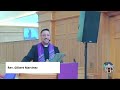
The Canaanite woman’s story teaches us about a faith that does not give up, even when initially met with exclusion. She was an outsider, overlooked and spoken to with words that could have broken her spirit. Yet, she responded not with anger, but with courageous humility and trust. Her persistence was rooted in the belief that even the smallest portion of God’s grace was sufficient. This humble, brave faith is a model for us when we feel dismissed or ignored. [03:34]
“Then Jesus said to her, ‘Woman, your faith is great. Let it be for you as you desire.’ And her daughter was healed from that moment.” (Matthew 15:28, NLT)
Reflection: When have you faced a situation where you felt overlooked or rejected? How did you respond, and how might the woman’s humble persistence inspire you to trust in God’s provision in a similar future situation?
Our lives and communities are filled with people who feel invisible, unheard, or unworthy. They may be present in our churches, neighborhoods, or daily routines, yet their struggles and humanity go unnoticed. Often, all they hope for is a small gesture, a crumb of acknowledgment that shows someone sees them. God’s care is consistently directed toward those on the margins, the vulnerable, and the rejected. We are invited to open our eyes and see those who are easily passed by. [04:53]
“For the Lord your God is God of gods and Lord of lords, the great God, mighty and awesome, who shows no partiality and accepts no bribes. He defends the cause of the fatherless and the widow, and loves the foreigner residing among you, giving them food and clothing.” (Deuteronomy 10:17-18, NLT)
Reflection: Who is one person or group in your community that might feel like an outsider, hoping for a “crumb” of recognition? What is one practical way you can offer a gesture of care or acknowledgment this week?
It is easy to feel entitled to God’s grace, especially when we are comfortable within our faith communities. We can assume God’s presence is reserved for us, the “insiders,” while forgetting that God often shows up first for those on the outside. Faith is not about claiming what we feel we deserve, but about approaching God with humility, trust, and a recognition of our shared need for grace. This posture allows us to receive God’s gifts without pride and to share them without condition. [07:54]
“For it is by grace you have been saved, through faith—and this is not from yourselves, it is the gift of God—not by works, so that no one can boast.” (Ephesians 2:8-9, NLT)
Reflection: In what area of your spiritual life do you most often operate from a place of entitlement rather than humble gratitude? How might shifting your perspective to one of humble trust change your relationship with God and others?
For many in our world, daily life is a struggle for basic needs and dignity. Children facing hunger, refugees seeking safety, and individuals battling mental illness often live with a quiet, persistent hope. They courageously ask for what feels like mere crumbs—a meal, a safe place, a moment of understanding—trusting that God sees and hears them even when the world does not. Their faith is a powerful testament to finding hope in the most fragile of circumstances. [12:25]
“But Jesus said, ‘You feed them.’ ‘With what?’ they asked. ‘We’d have to work for months to earn enough money to buy food for all these people!’ ‘How much bread do you have?’ he asked. ‘Go and find out.’” (Mark 6:37-38a, NLT)
Reflection: Where have you seen this kind of courageous, persistent hope in the world or in someone’s life? How does their faith challenge or inspire your own trust in God’s provision?
This journey of faith invites us to move from being passive observers to active participants in God’s grace. We are called to notice those who are struggling, to listen to those who feel unheard, and to extend care to those who feel left out. It is a call to examine our own hearts for places where we take God’s presence for granted and to practice humility by intentionally sharing God’s table with others. Our actions, however small, can be the very crumbs of hope that God uses to bless another. [23:45]
“Share with the Lord’s people who are in need. Practice hospitality.” (Romans 12:13, NLT)
Reflection: What is one specific, small step you can take this week to extend God’s grace to someone who feels like an outsider, making them feel seen, heard, or cared for?
Lent invites a hard look inward: a call to humility, honest self-examination, and attention to those pushed to the margins. A Canaanite woman seeks healing for her daughter and meets a sharp, exclusionary line—“the children’s bread should not be given to dogs”—that exposes how easy it is to treat some people as invisible. The woman answers with humble persistence, claiming even the crumbs from the table, and that persistence exposes a faith both brave and simple; the response she receives shows that God honors persistent, humble faith rather than entitlement.
Communities often assume belonging and take God’s presence for granted. That entitlement shows up in subtle exclusions—age, gender, ethnicity, sexual orientation, socioeconomics, immigration status, or mental health—and in moments when people quietly separate themselves into islands rather than sharing a common table. Real faith disrupts those divides by leaning toward the overlooked: refugees arriving with nothing, children facing food insecurity, immigrants pressured to assimilate instantly, and people living with mental illness who fear shame. Small acts—acknowledgment, a meal, a welcome kit, a conversation—become the crumbs that signal dignity and survival.
Faith does not mean waiting for grand miracles; it often looks like steady, humble knocking at doors, expecting only a scrap and trusting God will act. That persistence matters because God’s grace frequently appears in unexpected places and through ordinary people who refuse to look away. The call is practical and communal: notice who feels unseen, shift posture from entitlement to hospitality, and turn theological conviction into acts of care. Prayer, attention, and concrete support create a kingdom reality where the smallest faith can grow into fullness. The weeks of reflection should produce not just inward sorrow but outward change—sharing the table, offering crumbs, and embodying a faith that seeks the lost and honors the humble.
Now, does it mean that you're already done with your work? No, it doesn't. I believe that till the moment that you die, you can learn, if you're willing to. One of my friends and colleagues told me, Gilbert, there are two types of ignorant people, one who has yet to learn and one who chooses to stay ignorant. So I'm gonna ask you all, which one are you?
[00:10:35]
(42 seconds)
#NeverStopLearning
Finally, think about people living with mental illness. Many feel like they carry a dirty secret, afraid to truly see and believe their struggles can make them unworthy or different. They may feel like outsiders even among family and friends, but God sees them, God hears them even when they feel invisible, rejected, or ashamed. God is always with them.
[00:21:11]
(23 seconds)
#YouAreSeen
These stories, refugees, children facing hunger, immigrants who are criticized, and people living with mental illness teaches something important. Faith is not about entitlement. Faith is humble, persistent, and brave. It means trusting that God sees us, hears us, and acts even when the world overlooks us.
[00:22:42]
(22 seconds)
#HumbleFaith
Think about where we might take God's presence for granted and practice humility by sharing God's table with others. Pray for those who feel invisible, unheard, or left out, trusting that God is already with them. Faith is persistent, humble, and brave. Even the smallest hope, even the promise of faith can become the fullness of God's grace.
[00:23:45]
(26 seconds)
#ShareGodsTable
Their quiet persistence shows the same humble faith as a Canaanite woman. Even the smallest recognition of crumb can make a big difference. God sees them. God hears them. God cares. He is there even when people do not notice. Ask yourself, why are there so many children that do keep hope alive, that keep faith that God is still with them even when it seems the world has turned their cheek?
[00:16:38]
(35 seconds)
#CrumbsOfHope
Even small, humble, persistent acts, crumbs of faith can become the fullness of God's blessing. This week, let's find meaningful ways to act. Notice someone who is struggling, lonely, or left out, and offer care, kindness, or support.
[00:23:24]
(21 seconds)
#ActWithKindness
Within our congregations, it's easy to feel entitled. We come to worship. We join in programs. We know the prayers and songs and sometimes assume Jesus is with us just because we are present. But the gospel reminds us that God's care is not just for insiders. God often shows up first for those on the margins, the overlooked, the rejected, and the vulnerable.
[00:07:24]
(34 seconds)
#BeyondThePews
Imagine being compared to a dog just hoping for scraps, simply wanting to be noticed. How would that feel? Would you feel invisible, ignored, unworthy? See, there's a sign that was pretty popular during a time where certain people couldn't go into certain stores. And there's one that says, no Mexicans, no dogs, no Negroes.
[00:01:59]
(45 seconds)
#RememberTheExcluded
I'm an AI bot trained specifically on the sermon from Mar 11, 2026. Do you have any questions about it?
Add this chatbot onto your site with the embed code below
<iframe frameborder="0" src="https://pastors.ai/sermonWidget/sermon/god-marginalized-faith" width="100%" height="100%" style="height:100vh;"></iframe>Copy