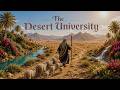
Exodus 15 picks up right after God brings Israel through the Red Sea, out of slavery, out of Egypt, and onto dry ground. God has just defeated the Egyptian army, and then class starts in Desert University. Moses leads the people into the desert, and after three days without new water, the people are thirsty, scared, and starting to panic.
The water at Mara looks like hope from a distance, but it turns bitter when the people reach it. Mara means bitter, and that bitter water starts working on more than their mouths. The bitterness starts getting into their hearts. The people grumble against Moses and ask, “What are we to drink?” even though God has been leading them by the cloud and the fire.
God wants the people thirsty so that they thirst for him. The Lord waits until their supply runs dry, not because he is cruel, but because he is getting their attention. The people keep staring at the bitter water, but God calls them to stop looking at their surroundings and start looking to him. Three days after the Red Sea, they have already forgotten that the same God who parts seas can heal water.
Moses cries out to the Lord, and the Lord shows him a piece of wood. The stick is not magic. The stick becomes the place where control gets surrendered and where God shows himself as the one who heals. Moses throws it into the water, and the water becomes fit to drink. God then says, “I am the Lord who heals you.”
God brings his people to Mara so their hearts can be ready to hear him. God may use dry places, anxious places, and bitter places to get underneath performance, striving, and control. God may bring a person through a whole wilderness just to say, “Before any role, any calling, any responsibility, that person belongs to him as son or daughter.”
The cross is the better piece of wood. Jesus enters the bitterness, grumbling, pain, anxiety, and brokenness of his people, and the cross costs him everything. The God who healed the waters at Mara gives the deeper healing through Christ. Grace shows up even when the people have been complaining and doing the wrong things.
Elim comes after Mara, with twelve springs and seventy palm trees. God does not leave his people at the bitter well. The desert prepares the heart to appreciate the oasis, to receive healing, and to know that the Lord has been leading all along.
Key Takeaways
- 1. Thirst can become holy attention God may allow a supply to run dry so that a soul finally notices the deeper thirst underneath the obvious need. Israel needed water, but God was after more than hydration. The dry place exposed panic, mistrust, and forgetfulness so the people could learn to thirst for the Lord himself. [42:13]
- 2. Bitter waters reveal hidden grumbling Mara did not create Israel’s bitterness as much as it brought it to the surface. The people had seen the Red Sea open, but bitter water still made them question the God who was leading by cloud and fire. Difficult circumstances often uncover the complaints that were already forming quietly in the heart. [44:46]
- 3. The stick was surrender, not magic The piece of wood did not work because it had power in itself. God used it as a moment where Moses and the people had to stop trusting what they could see and start trusting the God who led them there. Healing began where control was released into God’s hands. [48:07]
- 4. God heals before Elim arrives God revealed himself as “the Lord who heals” while the people were still in the desert, not after the whole journey was finished. Elim was coming, but Mara became the place where God’s character was named. Healing often begins before the oasis is visible. [55:08]
- 5. The cross answers every Mara The wood at Mara points forward to a better piece of wood, the cross of Jesus. Christ meets bitterness, pain, anxiety, and grumbling with a costly grace that no person deserves and no person can earn. The God who heals does not just sweeten circumstances, he gives himself. [63:26]
Youtube Chapters