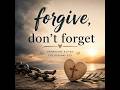
The phrase “forgive and forget” sounds noble and spiritual, but Scripture never speaks that way. God never asks for spiritual amnesia, and Christ never calls wounded hearts to pretend the pain did not happen. Forgiveness, as Scripture gives it, goes deeper than denial. It releases revenge to God, trusts his justice, and opens the heart to his healing without throwing away wisdom.
The story of the betrayed man shows how bitterness can feel like protection while quietly shutting out joy, peace, and closeness with God. Forgiveness did not make his pain vanish in one dramatic moment. It began with a simple prayer: “I don’t even know if I can forgive, but I want to forgive, and I want to want to forgive.” That kind of surrender became a first step of faith, and each repeated release taught him that God could be trusted with deep wounds.
Paul’s words in Ephesians name bitterness, rage, and anger before calling God’s people to forgive. That order matters because Scripture does not minimize real hurt. Joseph remembered betrayal. David named pain. The risen Jesus still carried scars. A scar is not proof that healing failed. A scar is proof that a wound happened and healing took place. In the same way, a memory is not necessarily unforgiveness.
Forgiveness is not powered by feelings. Colossians says to forgive “as the Lord forgave,” which means forgiveness begins with the cross, not with the offender’s behavior. God did not forgive because sinners had already made everything right. God forgave out of grace. Sometimes obedience comes before emotion catches up, like turning the key on a cold morning before the engine feels ready.
Forgiveness also does not erase boundaries. Romans 12 says, “as far as it depends on you, live at peace with everyone,” and that phrase admits that peace is not always fully within one person’s control. Forgiveness can release bitterness while still keeping distance. A healed burn does not require putting a hand back on the stove. Forgiveness says the offender will not be made to pay by personal revenge. A boundary says unrestricted access will not be given to harm again.
God never said “forgive and forget.” God offers something better: freedom from bitterness having the final word. Forgiveness may begin as a first step, a prayer, or a quiet decision to trust God with what still hurts.
##
Key Takeaways
- 1. Forgiveness is not spiritual amnesia God never asks wounded hearts to erase memory or pretend pain did not happen. Scripture tells the truth about wounds, because healing that begins with denial is not really healing. The scars of Jesus show that remembered suffering can remain without ruling the heart. [47:20]
- 2. Scars do not cancel healing A scar can remain after the wound has closed, and that scar does not mean healing failed. Some memories remain because something real happened, not because forgiveness was fake. Grace does not always remove the mark, but it can keep the mark from becoming the master. [50:40]
- 3. Forgiveness begins at the cross Forgiveness does not start with the offender’s worthiness, apology, or change. Forgiveness starts with how God has treated sinners in Christ, before everything was made right. The cross gives the heart a source deeper than its own emotional supply. [53:10]
- 4. Obedience may precede emotion Forgiveness often comes before the feeling of release arrives. A heart may need to place the offense in God’s hands again tomorrow, and again the next day. That repeated act is not failure, but faith learning to trust God with justice and pain. [55:26]
- 5. Boundaries can honor forgiveness Forgiveness and reconciliation are not the same thing. Reconciliation requires repentance, change, and safety, while forgiveness releases vengeance to God. A boundary can be one way a healed person refuses to return to what burns.
## [57:01]
Youtube Chapters
- [00:00] - Welcome
- [40:17] - God Never Said That Series
- [41:05] - The Weight of Forgive and Forget
- [42:39] - Forgiveness That Heals the Heart
- [42:58] - A Hidden Burden in Church
- [45:38] - Forgiveness as Transforming Faith
- [46:44] - Forgiveness Does Not Mean Forgetting
- [48:11] - Paul Names Bitterness and Anger
- [50:20] - Scars Are Not Open Wounds
- [52:20] - Forgiveness Rooted in Grace
- [54:51] - Turning the Key Again
- [56:23] - Forgiveness With Wise Boundaries
- [58:09] - Justice Belongs to God
- [59:55] - Healing After the Burn
- [62:04] - Grace Carries Forgiveness Forward