Oct 13, 2026
The psalmist calls all lands to make a joyful shout to the Lord. He invites us to serve the Lord with gladness and to come into His presence with singing. This is not a quiet, reluctant approach. It is a vibrant and deliberate movement toward God, fueled by a recognition of who He is. We enter His gates with thanksgiving and His courts with praise.
This approach matters because it reorients our entire perspective. We come acknowledging that the Lord Himself is God. He made us, and we are His people. He is the sheep of our pasture. Thanksgiving prepares our hearts for true worship. It shifts our focus from our problems to His permanent character. The Lord is good. His mercy is everlasting. His truth endures to all generations.
You might come to God today preoccupied with your burdens. The weight of unfinished work or family concerns can feel heavy. Choose to redirect your attention. Enter His presence not with a list of requests, but with a heart of gratitude for who He is. What one thing about God’s character can you thank Him for right now, before you ask for anything else?
Make a joyful shout to the Lord, all you lands! Serve the Lord with gladness; Come before His presence with singing. Know that the Lord, He is God; It is He who has made us, and not we ourselves; We are His people and the sheep of His pasture. Enter into His gates with thanksgiving, And into His courts with praise. Be thankful to Him, and bless His name. For the Lord is good; His mercy is everlasting, And His truth endures to all generations.
(Psalm 100:1-5, NKJV)
Prayer: Thank God for His unchanging character—His goodness, mercy, and truth that last forever.
Challenge: Before you pray about your needs today, spend three minutes listing aloud God’s attributes you are thankful for.
Jesus encountered ten men with leprosy. They stood at a distance and cried out to Him for mercy. Jesus instructed them to go and show themselves to the priests. As they obeyed and went, they were cleansed. All ten received a miraculous healing from their disease. Their bodies were made whole.
But only one man turned back. He praised God with a loud voice and fell at Jesus’ feet, giving Him thanks. This man, a Samaritan, received more than physical healing. He received a moment of intimate worship and recognition. Jesus noted the absence of the other nine. They received the blessing but forgot the Blesser.
It is possible to receive God’s gifts and become so occupied with enjoying them that we neglect the Giver. We pray fervently in need but grow distant in times of provision. Have you recently received an answer to prayer, big or small, that you have already begun to take for granted?
Then one of them, when he saw that he was healed, turned back, praising God with a loud voice; and he fell on his face at Jesus' feet, giving him thanks. Now he was a Samaritan. Then Jesus answered, “Were not ten cleansed? Where are the nine?”
(Luke 17:15-17, ESV)
Prayer: Confess any forgetfulness in receiving God’s blessings and ask for a heart that always returns to give thanks.
Challenge: Identify one specific answer to prayer from the last month and write a thank-you note to God for it in a journal.
David speaks directly to his own soul in Psalm 103. He commands himself to bless the Lord and to forget not all His benefits. He lists these benefits concretely. God forgives all your iniquity. He heals all your diseases. He redeems your life from the pit. He crowns you with steadfast love and mercy. David actively fights spiritual forgetfulness by rehearsing God’s past faithfulness.
This self-preaching is necessary because forgetfulness is a powerful enemy of gratitude. We easily remember what we lack and forget what we have received. We recall hurts more quickly than helps. Remembering God’s benefits strengthens our faith for present challenges and fuels our thankfulness.
You must often preach to yourself before you preach to anyone else. When discouragement whispers lies, answer with the truth of God’s record in your life. Speak to your soul about His forgiveness, healing, and redemption. What evidence of God’s past faithfulness can you use to counter a current worry?
Bless the Lord, O my soul, and forget not all his benefits, who forgives all your iniquity, who heals all your diseases, who redeems your life from the pit, who crowns you with steadfast love and mercy, who satisfies you with good so that your youth is renewed like the eagle's.
(Psalm 103:2-5, ESV)
Prayer: Ask God to bring to your mind His specific benefits and acts of faithfulness in your life.
Challenge: Open a notes app or journal and start a list titled “God’s Benefits.” Write down three things from your past you are thankful for.
The Israelites faced the Philistines in battle. God threw the enemy into confusion, and Israel won a great victory. The prophet Samuel took a single stone and set it up between Mizpah and Shen. He named it Ebenezer, saying, “Till now the Lord has helped us.” This stone was a physical, visible memorial to God’s help on a specific day. It was a tool for remembrance.
God’s people need these markers. They serve as tangible reminders of His intervention and faithfulness when our memories grow faint or our current circumstances seem overwhelming. They are declarations that the God who helped then will help again.
Your Ebenezer might not be a literal stone. It could be a journal entry, a saved photo, or a story you tell your family. These markers help us not to forget the whole story when we are in a difficult chapter. What tangible reminder can you create today to mark God’s help in your life?
Then Samuel took a stone and set it up between Mizpah and Shen and called its name Ebenezer; for he said, “Till now the Lord has helped us.”
(1 Samuel 7:12, ESV)
Prayer: Thank God for a specific “Till now” moment in your life where His help was evident.
Challenge: Choose a small object (a rock, a coin) and place it where you will see it daily as a reminder of God’s help.
The prophet Jeremiah wrote to the Israelites living in exile in Babylon. They were strangers in a foreign land. God’s instruction to them was surprising. He did not tell them to withdraw or simply endure. He commanded them to seek the peace and prosperity of the city where they lived. They were to pray to the Lord for it, because their own welfare was tied to its welfare.
Our gratitude must extend beyond our personal lives. We are called to thank God for our nation and our community. This involves praying for those in authority and actively seeking the good of our cities. It means supporting those who serve and helping the vulnerable. Thanksgiving moves us from private blessing to public service.
Your community is your place of exile and your place of calling. You can thank God for it by praying for its leaders and its peace. You can thank Him by being a good neighbor. How can you actively seek the peace and prosperity of your city this week?
But seek the welfare of the city where I have sent you into exile, and pray to the Lord on its behalf, for in its welfare you will find your welfare.
(Jeremiah 29:7, ESV)
Prayer: Pray for your mayor, city councillors, and local community leaders by name, asking God to grant them wisdom.
Challenge: Identify one local community organization that serves the vulnerable and visit their website to learn how to support them.
Thanksgiving begins with recognizing that life, strength, opportunity, and hope depend upon God. Gratitude does not deny suffering, unanswered prayer, financial pressure, sickness, grief, or uncertainty; it refuses to let those realities become the whole story. God remains good when circumstances change because His character, mercy, and truth remain constant. Psalm 100 calls God’s people to approach Him with thanksgiving, praise, gladness, and sincere worship, remembering that He created and sustains them.
Thanksgiving prepares the heart for deeper worship and intimacy with God. It redirects attention from anxiety toward the Lord’s goodness and reminds believers that His mercy is everlasting and His faithfulness reaches every generation. The account of the ten lepers exposes the danger of receiving God’s blessings while forgetting the Blesser. Genuine gratitude returns to God, gives Him glory, and produces a transformed life marked by worship, faithful service, kindness, generosity, responsible stewardship, and care for those who struggle.
A grateful heart deliberately remembers God’s works. Forgetfulness strengthens fear and dissatisfaction, while remembrance renews trust. Israel’s wilderness journey shows that past deliverance and provision can be forgotten when present difficulties become dominant. David’s example teaches believers to speak truth to their own souls by recalling answered prayers, opened doors, divine protection, and strength received in difficult seasons. Written records of God’s faithfulness can serve as modern memorials, helping families preserve testimonies for future generations.
Thanksgiving also extends beyond personal blessings to the nation and its communities. Scripture calls God’s people to pray for leaders, seek peace, pursue justice, and care for the vulnerable. Gratitude for a country does not require pretending that its history or present condition is perfect. Instead, thanksgiving should produce better citizens, faithful neighbors, honest workers, compassionate servants, and people willing to address injustice, support families, mentor young people, protect newcomers and Indigenous communities, and promote reconciliation.
Prayer for the nation must lead to practical responsibility. National and local leaders need wisdom, humility, integrity, and compassion; families, children, seniors, immigrants, refugees, and those facing poverty or loneliness need protection and support. The future belongs not only to political leaders but also to the daily choices of citizens. A lasting spirit of thanksgiving therefore trusts God for what lies ahead while serving faithfully, pursuing justice, strengthening communities, and giving God glory in every circumstance.
##
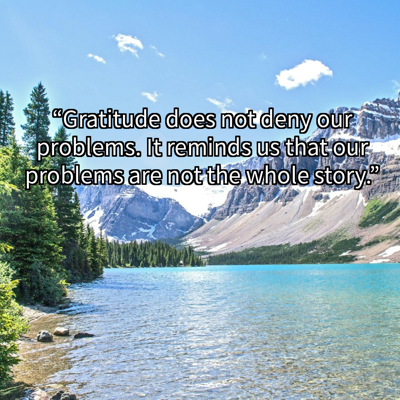
“Gratitude does not deny our problems. It reminds us that our problems are not the whole story.”
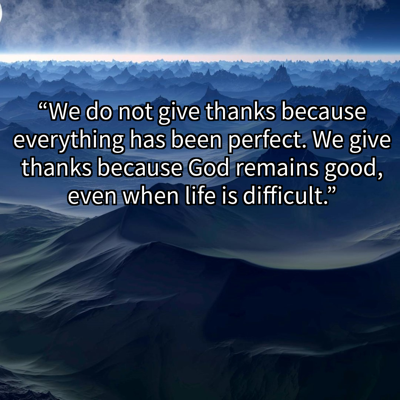
“We do not give thanks because everything has been perfect. We give thanks because God remains good, even when life is difficult.”
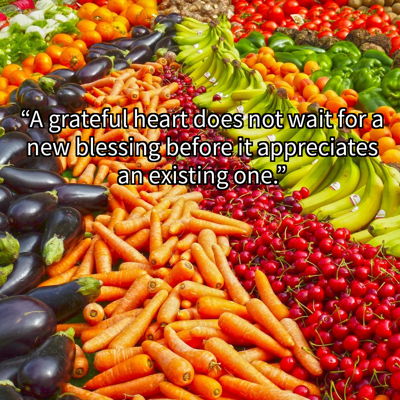
“A grateful heart does not wait for a new blessing before it appreciates an existing one.”
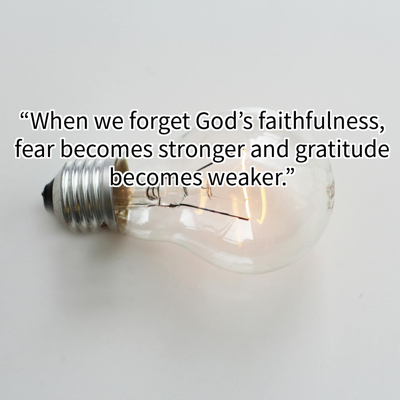
“When we forget God’s faithfulness, fear becomes stronger and gratitude becomes weaker.”
“Sometimes you must preach to yourself before you preach to anybody else.”
“Our thanksgiving should be heard in our homes, seen in our conduct, and expressed in our worship.”
“People may change, circumstances may change, and our strength may change—but the Lord remains worthy of our worship.”
“Love for a nation involves more than criticizing its problems; it involves prayer, responsibility, sacrifice, and a willingness to participate in solutions.”
“We can be grateful for our country without pretending that everything is perfect.”
“The future of our communities is not shaped by leaders alone. It is also shaped by the choices we make every day.”
Hi, I'm an AI assistant for the pastor that gave this sermon. What would you like to make from it?
Add this chatbot onto your site with the embed code below
<iframe frameborder="0" src="https://pastors.ai/sermonWidget/sermon/give-thanks-god-goodness-nation" width="100%" height="100%" style="height:100vh;"></iframe>Copy