God’s Kingdom frequently takes root where people least expect it. Small, ordinary moments—an awkward conversation, a short prayer at the sink, a tiny offering—are not meaningless. In quiet and hidden ways, God uses these small beginnings to build something larger than human measurement.
You are invited to notice the small things you already hold. When you stop measuring by size or spectacle and begin to offer what is small and faithful, you join the pattern God uses. Trust that what looks insignificant to others can be the very place God begins to work.
Zechariah 4:10 (ESV)
For who has despised the day of small things? For these seven rejoice to see the plumb line in the hand of Zerubbabel. They are the eyes of the LORD, which range through the whole earth.
Reflection: Identify one small, overlooked area of your daily routine (a five-minute habit, a brief conversation, or a minor task). What is one concrete step you can take today to offer that small thing to God?
Faith that is safe and tucked away does not grow. If faith is kept like a seed in a pocket, it cannot become a tree. Growth requires being planted—putting faith into real situations even when there is risk or uncertainty.
Today’s call is to move one small faith-step toward people or needs around you. It might feel uncomfortable, but God often multiplies the smallest acts of obedience when they are surrendered rather than guarded. Plant your trust in the soil of everyday life and let God do the watering.
Hosea 10:12–13 (ESV)
Sow for yourselves righteousness; reap steadfast love; break up your fallow ground, for it is the time to seek the LORD, that he may come and rain righteousness upon you. You have plowed wickedness; you have reaped injustice; you have eaten the fruit of lies. Because you have trusted in your own way and in the multitude of your warriors.
Reflection: What is one fear that keeps you holding your faith back? Choose one small, concrete action you can take today to "plant" your faith (for example: invite someone to coffee, sign up to serve once this month, or pray out loud for a specific need).
Spiritual growth usually happens beneath the surface and over time. Like a seed that rests in dark soil before sprouting, your faith is being formed in seasons you cannot always see. Patience is not passive; it is active trust that God is shaping what will last.
When days feel slow or invisible, resist measuring success by immediate change. Keep the simple practices—prayer, Scripture, small acts of obedience—and remember that steady faithfulness prepares deep roots. The harvest comes according to God’s timing, and the waiting itself is part of the work.
Psalm 37:7–9 (ESV)
Be still before the LORD and wait patiently for him; fret not yourself over the one who prospers in his way, over the man who carries out evil devices! Refrain from anger, and forsake wrath! Fret not yourself; it tends only to evil. For the evildoers shall be cut off, but those who wait for the LORD shall inherit the land.
Reflection: Choose one long-term area you want to grow (for example: patience, prayer, or generosity). What is one simple habit you will do daily for the next 30 days to steward that growth?
What feels insignificant to you may be essential to God’s plan. Like the missing puzzle piece, your quiet "yes" fits into a larger picture only God can see. No gift is too small for God to use in completing His work.
Remember that you are not incidental. The way you show up in small ways—listening with patience, offering a short word of encouragement, choosing kindness in a tense moment—matters. Surrendering your smallness allows God to weave you into something beautiful and whole.
Psalm 139:13–16 (ESV)
For you formed my inward parts; you knitted me together in my mother's womb. I praise you, for I am fearfully and wonderfully made. Wonderful are your works; my soul knows it very well. My frame was not hidden from you, when I was being made in secret, intricately woven in the depths of the earth.
Reflection: Who in your life do you assume is "too small" to matter? Reach out to one person this week with a specific act that shows you see their worth (a short note, a five-minute call, a simple gift).
Faith is meant to spread outward, not stay private. When one person lives out a surrendered yes, it can bless and shelter many. The mustard-seed kind of faith grows into a place of shelter and service for others.
Look for ways your faith can tangibly bless someone this week. Acts of love—mending, feeding, encouraging, praying—create ripples that multiply. Your small offering can become a source of life for people you may never fully see.
Acts 9:36–39 (ESV)
Now there was in Joppa a disciple named Tabitha, which, when translated, is Dorcas. She was full of good works and acts of charity. But at that time she became ill and died, and when they had washed her they laid her in an upper room. Since Lydda was near Joppa, the disciples, hearing that Peter was there, sent two men to him, urging him, "Please come to us without delay."
Reflection: Name one person or group you can intentionally bless this week. Plan and carry out one specific action (invite someone, prepare a meal, pray with them, or share a practical resource) and notice any ripple effects.
of the Sermon**
Today’s message centered on the Parable of the Mustard Seed, exploring how God’s Kingdom often begins in the smallest, most overlooked places. Using the illustration of a missing puzzle piece, we saw how something tiny and seemingly insignificant is essential to completing the bigger picture—just as our small acts of faith are vital in God’s plan. Jesus chose the mustard seed, not a mighty oak or cedar, to show that spiritual growth and impact often start with what seems small and ordinary. Through stories of David and Joseph, we were reminded that God delights in small beginnings and works behind the scenes, growing our faith as we surrender our dreams and steps to Him. The call was to plant our seeds of faith, trust God’s timing, and encourage others, knowing that God can use even our smallest “yes” to build something far greater than we imagine.
**K
God often starts big things in small places. The Kingdom rarely begins with explosions. Instead, it grows from the tiniest seeds—moments that seem insignificant but become something extraordinary in God’s hands.
We don’t have to have it all together. We can lean on the God who does. He doesn’t need us to be big, just willing to trust Him with our smallest steps.
Sometimes we think God will only work if we offer Him something impressive—a big plan, a big idea, or a big amount of faith. But Jesus teaches the opposite: God’s Kingdom thrives in the quiet, the hidden, the overlooked.
Faith doesn’t grow by staying in your pocket or saving it for later. It grows when you actually use it—when you trust God in real situations and choose obedience, even when it stretches you into something unknown.
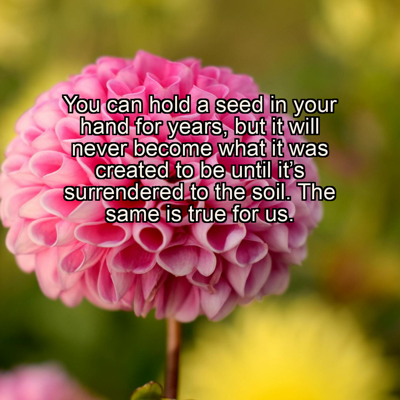
You can hold a seed in your hand for years, but it will never become what it was created to be until it’s surrendered to the soil. The same is true for us.
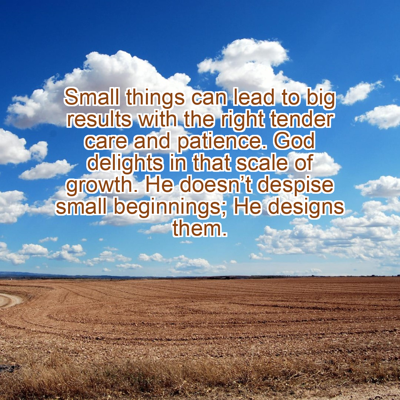
Small things can lead to big results with the right tender care and patience. God delights in that scale of growth. He doesn’t despise small beginnings; He designs them.
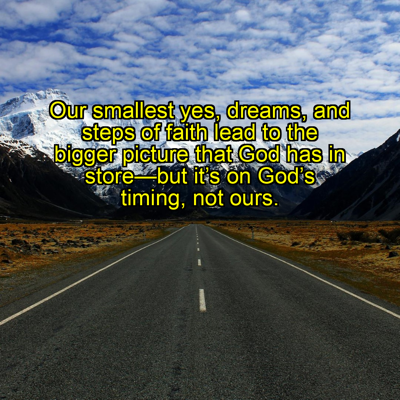
Our smallest yes, dreams, and steps of faith lead to the bigger picture that God has in store—but it’s on God’s timing, not ours.
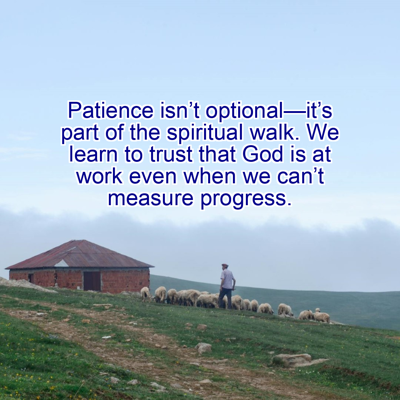
Patience isn’t optional—it’s part of the spiritual walk. We learn to trust that God is at work even when we can’t measure progress.
The seed reminds us that God doesn’t need you to be big, He just needs you to be willing.
Giving our seeds to God to plant will produce more of a result than holding onto them—whether it’s the result we want or not. We trust God’s plan, surrender our seed to Him, and watch it grow into something bigger than we could ever imagine.
Add this chatbot onto your site with the embed code below
<iframe frameborder="0" src="https://pastors.ai/sermonWidget/sermon/gen-sunday" width="100%" height="100%" style="height:100vh;"></iframe>Copy