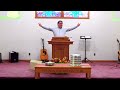
God finished His work in six days. On the seventh, He ceased—not from exhaustion, but by design. He planted rest into creation’s rhythm before sin’s curse made labor toilsome. The Sabbath wasn’t a suggestion but a gift, a weekly reminder that life depends on His provision, not human striving. Adam’s first full day in Eden was one of rest, not labor. [02:02]
This pattern reveals God’s heart: He sustains what He creates. The Sabbath declares that our worth isn’t tied to productivity. Jesus later affirmed this by healing on rest days, prioritizing people over rituals. God’s command to cease still stands, resisting our prideful self-sufficiency.
Where has hustle choked your soul? This week, practice stopping—not to collapse, but to worship. What task or worry do you cling to, afraid to release for even one day?
“Six days you shall labor, and do all your work, but the seventh day is a Sabbath to the Lord your God. On it you shall not do any work.”
(Exodus 20:9–10a, ESV)
Prayer: Confess one area where you’ve refused rest. Ask God to help you trust His provision.
Challenge: Silence your phone for 30 minutes today. Sit quietly, noting God’s gifts around you.
Two trees stood center-stage in Eden: one offering life, the other promising godlike knowledge. God permitted eating from every tree except one. Adam and Eve faced no complex rules—just a single boundary testing their trust. The serpent twisted this clarity, making restriction seem like deprivation. [05:08]
The trees represented two kingdoms. Life came through obedience; death through seizing autonomy. This choice echoes in every temptation—will we receive God’s gifts with gratitude or demand control? Jesus later faced His own “tree” decision in Gethsemane, choosing surrender over self-will.
What forbidden fruit entices you now—not because it’s evil, but because it’s forbidden? When has God’s “no” felt more real to you than His abundant “yes”?
“The Lord God commanded the man, saying, ‘You may surely eat of every tree of the garden, but of the tree of the knowledge of good and evil you shall not eat.’”
(Genesis 2:16–17a, ESV)
Prayer: Thank God for a specific gift He’s given you this week. Ask for discernment to recognize lies.
Challenge: Write down one area where you’re resisting God’s boundary. Pray over it before bed.
Adam’s first job was joyful stewardship—naming animals, tending Eden’s bounty. Work wasn’t a curse but a collaboration with God. Thorns came after the Fall, twisting labor into toil. Yet Christ, the second Adam, restored dignity to work, crafting tables before preaching sermons. [07:10]
God designed work to reflect His creativity, not define our identity. Adam worked from rest, not for rest. Jesus modeled this, retreating to pray even amid ministry demands. Our exhaustion often stems from seeking in work what only God can give.
Where have you let labor become your lord? What task can you approach today as worship, not a burden?
“The Lord God took the man and put him in the garden of Eden to work it and keep it.”
(Genesis 2:15, ESV)
Prayer: Name one workplace stress. Ask God to renew your purpose there.
Challenge: Do a neglected chore joyfully today—sweep, wash dishes, or organize a drawer—as an act of worship.
The cross was grown from Eden’s soil. God planted trees knowing one would become a torture device. Yet Christ transformed that instrument of death into a lifeline. His blood, like sap from a cursed tree, reversed Adam’s poison. The cross now bears forgiveness, not figs. [12:21]
Every Edenic tree pointed to Calvary. The life-tree’s healing leaves (Revelation 22:2) flow from the Lamb’s wounds. Jesus absorbed the knowledge-tree’s curse so we might taste grace. His death uproots our shame, replanting us in God’s garden.
What sin still feels unforgivable? How might embracing the cross’s fruit change your self-view?
“Christ redeemed us from the curse of the law by becoming a curse for us—for it is written, ‘Cursed is everyone who is hanged on a tree.’”
(Galatians 3:13, ESV)
Prayer: Confess a recurring sin. Thank Jesus His blood covers it fully.
Challenge: Write “Galatians 3:13” on your palm. Remember His sacrifice when tempted today.
Adam faced two trees daily; so do we. Modern idols promise identity through career, relationships, or ideologies—counterfeit life-trees. Yet only Christ’s cross offers true selfhood. Every decision to gossip, worry, or rebel replays Eden’s choice. [30:11]
Joshua’s challenge remains: “Choose this day whom you will serve.” Jesus’ resurrection empowers new choices. Like pruned branches, we’re grafted into the true Vine (John 15:1), bearing fruit that lasts.
Where are you seeking identity outside of Christ? What “tree” demands your allegiance this hour?
“If anyone would come after me, let him deny himself and take up his cross daily and follow me.”
(Luke 9:23, ESV)
Prayer: Ask God to expose one false identity. Claim your status as His child.
Challenge: Text a believer: “Today I choose Christ’s tree over the world’s. How can I pray for your choices?”
Genesis lays a foundation. The book tells where man came from and why man sits in a predicament. God rests on the seventh day, not because God is tired, but because God ceases. The Sabbath lands as design and gift, so a day of rest becomes obedience rather than prideful grind. Eden stands as God’s first garden, a paradise-plot where every good thing grows in one place, “pleasant to the sight and good for food.” In the very middle sit two trees, the tree of life and the tree of the knowledge of good and evil, and God places man there to work and keep it. Work is not a punishment. “Work’s a good thing.”
God’s command speaks with lavish permission and one clear boundary. “Of every tree of the garden thou mayest freely eat,” but from the knowledge tree, do not eat, “for in the day that thou eatest thereof thou shalt surely die.” The issue is not touch, not carpentry, not admiring a beautiful tree. The issue is trust. The phrase “knowledge of good and evil” reaches deeper than right and wrong charts. Scripture uses know as an intimate word, so the knowledge tree threatens an intimate acquaintance with evil, suffering, pain, and death. The choice in Eden is not about produce. “It wasn’t about fruit.” It is about God’s way or man’s way, about whether God’s word will be enough when a lie looks good.
Golgotha’s tree enters the story by seed. The Creator made the forest that would furnish the cross. The cross is called a tree because the curse falls there. “Cursed is everyone that hangeth on a tree,” and Christ becomes a curse to redeem. The fruit of that tree is blood, not ghastly in God’s eyes but precious, healing, forgiving. “By whose stripes ye were healed.” The tree of life, mentioned in Eden and in the New Jerusalem, bears twelve kinds of fruit in steady harvest and has leaves “for the healing of the nations.” Its fruit promises hope and wholeness.
Sin’s fruit is consistent. James says sin when finished brings forth death. Adam, as man’s representative, chose self in perfect conditions, and the curse rippled through creation. Every person repeats the same “stinking, rotten choice.” Yet the daily crossroads remains clear: choose Christ’s cross and live in forgiveness, cleansing, and relationship, or chase an identity without God that ends in loneliness and ruin. Today’s “tree of the knowledge of good and evil” often shows up as self-made identity, even high-tech versions of self. The gospel answers with a better name, a better tree, and a better life.
If you're here today, you say, oh, pastor, I can get by without rest. I don't need to take a day of rest. I I work seven days a week. Can I tell you what? Don't be prideful in that because the reality is it's disobedience. God said a day of rest. You need to rest. And so, man, as much as you can, we all know that there are extenuating circumstances that sometimes causes we have to work, but your life ought to be lived out in obedience to God, and part of that is taking that day of rest.
[00:02:37]
(34 seconds)
It matters where you came from. Hopefully, you're starting to see that as we begin our ways of preaching through Genesis. And today, I tell you what, what is interesting and wonderful about Genesis is it's a foundational book. Alright? Now, all the Bible is important because all the Bible is god's word. Amen? You understand that? All of it, every word is written is god breathed. It means god intended every word every word is put down. Alright? Now, but Genesis is foundational because it teaches us where we came from.
[00:00:36]
(43 seconds)
The bible uses the same word knowledge. It talks about Adam knew his wife, talks about this person knew his wife, and that, etcetera. What does that mean? It means it's an intimate term. It's an experience together. It's very intimate as you understand and get to know one another in a very intimate and deep way. It's the same here. God is warning Adam Adam if you eat of that tree, you will die and the problem of that tree is you'll become so intimately knowledgeable with suffering and anguish and pain and evil.
[00:09:41]
(41 seconds)
can I tell you what? This pastor can't stay in the side of blood. God knew what he was doing when he called me to be a spiritual doctor and not a physical doctor because I can't stand. I'd be faint on the floor. No. I can't stay in this. It just gets to me. Right? But can I tell you what? When I consider the precious blood of my savior, man, it causes me to weep, causes me to be joyful now and to rejoice that he would do that for me. That he would shut his blood from me.
[00:18:36]
(28 seconds)
Add this chatbot onto your site with the embed code below
<iframe frameborder="0" src="https://pastors.ai/sermonWidget/sermon/fruit-tree" width="100%" height="100%" style="height:100vh;"></iframe>Copy