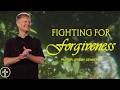
The villagers of Santo Tomas throw punches on Christmas morning. Men, women, and children swing at those who wronged them—land disputes, harsh words, betrayals. After brief brawls, they hug. No hair-pulling. No kicking fallen opponents. The ritual ends with shared drinks, grudges buried. Forgiveness here isn’t passive—it’s a violent release followed by deliberate peace. [00:26]
Jesus didn’t avoid conflict when He overturned temple tables or rebuked Pharisees. But His fight wasn’t against people—it was against the roots poisoning their hearts. The Santo Tomas brawl mirrors our inner war: we want to strike back, yet Christ calls us to wrestle our rage into surrender.
You’ve rehearsed conversations with someone who hurt you. You’ve imagined vindication. But clenched fists can’t receive grace. Today, name the debt you’ve been collecting. What happens if you stop demanding repayment?
“Get rid of all bitterness, rage, and anger, brawling, and slander… Be kind and compassionate… forgiving each other just as in Christ God forgave you.”
(Ephesians 4:31-32, NIV)
Prayer: Ask Jesus to uncurl your fists—one finger at a time.
Challenge: Write one sentence describing a grudge you carry. Tear it up after reading Ephesians 4:31 aloud.
Bitterness grows unseen. Hebrews warns of roots twisting in secret, feeding on old wounds and unmet apologies. Like invasive weeds, they crack foundations—your peace, sleep, relationships. The woman at the well hid five husbands; her shame thrived underground until Jesus exposed it with kindness. [07:53]
God doesn’t trivialize your pain. He names bitterness a spiritual danger because it replaces His life with toxic substitutes. Jesus didn’t ignore Judas’ betrayal—He named it at the Last Supper—but refused to let it define His mission.
What root have you been watering with resentment? Dig it up before it strangles your joy. When did you last check your heart’s soil for hidden growth?
“See to it that no one falls short of the grace of God and that no bitter root grows up to cause trouble and defile many.”
(Hebrews 12:15, NIV)
Prayer: Confess one bitter root to God. Speak its name aloud.
Challenge: Text a trusted friend: “Help me uproot bitterness in ________ area.”
Jesus showed His wounds to Thomas. Not as proof of suffering, but as receipts of forgiveness. The disciples owed Him loyalty—they’d fled. Peter owed courage—he’d denied. Yet Christ served them broiled fish, not bills. His scars declared: “I cancel what you could never repay.” [24:53]
Unforgiveness keeps ledgers. Jesus’ cross erases columns. When He said, “Father, forgive them,” He transferred humanity’s debt from our hands to God’s court. The offense remained real—the solution became divine.
Who’s on your ledger? What impossible debt could you mark “Paid in Full” today? How would your breathing change if that account closed?
“When they hurled their insults at Him, He did not retaliate… He entrusted Himself to Him who judges justly.”
(1 Peter 2:23, NIV)
Prayer: Thank Jesus for absorbing your worst debt. Now name someone else’s.
Challenge: Silently pray blessings over a person who hurt you while washing your hands.
The pastor described forgiveness as releasing yourself, not your offender. Like Joseph freeing himself from Potiphar’s prison, then Pharaoh’s dungeon. His brothers cowered, expecting revenge. Joseph wept: “God meant it for good.” The jailer became the liberator. [09:41]
Bitterness is a life sentence. Forgiveness is a parole hearing where you hold the gavel. Jesus didn’t wait for His executioners to apologize—He handed justice to the Father and walked out of the tomb.
What jail have you built with others’ mistakes? When will you turn the key?
“Forgive, and you will be forgiven.”
(Luke 6:37, ESV)
Prayer: Confess: “God, I’ve preferred prison over peace. Take my key.”
Challenge: Write “Galatians 5:1” on your mirror. Say it while brushing your teeth.
Jesus told Peter to forgive “seventy times seven”—not because sins are small, but because accountants make terrible disciples. The servant forgiven millions throttled a man owing pennies. God fires debt collectors. He promotes grace-distributors. [30:06]
You weren’t designed to track payments. Like the prodigal’s father, God sprints past ledgers to embrace. Your offender may never pay, but their balance won’t bankrupt you. The cross overdraws hell’s account to credit your soul.
What calculator are you clutching? What happens if you smash it?
“Do not take revenge… but leave room for God’s wrath.”
(Romans 12:19, NIV)
Prayer: Repeat: “God, You’re better at justice than me. I quit.”
Challenge: Delete one angry draft message. Replace it with Psalm 56:8.
Forgiveness sets the tone as a fight for freedom. The Peruvian Christmas fistfights become a mirror of the human impulse to settle scores, but the claim insists the real battle is internal. Forgiveness is always a fight, rarely easy, and exactly the opposite of what the wounded heart wants. Yet the fight matters because unforgiveness is not just pain, it is pain competing with God’s plan and purpose. Bitterness is pictured as a hidden root that grows in the dark until it bears bitter fruit, turning the heart into an altar where peace, trust, and joy are sacrificed.
Ephesians calls for getting rid of all bitterness and forgiving as God in Christ forgave. That command is not trite; it is protective. Forgiveness is not pretending the offense was small, nor saying it did not matter. Forgiveness refuses to let the wound become the master. God himself models the fight. In Gethsemane Jesus faces the cost, then on the cross pays debts he did not owe because humanity owed debts it could not pay. That grace creates a path forward: without forgiveness, there is no future.
The debt-collector image names the trap. As long as the offended believes the offender owes, the offender owns, living rent free in the mind. Waiting on emotional restitution that will never come keeps the soul spiritually bankrupt. If peace depends on their repentance, freedom sits in their hands. The Spirit, however, opens another road. Some debts will never be repaid by the offender, yet God still heals that place. Forgiveness releases the demand for personal repayment and hands the account to the only One who can redeem it.
Clarifications keep the path honest. Forgiveness is not excusing the wrong, not forgetting, and not always reconciling. Where reconciliation is wise and possible, pursue it; where it is not, forgiveness still chooses freedom. David Stoop’s line is sharp: canceling the debt frees the offended from the expectation of restitution. Holy Week anchors the vision. Betrayed, denied, mocked, and crucified, Jesus prays, Father, forgive them. That prayer shows strength, not weakness.
Two practices close the loop. First, forgiveness is a choice, not a feeling. The alternatives are bitterness, hate, revenge, and a life shrunk by walls. Second, God sees clearly and judges perfectly. First Peter names the move: entrust the wound to the One who judges justly. God is a far better debt collector. Releasing the debt and trusting God with justice opens the prison door the offended is sitting behind.
But my point is is this, is when you start playing debt collector, you walk into prison of all bitterness and the frustration. When you think that person owes you, they own you. But when you say, God, I'm giving you this offense, and I'm entrusting it to you, and you are you are the one that judges justly. It's a fight to forgive, but it's worth the effort. Release the debt and trust God with the justice. Some of you today need to do that.
[00:31:19]
(40 seconds)
And if grace is real, we talk about amazing grace. We sing the song. Right? We talk about grace, grace, grace, the God of grace. Well, grace doesn't exist if there isn't justice. Well, you think about that. There is no such thing as grace if there also isn't justice. And he is a God of grace, but the Bible says very clearly he's also a just God. And contrary to common thought, forgiveness shows that you are strong, not weak.
[00:28:24]
(36 seconds)
Not because that person shouldn't pay the debt and shouldn't ask for the apology and shouldn't try to make up for it. Yes. They should. But the problem is is this, in this hopelessly broken world, many times the person who's who the is the offender is not gonna do it. So forgiveness is not saying there is no debt. Forgiveness is saying, I release my demand that you personally repay what only God can ultimately redeem. That's what you're doing. That's what you're doing.
[00:20:41]
(41 seconds)
And here's the thing. It was like those ladies that were in the room could release a debt that was never gonna get paid to them by the one who truly should have been paying it. Some debts, whether you are a man or a woman, whether you are a child or a senior citizen in here, Some debts will never be repaid by the person who created them. And I know that you want that. I know you're waiting for that. But I'm here to tell you, I want to release you from that expectation.
[00:19:57]
(44 seconds)
I'm an AI bot trained specifically on the sermon from May 17, 2026. Do you have any questions about it?
Add this chatbot onto your site with the embed code below
<iframe frameborder="0" src="https://pastors.ai/sermonWidget/sermon/freedom-forgiveness-jeremy-deweerdt" width="100%" height="100%" style="height:100vh;"></iframe>Copy