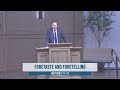
The transfiguration of Christ offers a glimpse into the ultimate reality that awaits all believers. In this moment, the divine glory of Jesus, which was veiled during his earthly ministry, shone forth in radiant splendor. This event was not merely a spectacle but a profound assurance of the future that is secured for those in Christ. It serves as a powerful reminder that the current struggles and sufferings of this life are temporary. The eternal weight of glory that is to come far outweighs them all. Everything will be alright in the end. [04:47]
And he was transfigured before them, and his face shone like the sun, and his clothes became white as light.
(Matthew 17:2 ESV)
Reflection: When you consider the challenges you are currently facing, how does the promise of future glory in Christ reshape your perspective and provide you with genuine comfort and hope?
The presence of Moses and Elijah on the mountain confirms that Jesus is the fulfillment of all Scripture. They represent the law and the prophets, the entire Old Testament witness that pointed toward the coming Messiah. Their conversation with Jesus signifies the perfect harmony between the promises of God in the past and their fulfillment in Christ. This moment underscores that the Bible, from beginning to end, is a unified story of redemption through Jesus. He is the central figure to whom everything points. [12:17]
And he said to them, “O foolish ones, and slow of heart to believe all that the prophets have spoken! Was it not necessary that the Christ should suffer these things and enter into his glory?” And beginning with Moses and all the Prophets, he interpreted to them in all the Scriptures the things concerning himself.
(Luke 24:25-27 ESV)
Reflection: In what ways can you cultivate a habit of reading the Old Testament with fresh eyes, actively looking for how its stories, laws, and prophecies ultimately point to Jesus?
The path to exaltation always leads through the valley of humility. The disciples could not remain on the mountain of glory; they had to descend back into a world of need and suffering. This pattern, first established by Christ, is the same pattern for his followers. Lasting glory cannot be achieved by bypassing difficulty, obedience, or sacrifice. True Christ-honoring glory is found in embracing the path of humble service and trust, following the example of our Lord who endured the cross for the joy set before him. [21:49]
Have this mind among yourselves, which is yours in Christ Jesus, who, though he was in the form of God, did not count equality with God a thing to be grasped, but emptied himself, by taking the form of a servant, being born in the likeness of men. And being found in human form, he humbled himself by becoming obedient to the point of death, even death on a cross.
(Philippians 2:5-8 ESV)
Reflection: Where is God inviting you to embrace a season of humble service or obedience right now, trusting that this path, though difficult, leads to genuine life and glory in Him?
In the midst of human confusion and misguided enthusiasm, the voice of God provides clarity and direction. The divine command to “listen to him” places the words of Christ above all other voices and opinions. It is a call to attentive, submissive hearing that leads to faithful action. Our own ideas about glory and success often need to be corrected by the teachings of Jesus. The Christian life is one of continually tuning our ears to the voice of our Shepherd through his Word, allowing it to shape our thoughts, words, and deeds. [22:39]
And a voice came out of the cloud, “This is my beloved Son; listen to him.”
(Mark 9:7 ESV)
Reflection: What is one specific area of your life where you recognize a tendency to act on your own impulses rather than first pausing to listen to what Christ says in His Word?
This is the steadfast hope that anchors the Christian soul: because Christ has been raised and glorified, everything will ultimately be made right for those who are in him. This confident assurance is not a trite cliché but a theological certainty rooted in the finished work of Jesus. It is a hope that empowers endurance through suffering, fuels perseverance in obedience, and inspires joyful proclamation. No matter what unfolds in the present, the final chapter for the believer is one of everlasting glory and peace in the presence of God. [16:21]
For I consider that the sufferings of this present time are not worth comparing with the glory that is to be revealed to us.
(Romans 8:18 ESV)
Reflection: How can the unshakable truth that “everything will be alright in the end” free you to live with greater courage, generosity, and peace today?
The transfiguration scene on the mountain functions as both a foretaste of coming glory and a foretelling of necessary humiliation. The narrative climbs: Jesus takes Peter, James, and John up a high mountain and appears radiant, with Moses and Elijah conversing with him, signaling continuity between the law, the prophets, and the fulfillment now present in Christ. That luminous moment anticipates the resurrection and the final kingdom, offering a glimpse of the glory that awaits the obedient sufferer. At the same time, the descent from the mountain points to the unavoidable path of suffering; exaltation comes only after submission to the cross.
Moses and Elijah stand as living witnesses to Scripture’s testimony about the Messiah. Their presence affirms that the law and the prophets always pointed to Christ, and their bodily appearance anticipates the bodily vindication believers will share through union with him. The voice from the cloud crowns Jesus as the beloved Son and commands attention to his words, displacing any attempt to privatize or domesticate divine glory. Peter’s instinct to build shelters reveals a common temptation: to fixate on mountaintop experience while refusing the downward road of obedience. The divine command to “listen to him” reframes glory as something inseparable from the Word and the way of the Son.
The passage calls for a gospel-shaped regimen of sight and submission. The transfiguration comforts by showing that present suffering will yield to an abiding beauty, yet it also disciplines by insisting that lasting glory comes only through faithfulness to God’s revealed way. The foretaste offered on the mountain gives both consolation and correction: consolation that everything will be well in the end for those in Christ, and correction that genuine hope never divorces the path of humiliation from the promise of exaltation. Believers find cause to encourage one another in steadfastness, to pay attention to the Son’s word, and to live as people who trust that faith and hope will ultimately become sight.
When we see glory apart from the glorious or the gospel word of Christ, be it be it salvation or everyday living, when we we seek glory apart from that, there isn't anything lasting about it. And that's why the apostle Peter said this too in second Peter one nineteen. The very one I mean, he learned his lessons. He says that we need to pay attention to the word of the lord as one would pay attention to a light in a dark place.
[00:24:06]
(32 seconds)
#WordIsLight

The foretaste and the foretelling are here, and they speak to us both about the glory of Christ and his humiliation. And both were going to happen, but both in the proper order of things. Humiliation first, obedience unto death, then glory. And it reminds us as it did Jesus, Elijah, Moses, the disciples of old, that everything was gonna be alright in the end for the joys that are set before us. Isn't that exactly the comfort that we need when we long for the glorious appearing of Jesus Christ, our savior and lord in faith?
[00:31:25]
(52 seconds)
#FromSufferingToGlory
Add this chatbot onto your site with the embed code below
<iframe frameborder="0" src="https://pastors.ai/sermonWidget/sermon/foretaste-foretelling" width="100%" height="100%" style="height:100vh;"></iframe>Copy