The candle names Christ as the light of the world and names God’s people as those invited to be light together. The three wicks name the Trinity, Father, Son, and Holy Spirit, working together as one God. The Bible opens God’s story as a gift given across generations, a story of God’s love for people and for all creation.
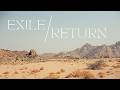
The desert shows up as a dangerous place, with little food or water, burning days, freezing nights, shifting sands, and no easy way to find the path. Jerusalem stands inside strong walls, with the temple at its center, and God’s people come to believe that the walls can protect them from anything and that the temple is the only place where God can be found. That confidence cannot stand when armies come.
The Assyrians bring suffering and leave, but Babylon breaks down Jerusalem’s walls, burns the temple, and takes God’s people away in chains. Exile turns the desert into a long forced march, where soldiers decide when people rise, eat, drink, and sleep. The waters of Babylon become a place of grief, where harps hang on willow trees and sad songs rise from people who cannot go home.
God’s presence refuses to remain contained inside Jerusalem’s temple walls. God comes near in Babylon as God’s people gather, sing, tell their stories, read Scripture, and pray. Babylon becomes a strange and foreign land where life still goes on, where people work, open stores, and even serve within the king’s world.
Persia opens a way home through Ezra and Nehemiah. Ezra leads people back to rebuild the temple, and Nehemiah leads people back to rebuild the city walls. Yet God’s people do not all return, because exile has taught them something they did not know before: God is there too. God is present in Jerusalem, present in Babylon, present in the familiar place, and present in the place nobody would have chosen.
The desert’s shifting shape becomes a picture of lives that do not stay the same. Jerusalem’s walls become a picture of the false safety people can build around themselves. Babylon’s harps become a picture of honest sorrow, while God’s surprising presence becomes the deepest truth in every part of the story. God goes with people to family visits, college, school, work, grocery stores, and even into the places where life feels hard and unfamiliar.
##
Key Takeaways
- 1. God cannot be contained by walls. Jerusalem’s walls and temple became symbols of a confidence that had grown too small. God did not abandon God’s people when those structures fell, but met them in the land they feared. God’s presence is not dependent on the places people can control. [35:34]
- 2. Exile can uncover God’s nearness. Babylon was not chosen, easy, or free from grief. Yet God’s people slowly learned that prayer, Scripture, songs, and shared memory could still become places of meeting with God. Sorrow does not prove God is absent. [36:03]
- 3. Home may change while God remains. Return to Jerusalem did not simply restore the old life. The city was different, the people were different, and some discovered that God had given them life in Babylon too. God’s faithfulness holds when familiar places no longer feel familiar. [41:04]
- 4. God shows up in surprising places. A wheelbarrow on a hill, a ride offered to a stranger, and a small gift given away can become holy ground. God often meets people through ordinary acts of mercy and attention. God’s presence can interrupt the places that seem least spiritual.
## [45:01]
Youtube Chapters
- [00:00] - Welcome
- [24:59] - Entering God’s Story Together
- [26:12] - The Trinity Candle and Christ’s Light
- [28:46] - The Dangerous Desert
- [30:00] - Jerusalem, the Temple, and False Safety
- [32:56] - Babylon Destroys Jerusalem
- [35:13] - Harps by the Waters of Babylon
- [36:22] - Ezra, Nehemiah, and the Return Home
- [37:56] - God Is There Too
- [40:07] - Finding Ourselves in the Story
- [42:38] - Meeting God in Surprising Places
- [45:33] - God Goes Into Everyday Life
- [46:43] - Closing Prayer