
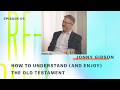
How Do I Enjoy the Old Testament? | A Conversation with Jonny Gibson
Sep 30, 2026
Devotional
Sermon Summary
Bible Study Guide
Sermon Clips
He's there all over the pages of the Old Testament. Not just in specific prediction fulfillment texts. There's only about 40 of those actually in the Old Testament, but uh he's there over all the pages of scripture, but in shadow form. And you know what your own shadow looks like? It's it is a it is a um an outline of your body, of yourself. And yet it's fuzzy. It's blurry. And so that's what you're dealing with in the Old Testament. Christ is there, but he's it's a bit blurred. It's it's hard to see until the New Testament where the veil is lifted off. [00:15:31]
whole of scripture is inspired by God, every word without error, it's infallible, but every word is inspired and God is in the details. Then what we want to do is study the Old Testament in its original context, in its historical context, in its literary context and get as much out of that text that we're in in the Old Testament as possible. And if you're more patient, more slow to study it, you will end up with a richer view of Christ at the end because you haven't rushed to get to him. [00:19:05]
God is a God who loves to come and dwell with his people in the same kind of homes that they live in. The Israelites are in a tent. He comes to live in a tent. Wow. Israelites are in physical buildings in the promised land. He comes into the temple in a physical building. God likes to come and dwell with his people in the same homes they live in. [00:24:22]
And by the end, it will be like obvious who it's about. And yet by doing that you sort of build the suspense and the drama and you you you create the rich categories in which then to introduce Christ. So that would be my one thing. Don't don't rush to get to Jesus. Deal with the text in its original context and then you will see a better Christ. [00:20:12]
the whole of the Bible is about him and he was referring to the Old Testament. And so I love studying the Old Testament to see Christ in that um as we need to get away from this idea that it's this different part of the Bible and we just need to wait to get to Jesus in the New Testament. Jesus is all over the pages of the Old Testament. [00:03:33]
Well, I think when people have that view, they're reading the Old Testament selectively because God is a God of wrath and judgment in the Old Testament, a God of holiness. He doesn't tolerate sin, but in numerous places, he's also the God of love, steadfast love. His mercies renew every morning. His faithfulness never ends. [00:05:46]
Uh I would say it's the first part of the Bible. You got two parts, Old Testament, New Testament. I would say it's the preface, the introduction to the main story. Um those are some sort of very simple ways but theologically I would say what it is it is a body of revelation in history that is preparing the world to receive its savior. [00:11:49]
Go deeper. You You're going to find Jesus as you sit in it. As you go deeper in it, uh rather than just coming across the surface and with a quick nervousness, oh, I got to find out how this is about Jesus. Uh making the the move too quick. Uh but to trust him, trust his patience, and have the kind of divine leisureliness that would help you find the truth. [00:20:46]
Well, the original is Jesus. He's the real deal. And he stands in the Old Testament and casts his shadow. Sorry, he stands in the New Testament and casts his shadow back over the Old Testament. So, his shadow is all over the Old Testament. That's what we mean by typology. [00:23:40]
His words are inspired through his prophets and by his spirit. They're good words. These are delightful words. They're part of satisfying our soul. And I something I come come away with over and over again from all of scripture, but maybe in particular the Old Testament is the greatness of God. Uh the expanding of my small categories for what God can do, what his power is, how he steers history. [00:04:52]
Alec Matir um used to say that if the Old Testament is boring you, God's trying to tell you something. And also if God keeps repeating himself, he's trying to tell you something. And I think that's what he's telling us in the Old Testament. He he is the God of steadfast love. [00:09:06]
to overcome that false dichotomy between the God of wrath, the God of love, read your Old Testament and actually see these attributes of God of of love and patience and faithfulness. They're they're all over the Old Testament. [00:08:18]
Listen up. And the human heart kind of gets bored with repetition. But the scriptures are are written in such a way that that the repetition teaches us that, you know, I don't know about you, brothers, I need to hear it over and over and over and over again. [00:10:38]
And then what do we see in the New Testament? We see Jesus dying on a mountain on Mount Golgtha making a sacrifice. And so you can now see that all of those things in the Old Testament are types, shadows, pointers uh to Christ. [00:26:09]
patient, more slow to study it, you will end up with a richer view of Christ at the end because you haven't rushed to get to him. There's more to see than we ourselves and our finite minds have seen. [00:00:40]
Ask a question about this sermon
whole of scripture is inspired by God, every word without error, it's infallible, but every word is inspired and God is in the details. Then what we want to do is study the Old Testament in its original context, in its historical context, in its literary context and get as much out of that text that we're in in the Old Testament as possible. And if you're more patient, more slow to study it, you will end up with a richer view of Christ at the end because you haven't rushed to get to him. [00:19:05]
God is a God who loves to come and dwell with his people in the same kind of homes that they live in. The Israelites are in a tent. He comes to live in a tent. Wow. Israelites are in physical buildings in the promised land. He comes into the temple in a physical building. God likes to come and dwell with his people in the same homes they live in. [00:24:22]
And by the end, it will be like obvious who it's about. And yet by doing that you sort of build the suspense and the drama and you you you create the rich categories in which then to introduce Christ. So that would be my one thing. Don't don't rush to get to Jesus. Deal with the text in its original context and then you will see a better Christ. [00:20:12]
the whole of the Bible is about him and he was referring to the Old Testament. And so I love studying the Old Testament to see Christ in that um as we need to get away from this idea that it's this different part of the Bible and we just need to wait to get to Jesus in the New Testament. Jesus is all over the pages of the Old Testament. [00:03:33]
Well, I think when people have that view, they're reading the Old Testament selectively because God is a God of wrath and judgment in the Old Testament, a God of holiness. He doesn't tolerate sin, but in numerous places, he's also the God of love, steadfast love. His mercies renew every morning. His faithfulness never ends. [00:05:46]
Uh I would say it's the first part of the Bible. You got two parts, Old Testament, New Testament. I would say it's the preface, the introduction to the main story. Um those are some sort of very simple ways but theologically I would say what it is it is a body of revelation in history that is preparing the world to receive its savior. [00:11:49]
Go deeper. You You're going to find Jesus as you sit in it. As you go deeper in it, uh rather than just coming across the surface and with a quick nervousness, oh, I got to find out how this is about Jesus. Uh making the the move too quick. Uh but to trust him, trust his patience, and have the kind of divine leisureliness that would help you find the truth. [00:20:46]
Well, the original is Jesus. He's the real deal. And he stands in the Old Testament and casts his shadow. Sorry, he stands in the New Testament and casts his shadow back over the Old Testament. So, his shadow is all over the Old Testament. That's what we mean by typology. [00:23:40]
His words are inspired through his prophets and by his spirit. They're good words. These are delightful words. They're part of satisfying our soul. And I something I come come away with over and over again from all of scripture, but maybe in particular the Old Testament is the greatness of God. Uh the expanding of my small categories for what God can do, what his power is, how he steers history. [00:04:52]
Alec Matir um used to say that if the Old Testament is boring you, God's trying to tell you something. And also if God keeps repeating himself, he's trying to tell you something. And I think that's what he's telling us in the Old Testament. He he is the God of steadfast love. [00:09:06]
to overcome that false dichotomy between the God of wrath, the God of love, read your Old Testament and actually see these attributes of God of of love and patience and faithfulness. They're they're all over the Old Testament. [00:08:18]
Listen up. And the human heart kind of gets bored with repetition. But the scriptures are are written in such a way that that the repetition teaches us that, you know, I don't know about you, brothers, I need to hear it over and over and over and over again. [00:10:38]
And then what do we see in the New Testament? We see Jesus dying on a mountain on Mount Golgtha making a sacrifice. And so you can now see that all of those things in the Old Testament are types, shadows, pointers uh to Christ. [00:26:09]
patient, more slow to study it, you will end up with a richer view of Christ at the end because you haven't rushed to get to him. There's more to see than we ourselves and our finite minds have seen. [00:00:40]
Desiring God
This sermon · AI assistant

-
I'm an AI bot trained specifically on the sermon from Sep 30, 2026. Do you have any questions about it?