Before there was a cradle, there was a Christ. He did not begin in Bethlehem; He stepped into Bethlehem from eternity as the living Word, fully God and with God. This means Christmas is not a sweet story but the arrival of the Savior who can forgive, redeem, and change us. Let your heart bow before Him as King and God, not only as a baby in a manger. Rest your worship on the One who didn’t begin in Bethlehem but stepped into it for you [02:47].
John 1:1–3,14 — Before time started, the Word was already there, in fellowship with God—and He was truly God. Through Him every single thing came to be; nothing that exists arrived without Him. Then the Word put on our humanity and made His home among us; we saw His splendor—the unique Son from the Father—overflowing with grace and truth.
Reflection: Where have you treated Christmas more like a touching story than a call to worship Jesus as God, and what would adoration look like for you this week?
The same hands that flung galaxies into space were wrapped in swaddling clothes and later stretched out on a cross. He not only created all things; He holds all things together—even the smallest pieces you can’t see and the moments you can’t manage. If He sustains atoms, He can sustain your heart, your home, and your future. Bring to Him what feels scattered and slipping, and trust His steadying grace. The Maker entered His creation to redeem what He made [03:59].
Colossians 1:16–17 — Everything was made by Him—in heaven and on earth, visible and invisible, from thrones to the tiniest things. He existed before anything else, and by His power the whole universe is held together.
Reflection: Where does your life feel like it’s flying apart, and what simple step today could entrust that exact place to Jesus, the One who holds all things together?
Darkness is not only around us; it settles inside us, and that is why Jesus came. Light does not negotiate with darkness; it overcomes it. Even a small light can fill a tent on a winter night; how much more does Christ’s light flood a surrendered heart and a weary home. He did not come to cure the dark but to conquer it—in us and for us. Let His light shine through you where the church building can’t go, but you can [04:21].
John 1:4–5 — In Him was life, and that life became the light for humanity. The light keeps on shining in the dark, and the darkness cannot overpower it or shut it down.
Reflection: What is one specific dark place—a conversation, workplace corner, or hidden fear—where you can bring Christ’s light this week through a quiet act of faith, truth, or love?
He came to His own and many said no, yet their rejection did not stop His redemption. To all who receive Him and trust His name, He gives the right to become children of God—born not by heritage or effort, but by God’s own work. Christmas is not only about a birth in Bethlehem; it is about a birth in the heart. He will not force Himself on you; He invites you. Open your life to the One who gives the power to become His [05:12].
John 1:10–13 — He was in the world, and though the world was made through Him, it did not recognize Him. He came to His own, and His own did not welcome Him. But to all who did receive Him—those who trust His name—He gave authority to become God’s children, born not from bloodline, or human desire, or human will, but from God.
Reflection: If your faith has looked busy on the outside but unchanged on the inside, what is one honest step—prayer, confession, or trusted conversation—you could take this week to truly receive Jesus?
The Word became flesh and dwelt among us; He walked where we walk, wept where we weep, and hurts where we hurt. In Gethsemane He said, “Not my will but yours,” and on Calvary He carried what we could not carry. Because God came to us, we can now come to Him in every sorrow and every joy. This is the Gift: Emmanuel, God with us—near in our grief, near in our hope, near in our ordinary days. Bring your ache to Him and let His nearness steady you [04:38].
Matthew 1:21–23 — She will have a Son, and you are to name Him Jesus, because He will save His people from their sins. All this happened to fulfill what the Lord promised: a virgin will conceive and bear a Son, and He will be called Immanuel—God with us.
Reflection: Where are you hurting right now, and how could you make space today to welcome Emmanuel into that exact place—through prayer, a psalm, or asking someone to pray with you?
John paints a breathtaking picture: before there was a cradle, there was Christ. The Word was eternal, with God, and was God. He didn’t begin in Bethlehem; He stepped into Bethlehem. Before Mary held Him, the universe answered to Him. All things were made by Him—and by Him all things hold together. The hands that flung galaxies into place would be wrapped in swaddling clothes, then stretched out on a Roman cross. That’s why Christmas is more than a sentimental scene; it’s the arrival of the Creator come to redeem His creation.
The four Gospels turn the diamond from different angles—Matthew shows the King, Mark the Servant, Luke the Son of Man, and John the Son of God. John’s opening thunders: the Light shines, and darkness cannot overcome it. Darkness isn’t just around us—it’s in us. That’s why the Light had to take on flesh, be tempted as we are, and carry our sins in His own body on the tree. Light doesn’t negotiate with darkness; it conquers it. He faced the rejection of His own, but that rejection was woven into the plan of redemption. In Gethsemane He submitted—“not My will, but Yours”—and shouldered the cross for our salvation.
“As many as received Him, to them He gave power to become the children of God.” Christmas isn’t only about a birth in Bethlehem; it’s about a new birth in our hearts. You don’t earn this family—you’re born into it by faith. Like the little boy who carved a boat, lost it, then bought it back, Jesus can hold us and say, “You’re twice Mine. I made you and I bought you.” Emmanuel means God with us—He walked where we walk, wept where we weep, and hurts where we hurt. So, as we celebrate, let’s not stop at the manger. Let’s follow the star to the cross, receive the Word made flesh, and carry His light into the places our church sign can’t reach but your life can.
Before there was a cradle, there was a Christ. We worship Him and talk about Him in Bethlehem, but before there was a Bethlehem, there was a Jesus.
Jesus is not a created being; He is the creator of all beings. He is not a junior partner in the Trinity — He is co-equal and co-eternal with the Father.
The hand that designed the galaxies would one day be wrapped in swaddling clothes, and those hands would be nailed to a cross.
He made us and He bought us. We're not our own; we're bought with a price, and that price is the precious blood of the Lord Jesus Christ.
The Word came as light into the darkness. Light does not negotiate with darkness; it simply overcomes it. No darkness is strong enough to overcome Christ's light.
Christmas is not primarily about the birth in Bethlehem; it's about the birth in the heart. Jesus wants to live in us, not just be remembered in a manger.
Darkness is not just around us; darkness is in us. That's why Jesus came — to live in human flesh, be tempted like us, and nail our sins to the cross with Himself.
Because God came to us, we can now come to Him. Emmanuel means "God with us" — the Creator entered His creation so we can enter His presence by faith.
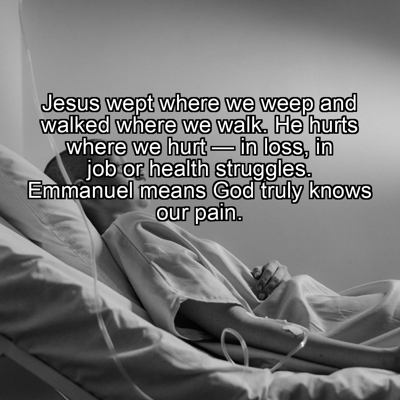
Jesus wept where we weep and walked where we walk. He hurts where we hurt — in loss, in job or health struggles. Emmanuel means God truly knows our pain.
Hi, I'm an AI assistant for the pastor that gave this sermon. What would you like to make from it?
Add this chatbot onto your site with the embed code below
<iframe frameborder="0" src="https://pastors.ai/sermonWidget/sermon/emmanuel-word-made-flesh" width="100%" height="100%" style="height:100vh;"></iframe>Copy