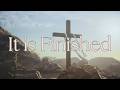
The work of salvation is not an unfinished project left for you to complete. On the cross, Jesus Christ declared that the debt of your sin was settled completely. This was not a partial payment or a down payment; it was a final, complete transaction. He absorbed the judgment you deserved and paid the penalty in full. You no longer need to strive to earn your way to God. The bill has been covered, and the account is settled. [43:21]
“For the wages of sin is death, but the free gift of God is eternal life in Christ Jesus our Lord.” (Romans 6:23, ESV)
Reflection: What does it mean for you personally to know that the debt of your sin has been completely paid by Jesus, and that you no longer carry the burden of trying to earn God’s acceptance?
Sin often feels like a controlling master, holding you in patterns of addiction, anger, fear, lust, or pride. These patterns can feel impossible to break on your own. The cross of Christ, however, was a declaration of victory over these powers. Jesus disarmed the spiritual forces that held you captive and triumphed over them. His finished work means you are no longer a slave to sin but are free to live a new life. [49:49]
“He disarmed the rulers and authorities and put them to open shame, by triumphing over them in him.” (Colossians 2:15, ESV)
Reflection: Which sinful pattern in your life most often feels like it has mastery over you? How might you begin to walk in the freedom Christ has already secured for you in that specific area?
Before Christ, a great separation existed between humanity and a holy God, symbolized by the temple veil. Through His sacrifice, Jesus tore that veil from top to bottom, opening a new and living way for you. You now have direct access to the Father; you can draw near to Him with confidence and full assurance of faith. The barrier has been removed, and the relationship has been restored. [52:40]
“Therefore, brothers, since we have confidence to enter the holy places by the blood of Jesus, by the new and living way that he opened for us through the curtain, that is, through his flesh… let us draw near with a true heart in full assurance of faith.” (Hebrews 10:19-22, ESV)
Reflection: In what ways do you still sometimes feel distant from God, and how does the truth that Jesus has opened the way for you change your approach to prayer and spending time with Him?
Salvation is not a meeting in the middle where Jesus does His part and you must do yours. It is entirely a gift of grace, received through faith. There is nothing you can add to the finished work of Christ. You are not called to achieve, but to receive. This gift is eternal, secure, and offered freely to all who will believe. [56:10]
“For by grace you have been saved through faith. And this is not your own doing; it is the gift of God, not a result of works, so that no one may boast.” (Ephesians 2:8-9, ESV)
Reflection: Where do you find yourself most tempted to add your own works or efforts to the completed gift of salvation? What would it look like to rest fully in what Christ has already done?
The empty tomb is the proof that Jesus’s declaration was true and His mission was accomplished. This reality invites a response. It calls for a turn—a turning from trusting in yourself and a turning toward trusting in Him. This repentance is the beginning of a journey, a first step into the life God has prepared for you. [01:01:10]
“For we are his workmanship, created in Christ Jesus for good works, which God prepared beforehand, that we should walk in them.” (Ephesians 2:10, ESV)
Reflection: Having received the gift of salvation, what is one specific “good work” God might be preparing for you to walk in this week as a natural response of gratitude for what He has done?
On Easter morning, worshipers proclaimed the resurrection with simple, powerful rejoicing and then gathered for a service that blended celebration, instruction, and invitation. Redwood Chapel offered practical hospitality—sunrise service, breakfast, kids’ participation through a video reading, live translation into Mandarin and Spanish, and ways to connect through small groups and volunteer opportunities. The gospel reading focused on John’s account of the crucifixion and the single Greek word tetelestai, translated “it is finished,” and explored what those three words accomplished. Jesus declared that his mission stood complete: the debt owed for sin met its payment, the enslaving power of sin lost its mastery, the dividing curtain between humanity and God tore away, and the work required for salvation reached fulfillment.
Scripture framed each claim. Romans linked sin to the wages of death and contrasted that reality with the free gift of eternal life. John and Hebrews tied the cross to access—Jesus removed separation and opened direct approach to the Father. Colossians pictured the cross as canceling the legal debt and triumphing over hostile powers. Practical application followed theological truth: repentance amounts to turning away from self-reliance and receiving the finished work of Christ; baptism and a life of service flow from the grace that saves. The community received a clear call to live out faith through good works, a forthcoming Serve Day to serve Castro Valley, and next steps such as baptism and prayer support in the prayer room for those ready to turn.
The service closed with missionary prayer, encouragement toward generosity as a faithful response to grace, and a benediction that sent worshipers into the week with the assurance that the empty tomb testifies to victory. The resurrection stood not only as past event but as present invitation: trust, repent, receive, and engage in the life that follows from what Christ completed on the cross.
And my goal this morning is to tell you a whole bunch of good news this morning, and here's good news number one. Listen to this. This is important. Jesus stepped into the void between our sin and God's holiness to pay a debt of sin for us. He did that for us. He paid the debt of sin. The debt of sin has been completely paid. On the cross, Jesus takes our sin. He absorbs our judgments. He pays our debt. And when he says it is finished, he means there's nothing left to pay. The bill has been covered.
[00:42:45]
(45 seconds)
#DebtCovered

when Jesus says it is finished, he is saying the work of your salvation is now completed. The work of salvation is completed. When Jesus says, it is finished, he's not saying, I did my part. Now you come and do your part, and I'll meet you halfway. He's not saying, I did what I was supposed to do, and now if you work your way really hard towards me, we can meet in the middle, and you can figure out how you can get to me the rest of the way. No. When Jesus says it is finished, what he means is that salvation is a free gift to anybody who will receive it. It only needs to be received by the one who God has sovereignly called into your life and said, here is an invitation for you. Will you receive the gift that I offer to you?
[00:53:27]
(51 seconds)
#SalvationIsAGift
I'm an AI bot trained specifically on the sermon from Apr 06, 2026. Do you have any questions about it?
Add this chatbot onto your site with the embed code below
<iframe frameborder="0" src="https://pastors.ai/sermonWidget/sermon/easter-sunday-it-is-finished" width="100%" height="100%" style="height:100vh;"></iframe>Copy