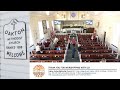
Oakton United Methodist Church opens with a warm welcome and a clear focus on mission, community, and the presence of God. The service moves through prayers for personal needs, family and neighbors, and the wider world, calling for God’s peace in hospital rooms, prisons, and homes marked by struggle. Worship includes generous giving, gratitude for outreach ministry—feeding more than one hundred people at the Lamb Center—and practical invitations to connect through cards, small groups, and upcoming fellowship events.
The central reflection examines the Johannine encounter with Thomas, reframing “doubting Thomas” as “not believing” (apistos) and treating that stance as a crucial spiritual moment rather than a character flaw. The Gospel of John sets belief as committed allegiance—choosing light over darkness and truth over falsehood—and the narrative highlights Thomas’s movement from absence and skepticism to the powerful confession, “My Lord and my God.” The text locates that transformation as a model for those who cannot see or touch the risen Christ but must decide to align themselves with him.
The sermon names the value of certainty—its capacity to nurture confidence, moral clarity, and decisive action—while also naming its dangers: arrogance, closed-mindedness, and a hardness that resists learning. A counterbalance appears in the call to make room for uncertainty. Questions, honest struggle, and intermittent unbelief do not disqualify faith; they can deepen humility, curiosity, and perseverance. The crucial risk comes not from asking hard questions but from letting them lead away from community. Remaining present at the table and in prayer becomes the path by which Jesus meets seekers and changes unbelief into confession.
Communion receives the same argument: the table welcomes those who are questioning, seeking, and wounded, and it stands as a reminder that the risen Christ meets people amid their uncertainty. The service closes with practical announcements, invitations to ongoing formation and fellowship, and a benediction that sends the community into the world to serve and testify to the resurrection, encouraged to keep showing up, keep asking, and keep practicing love and forgiveness.
Key Takeaways
- 1. Make room for honest questions Questions about suffering, silence, and apparent contradictions do not signal spiritual failure but mark an active, engaged faith. Holding those questions out loud creates space for learning, prayerful wrestling, and deeper dependence on God rather than superficial answers. Keeping questions within the community prevents isolation and opens pathways for transformation into clearer, more tested belief. [1:01:34]
- 2. Unbelief differs from mere doubt The original term apistos reads as “not believing,” a stance of allegiance rather than a temporary hesitation. This distinction reframes the struggle: the issue concerns commitment to Christ’s lordship, not a shameful inability to think. Recognizing the difference helps Christians address roots—fear, absence, or hurt—rather than dismissing honest intellectual or emotional questions. [51:03]
- 3. Faith grows by staying connected The danger lies not in questioning but in withdrawing from the table, from prayer, and from community where Christ appears. Continued presence invites encounters that shift disbelief into confession and service; community provides witnesses, accountability, and grace. Choosing to remain cultivates faith as a lived journey, tested and strengthened over time. [1:00:34]
- 4. Balance certainty with humble openness Certainty supplies courage to act and clarity to choose justice, but unchecked certainty breeds defensiveness and blindness. Humble openness to uncertainty cultivates curiosity, ongoing learning, and a posture that listens to others and to God. Holding these tensions prevents spiritual stagnation and preserves moral courage rooted in honest reflection. [57:05]
- 5. Communion welcomes seekers and doubters The table serves as a tangible reminder that the risen Christ meets people wherever they are on the faith journey. Open-table practice affirms that baptism, sin, or theological certainty do not gatekeep grace; vulnerability and hunger do. Coming to the table models the posture of those who stay, receive, and are transformed into witnesses. [1:03:19]
Youtube Chapters
- [00:00] - Welcome
- [09:08] - Opening Welcome and Mission Focus
- [24:23] - Guided Prayers: Needs, Neighbors, World
- [35:43] - Offering Prayer and Gratitude
- [41:29] - Introducing Thomas: Low Sunday Themes
- [51:03] - Apistos: Not Believing Explained
- [53:46] - Thomas’ Confession: “My Lord, My God”
- [56:09] - Certainty, Doubt, and Humble Openness
- [1:03:19] - Communion: Open Table Invitation
- [1:17:00] - Benediction and Sending Orders