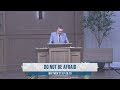
In a world often gripped by anxiety and uncertainty, the events surrounding the empty tomb remind us that Christ holds ultimate authority. The supernatural occurrences—the earthquake, the angel's appearance—were terrifying and unexplainable. Yet, into that fear, God spoke a clarifying word of peace. The resurrection demonstrates that Christ has power over all creation and our personal circumstances. We can trust Him with the future we cannot see.
[08:45]
And behold, there was a great earthquake, for an angel of the Lord descended from heaven and came and rolled back the stone and sat on it. His appearance was like lightning, and his clothing white as snow. And for fear of him the guards trembled and became like dead men.
Matthew 28:2-4 (ESV)
Reflection: What is one specific area of your life, perhaps a current trial or a future uncertainty, where you are struggling to trust God's sovereign control? How can the truth of Christ's victory over the grave reshape your perspective on that situation this week?
Salvation is a gift of grace, often delivered through the faithful proclamation of the gospel. The angel’s message to the women came before they physically saw the risen Lord, reminding us that God uses means to bring people to faith. This underscores the vital importance of hearing and sharing the good news. It is through the consistent testimony of His Word that hearts are prepared to truly see and know Jesus.
[20:56]
But the angel said to the women, “Do not be afraid, for I know that you seek Jesus who was crucified. He is not here, for he has risen, as he said. Come, see the place where he lay. Then go quickly and tell his disciples that he has risen from the dead..."
Matthew 28:5-7a (ESV)
Reflection: Who in your life has God placed on your heart to invite into a space where they can hear the gospel proclaimed? What is one practical step you could take this week to extend that invitation with gentleness and respect?
The glorious truth of the resurrection transforms our relationship with God from one of terror to one of intimate fellowship. The disciples’ fear was met with the gracious greeting of their Savior, which led them to worship at His feet. Because our sin has been dealt with on the cross, we no longer need to fear Christ’s appearing in judgment. For those in Him, His return is a promise of final salvation and eternal communion.
[25:55]
And behold, Jesus met them and said, “Greetings!” And they came up and took hold of his feet and worshiped him.
Matthew 28:9 (ESV)
Reflection: When you consider the promise of Christ's return, do you more often feel a sense of anxious dread or hopeful anticipation? How does the reality of your forgiven status through His death and resurrection encourage a heart of worship instead of fear?
The command to “go and tell” is rooted in the accomplished fact of the empty tomb. Jesus directly linked the comfort of “do not be afraid” with the mission to share the news of His resurrection with others. This good news is not meant to be a private comfort but a public proclamation. Our witness is empowered by the certainty of His victory, freeing us from the fear of what others might think or say.
[30:33]
Then Jesus said to them, “Do not be afraid; go and tell my brothers to go to Galilee, and there they will see me.”
Matthew 28:10 (ESV)
Reflection: In your conversations, how might you move beyond using the resurrection merely as a defensive shield for your faith to actively wielding it as a sword of hope? What is one opportunity this week to gently share the hope of the empty tomb with someone?
The resurrection is not just a historical event to be acknowledged; it is a present reality meant to shape every aspect of a believer’s life. It should be the foundation of our comfort, the fuel for our worship, and the courage for our witness. This truth dissolves fear—of the unknown, of judgment, and of man—and replaces it with confident joy. May our lives consistently reflect this active, living hope to a watching world.
[34:29]
So you also must consider yourselves dead to sin and alive to God in Christ Jesus.
Romans 6:11 (ESV)
Reflection: As you reflect on this past week, where did you see the reality of the resurrection most clearly impacting your daily thoughts, choices, or attitudes? What is one habit or rhythm you could establish to keep this triumphant hope at the forefront of your mind?
Matthew’s account of Matthew 27–28 focuses on the burial, the supernatural events surrounding the tomb, and the dawning reality of the resurrection. Joseph of Arimathea secures a new tomb and the women come at dawn to an earth that shakes, a rolled-away stone, and an angel whose appearance terrifies the Roman guards. The angel announces what the empty tomb signifies: Jesus has risen, just as he promised. The announcement precedes any eyewitness encounter, and the women depart with fear mixed with great joy to tell the disciples. Shortly thereafter, Jesus himself appears, greets them, and reiterates the angel’s command: do not be afraid.
The narrative links the empty tomb to cosmic and redemptive implications. Earthquakes, torn temple curtains, and raised saints frame a resurrection that asserts authority over creation, judgment, and death. These signs demonstrate that the cross and the empty tomb together resolve the deepest anxieties: separation from God, the fear of final judgment, and the dread of a future beyond human control. The text emphasizes that divine revelation arrives in word and visitation—God speaks first through the angel, then through the risen Lord—so that faith comes by proclaimed truth rather than mere speculation or spectacle.
Resurrection sight produces worship and fellowship rather than distant admiration. The women fall at Jesus’ feet and worship; that relational, covenantal reality distinguishes human believers from mere observers who may acknowledge facts without union. Because Christ rose and laid down his life for sins, his appearing at the last day will save those eagerly awaiting him rather than condemn them. The empty tomb therefore translates into pastoral and missionary courage: believers receive a mandate to go and tell, to make the resurrection the central motif of witness, and to confront cultural fear with the assurance that Christ rules history.
Practical implications flow from this historic and theological claim. The empty tomb destabilizes idols of fear by promising presence, power, and fellowship. It calls for consistent proclamation in worship and daily life, courage to speak the resurrection into fearful moments, and confident expectation of a final appearing that brings vindication and communion for those in Christ.
And that's because the gospel of Jesus Christ, which we hold to and we cling to on a day like today, removes, obliterates all of our fears. It is only the gospel, brothers and sisters, that can do away with, that can smash down our stale idols of fear in our hearts. And the greatest aspect of that gospel that helps us in that is Easter Sunday, saints. It's the empty tomb. The reality of Easter should remove your fears.
[00:06:08]
(36 seconds)
#EasterRemovesFear

Man and his fallen heart exchanges the the worship of the creator with the worship of the creature. That's what Adam and Eve did. That's why we're in the state we're in, where where fear is rampant because they look to someone other than God. The result of this was a heart in all of us that is easily gripped in fear. Think about this in light of where we are headed. Right? As Christians, we should not be fearful of our futures, not just temporally, but eternally.
[00:05:04]
(35 seconds)
#WorshipGodNotCreation
I'm an AI bot trained specifically on the sermon from Apr 05, 2026. Do you have any questions about it?
Add this chatbot onto your site with the embed code below
<iframe frameborder="0" src="https://pastors.ai/sermonWidget/sermon/dont-be-afraid" width="100%" height="100%" style="height:100vh;"></iframe>Copy