Discipleship is not a finish line at conversion, but the starting point of a lifelong journey. It is a call to walk with others through the joys and struggles of following Jesus, investing time and sharing life together. This journey is not about programs or certificates, but about intentionally helping others grow in faith as we ourselves continue to grow. Each believer is invited to move beyond simply making decisions for Christ, and instead, to make disciples—one life at a time.
When we walk alongside others, we model what it means to follow Jesus in real life. We share our stories, our struggles, and our victories, creating space for honest questions and authentic growth. Discipleship is a commitment to be present, to listen, and to guide, trusting that God works through relationships to shape us into His likeness. The journey may be slow and sometimes messy, but it is always worth it, because it is how lives are truly transformed.
“Let us know; let us press on to know the Lord; his going out is sure as the dawn; he will come to us as the showers, as the spring rains that water the earth.” (Hosea 6:3, ESV)
Reflection: Who is one person you can intentionally walk alongside this week, investing time and encouragement in their journey with Jesus?
The early church flourished not because of impressive buildings or resources, but because believers shared life together in deep, daily relationships. Spiritual growth is stunted in isolation, but it thrives in the soil of authentic community. God designed us to learn, love, and serve alongside others, allowing their presence to shape us and help us mature in faith.
Living in community means embracing the messiness of real relationships. We learn to forgive, to serve, and to persevere as we walk with other imperfect people. Christianity was never meant to be a solo journey; faith matures as we open our lives to others, allowing God to use their encouragement and even their challenges to help us grow. When we commit to authentic community, we experience the fullness of what it means to be the family of God.
“Two are better than one, because they have a good reward for their toil. For if they fall, one will lift up his fellow. But woe to him who is alone when he falls and has not another to lift him up!” (Ecclesiastes 4:9-10, ESV)
Reflection: What is one step you can take this week to move from isolation to deeper connection with your church community?
Simply attending church is not the same as being connected to the body of Christ. Real spiritual growth happens when we allow ourselves to be known, encouraged, and even lovingly corrected by others. Accountability is sometimes uncomfortable, but it is essential for sharpening our faith and helping us become more like Jesus.
God uses the friction of close relationships to refine us. When we open our lives to others, we invite them to speak truth, offer support, and challenge us to grow. This kind of accountability transforms passive attendance into active involvement, making church a place where lives are changed and faith is strengthened. It is through these honest, sometimes difficult relationships that God shapes us for His purposes.
“Let a righteous man strike me—it is a kindness; let him rebuke me—it is oil for my head; let my head not refuse it. Yet my prayer is continually against their evil deeds.” (Psalm 141:5, ESV)
Reflection: Who in your life has permission to lovingly challenge or correct you? How can you invite deeper accountability into your walk with Christ?
Jesus said that the world would know His disciples by their love for one another. This love is not just a feeling or a theory—it is practical, sacrificial, and visible in the way we welcome, care for, and walk with each other. When a church embodies this kind of love, it becomes a powerful witness, breaking down barriers and drawing people to Christ.
True discipleship is marked by love that goes beyond words. It is seen in acts of kindness, in bearing one another’s burdens, and in choosing to serve even when it costs us something. This love is the greatest apologetic the church can offer, showing the world the reality of Jesus through the way we treat each other. When we love as He loved, we reflect His heart to a watching world.
“Little children, let us not love in word or talk but in deed and in truth.” (1 John 3:18, ESV)
Reflection: What is one practical way you can show sacrificial love to someone in your church family this week?
The early church grew and thrived because every believer was engaged in the life of the body. The difference between a crowd and a movement is participation—when each person reaches out, builds up, and walks together, the church becomes a living, breathing family. God calls each of us to move from passive attendance to active engagement, making space for others and allowing Him to use us in the lives of those around us.
When every member is involved, the church becomes unstoppable. It is no longer just a place to attend, but a family to belong to and a mission to join. Each person’s gifts, presence, and participation matter. As we step out to serve, encourage, and disciple others, we become the body of Christ in action, making a difference in our community and beyond.
“And let us consider how to stir up one another to love and good works, not neglecting to meet together, as is the habit of some, but encouraging one another, and all the more as you see the Day drawing near.” (Hebrews 10:24-25, ESV)
Reflection: What is one way you can move from being a spectator to an active participant in the life of your church this week?
of the Sermon**
In this message, we explored the heart of biblical discipleship: not just making converts, but walking with people as they grow in Christ—one life at a time. The focus was on the necessity of genuine Christian community, where believers are not left to fend for themselves but are nurtured, encouraged, and held accountable within the family of God. Drawing from Acts 2 and Hebrews 10, we saw that discipleship is a lifestyle, not a program, and that spiritual growth happens best in the context of real relationships. The early church modeled a life of shared devotion, mutual support, and sacrificial love, and we are called to recapture that same spirit. The challenge is clear: move from mere attendance to active involvement, from religion to relationship, and from isolation to authentic community—because this is how disciples make disciples, and how the church becomes a true family.
**K
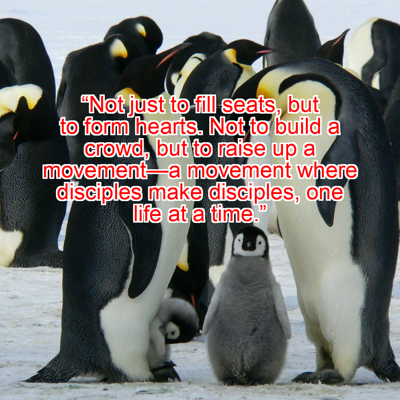
“Not just to fill seats, but to form hearts. Not to build a crowd, but to raise up a movement—a movement where disciples make disciples, one life at a time.”
“It’s not enough to just get them to the altar—we’ve got to walk with them after the altar to make a disciple. I want us to be a church that not only brings them to the cross, but then teaches them how to carry it.”
“You can be saved alone, but you can’t make disciples alone. You can’t grow alone. You need community, you need accountability, you need the church.”
“Salvation is the new birth, but community is the nursery where faith learns to walk. Let’s see how God grows us—together.”
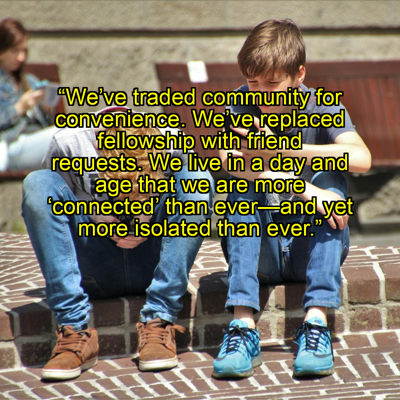
“We’ve traded community for convenience. We’ve replaced fellowship with friend requests. We live in a day and age that we are more ‘connected’ than ever—and yet more isolated than ever.”
“You can’t be a growing Christian if you’re not connected to a growing church. When God saved you, He didn’t just call you to believe—He called you to belong.”
“We learn to love like Jesus by being around His people—even the difficult ones. We don’t learn to forgive, to be patient, to be kind by sitting alone in a quiet cabin with our Bible and a candle.”
“God uses people to polish people! The church isn’t a perfect place full of perfect people—it’s a grace-filled family learning how to walk together. It’s beautiful and it’s messy.”
“Just being in the garage doesn’t make you a car, and just sitting in church doesn’t make you a disciple! Real discipleship involves participation in the family—the good, the bad, and the ugly.”
“Don’t just attend—engage. Don’t just watch—walk with someone. Don’t just come to church—be the church. Because this is how we grow—together. This is how disciples make disciples. This is how a church becomes a family.”
Add this chatbot onto your site with the embed code below
<iframe frameborder="0" src="https://pastors.ai/sermonWidget/sermon/disciples-making-3" width="100%" height="100%" style="height:100vh;"></iframe>Copy