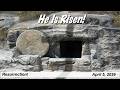
He is risen. The women arrived at the tomb at dawn, found the stone rolled away and the body gone, and encountered two dazzling figures who asked why they sought the living among the dead. The empty tomb forced a slow remembering: Jesus had foretold his death and third-day rising. The account shows both faithful witnesses and skeptical disciples—some proclaimed the news, others called it nonsense—while Peter inspected the linens and went home marveling. A clear map of Holy Week emerges: the journey from Bethany across the Mount of Olives, the view of the temple, the upper room, Gethsemane, Calvary, and the places tied to Peter’s denial. Geography anchors theology; the physical places carry prophetic and historical weight.
Doubt appears as a recurring human reality in the Scriptures: disciples wavering even after resurrection sightings, Old Testament heroes who faltered, and the questioning of Pilate who asks, “What is truth?” The sermon digs into the grammar of doubt and the biblical examples that normalize hesitation while refusing despair. The resurrection stands as the decisive, public, attested event: Paul’s summary in 1 Corinthians 15 lists appearances to Peter, the twelve, five hundred at once, James, and many others. Competing explanations—conspiracy, spiritualized accounts, or cover-ups—cannot erase the testimony recorded and remembered.
A contrast sharpens between religion and relationship. Religion offers rules, rituals, and safe distance; relationship demands costly discipleship—deny self, take up the cross, obey the Father. The Bible calls for active hearing: read, memorize, and do the Word rather than shelve it as theory. Personal appropriation changes the facts into faith: “He died for me” transforms doctrine into daily allegiance and sends believers back into the world to witness, disciple, and love. The invitation remains simple and urgent: receive Christ, repent, and begin a life shaped by the risen Lord.
Key Takeaways
- 1. Doubt does not disqualify faith Doubt appears repeatedly in Scripture and often precedes deeper trust. Standing between belief and unbelief can prompt honest questions that drive people back into Scripture and prayer rather than away. Rather than hiding doubt, the faithful can bring it before Christ, who meets wrestlers of faith and reshapes their trust. [25:02]
- 2. The resurrection is objective truth The empty tomb anchors history with eyewitness testimony and public appearances recorded in the early church. Paul’s inventory of witnesses treats the resurrection as verifiable fact that demands moral and theological response, not private interpretation. Accepting the resurrection reorients ethics, hope, and mission because it declares death defeated and God active in history. [33:01]
- 3. Relationship over religion, not ritual Ritual structures can protect hearts from vulnerability while offering a counterfeit peace that avoids transformation. True relationship with Christ removes safety nets: it calls for surrendered obedience, costly discipleship, and the daily work of becoming like him. Selecting relationship means accepting disturbance, sanctification, and the surgeon’s work that heals by cutting away sin. [35:14]
- 4. Live the Word; be a doer Hearing Scripture must lead to concrete obedience; knowledge without practice breeds self-deception. Practical obedience forms spiritual character, trains affections, and roots truth in daily choices more than in abstract assent. Communities grow as individuals translate text into action—prayer, mercy, confession, and courage in witness. [40:46]
Youtube Chapters
- [00:00] - Welcome
- [00:31] - Opening Worship and Prayer
- [13:01] - Call to Attentive Hearing
- [14:29] - The Women at the Tomb (Luke 24)
- [15:09] - Mapping Holy Week Journey
- [18:36] - Mount of Olives and Prophecy
- [20:40] - Temple, Upper Room, Gethsemane
- [24:32] - Women’s Testimony and Skepticism
- [25:02] - Doubt in Scripture: Examples
- [33:01] - Resurrection Witnesses and Evidence
- [35:14] - Relationship vs. Religion
- [40:46] - Hearers and Doers: Practical Faith
- [47:06] - Personalizing the Gospel: “He died for me”
- [49:20] - Invitation to Receive Christ
- [54:03] - Benediction and Closing