Pride often creeps in as a quiet shift of attention. When a person begins to count achievements and projects as the proof of worth, God’s role in those successes fades from view. That movement is small at first — a thought here, a private pat on the back there — but it changes the posture of the heart: from dependence to self-reliance.
Notice where you look for security and meaning. If accomplishment, titles, or reputation are the barometers, the soul slowly learns to trust itself instead of God. The remedy is simple and practical: name the places where pride lives, confess them, and intentionally reframe successes as gifts and teamwork. Humility doesn’t mean thinking less of yourself; it means thinking more about God’s sufficiency and giving him the credit he deserves.
Psalm 10:3-4 (ESV)
For the wicked boasts of the desires of his soul, and the one greedy for gain curses and renounces the LORD.
In the pride of his face the wicked does not seek him; all his thoughts are, “There is no God.”
Reflection: Identify one achievement or role you have been quietly measuring your worth by. Today, thank God aloud for his part in that thing and tell one person how God and others helped you succeed.
Consequences are not only punishment; they are also means of correction. When people face the results of their choices, pain can become a teacher that loosens the grip of sin and leads to real change. God’s response often balances justice with mercy so that the heart is led back rather than merely broken.
That balance can feel strange: discipline may sting, yet it also proves God’s ongoing faithfulness. The purpose is restoration, not annihilation. When consequences are accepted with humility and repentance, they become tools of formation that reorient life toward obedience and dependence.
Psalm 89:30-33 (ESV)
If his children forsake my law and do not walk according to my rules; if they violate my statutes and do not keep my commandments,
then I will punish their transgression with the rod and their iniquity with stripes.
But I will not remove from him my steadfast love or be false to my faithfulness.
Reflection: Think of one choice you’ve been avoiding the fallout from. Within 48 hours, write a one-step plan to face that consequence (apology, repair, or changed behavior) and take that step.
Private decisions rarely stay private when someone carries influence. A leader’s hidden compromises or tolerations eventually spill outward and touch family, congregation, or team. What is kept in darkness becomes a controlling power that harms others, whether through misdirection, poor example, or weakened trust.
Bringing secrets into the light is not just personal honesty—it is an act of love for the community. Admitting fault, seeking counsel, and accepting accountability repair relationships and prevent further harm. Leaders and those who influence others must practice transparency and build systems of mutual care so private failures do not become public wounds.
Ezekiel 34:3-4 (ESV)
You eat the fat, you clothe yourselves with the wool, you slaughter the fat ones, but you do not feed the sheep.
The weak you have not strengthened, the sick you have not healed, the injured you have not bound up, the strayed you have not brought back, the lost you have not sought, and with force and harshness you have ruled them.
Reflection: Name one private habit, attitude, or secret that could negatively affect people under your care. This week, tell one trusted person about it and ask them to hold you accountable.
Worship that requires no cost becomes routine and fails to change the heart. When offerings are purely convenient—time on autopilot, money out of habit, words without risk—they do not press into dependence or holiness. True worship asks for something significant because giving away what matters forms and frees the soul.
Costly worship doesn’t look the same for everyone. It may be giving what would have been saved, offering time when one would rather rest, or admitting a humble truth that risks reputation. These costly acts invite God to meet people at the place where they actually live, and they become moments where mercy meets transformation.
1 Samuel 15:22-23 (ESV)
And Samuel said, “Has the LORD as great delight in burnt offerings and sacrifices, as in obeying the voice of the LORD? Behold, to obey is better than sacrifice, and to listen than the fat of rams.
For rebellion is as the sin of divination, and presumption is as iniquity and idolatry.”
Reflection: What recurring, low-cost form of worship are you offering (time, money, or comfort)? This week, choose one concrete costly act (give the money you would have spent on a convenience, fast an evening, or add an extra hour of deliberate prayer) and notice how it affects your heart.
The courage of those who suffer for Christ shows that worship often costs everything. Daily faithfulness is made of small, costly decisions: forgiving when it hurts, speaking truth when it risks rejection, giving when it strains the budget. These acts are the currency of a faith that is alive and able to stand when trials come.
Costly obedience is not meant to prove worth but to demonstrate trust. When people choose obedience over comfort, they participate in the same path Christ walked. Take a concrete risk for the sake of the gospel or for obedience to God’s call this week, and let the community know so your act of faith can be held and celebrated with you.
1 Peter 4:12-13 (ESV)
Beloved, do not be surprised at the fiery trial when it comes upon you to test you, as though something strange were happening to you.
But rejoice insofar as you share Christ’s sufferings, that you may also rejoice and be glad when his glory is revealed.
Reflection: Identify one act of obedience you’ve avoided out of fear (a tough conversation, public witness, sacrificial giving). Pick one concrete step to take this week (make the call, post a short testimony, give a sacrificial gift), do it, and tell one person in the church what you did.
of the Sermon:**
This sermon, rooted in 2 Samuel 24, explores the story of King David’s prideful census and the consequences that followed. It highlights how David’s moment of self-reliance led him away from trusting God, resulting in suffering for the nation. The message then shifts to the nature of true worship, emphasizing that worship which costs us nothing ultimately changes nothing. David’s refusal to offer God a sacrifice that cost him nothing becomes a powerful lesson for us: authentic worship requires real surrender, sacrifice, and obedience. The sermon closes by challenging us to lay down our pride, face the consequences of our choices, and bring God offerings that are genuine and costly, knowing that such worship transforms us.
**K
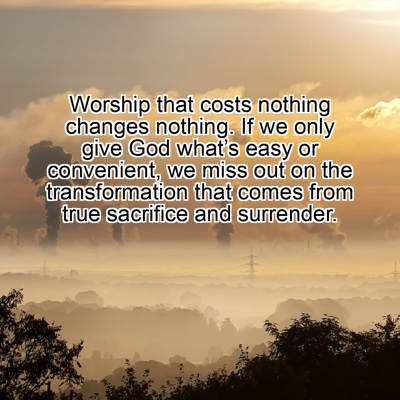
Worship that costs nothing changes nothing. If we only give God what’s easy or convenient, we miss out on the transformation that comes from true sacrifice and surrender.
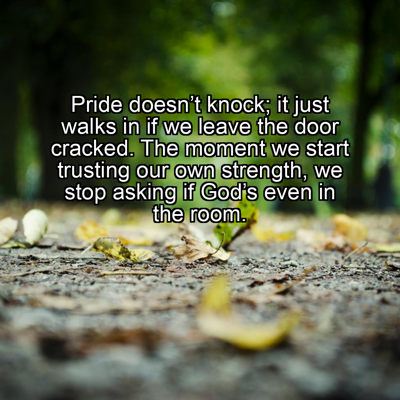
Pride doesn’t knock; it just walks in if we leave the door cracked. The moment we start trusting our own strength, we stop asking if God’s even in the room.
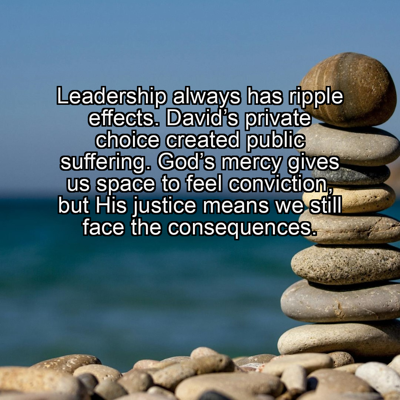
Leadership always has ripple effects. David’s private choice created public suffering. God’s mercy gives us space to feel conviction, but His justice means we still face the consequences.
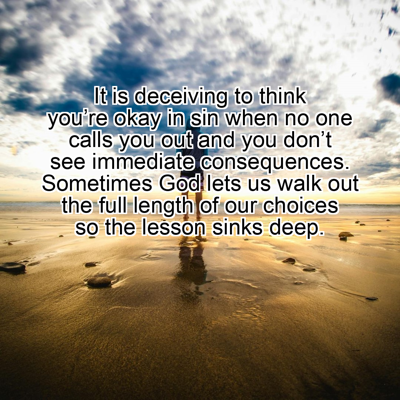
It is deceiving to think you’re okay in sin when no one calls you out and you don’t see immediate consequences. Sometimes God lets us walk out the full length of our choices so the lesson sinks deep.
David didn’t flinch—“I will not offer to the Lord something that costs me nothing.” He understood that real worship requires real sacrifice.
When we measure our accomplishments instead of God’s faithfulness, everything shifts. We’ve all counted our wins, padded our stats, and tried to convince ourselves our strength is enough.
What secrets do we need to drag into the light? What consequences do we need to face rather than carry? Avoiding them only delays the healing God wants to bring.

Bring God something real this week—something that actually costs you. That kind of worship doesn’t just honor Him… it transforms you.

We don’t bring animal offerings today, but we still bring our obedience, repentance, generosity, forgiveness, time, and surrender. Is your heart ready for daily honest worship to God?
If David—Israel’s greatest king—could fall for pride, none of us are untouchable. We all need to guard our hearts and remember who truly deserves the credit.
Hi, I'm an AI assistant for the pastor that gave this sermon. What would you like to make from it?
Add this chatbot onto your site with the embed code below
<iframe frameborder="0" src="https://pastors.ai/sermonWidget/sermon/costly-worship" width="100%" height="100%" style="height:100vh;"></iframe>Copy